Downspout Repair, Replacement, or Full System Redesign: An Honest Guide for Gulf Coast Homeowners
A leaking downspout rarely makes noise. It just moves water somewhere it shouldn't go, quietly, every time it rains. If you're trying to decide between repairing what you have, replacing the downspout, or rethinking the whole drainage layout, the right answer depends almost entirely on which category of failure you're actually dealing with.
Key Takeaways
- Downspout problems fall into three categories: mechanical failure (fixable with repair), sizing failure (requires replacement), and layout failure (requires system redesign)
- A downspout that's the wrong size for your roof will fail repeatedly no matter how well it's repaired
- Deferred repairs compound into structural damage at the fascia, siding, and foundation
- Martin's Seamless Gutters & Fencing has provided free estimates to homeowners and commercial clients across Northwest Florida since 2004
- Getting the diagnosis right at the start is almost always cheaper than correcting the wrong repair later
What's Actually Wrong With Your Downspout?
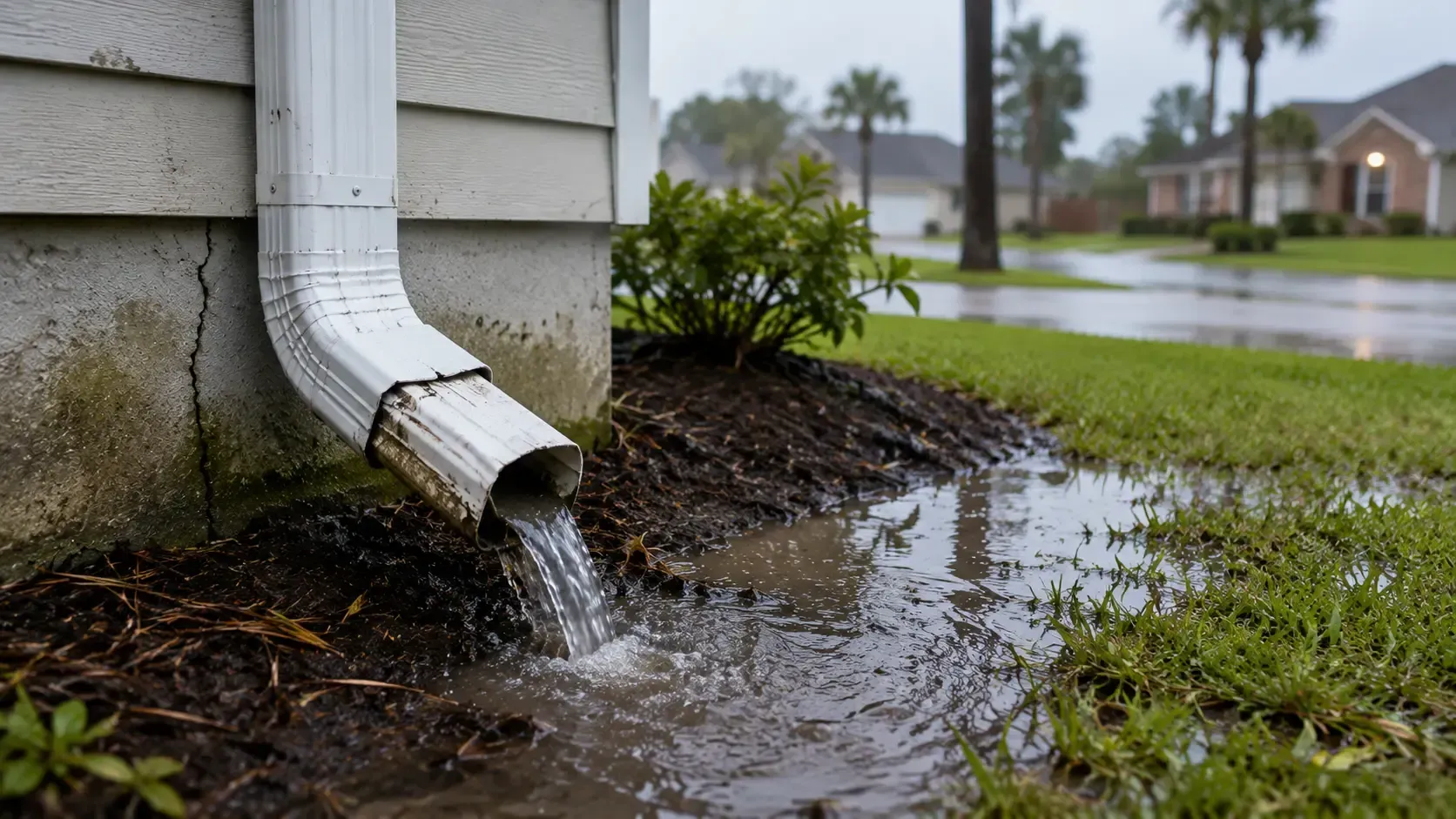
Most homeowners see a symptom, not a cause. Water pooling near the foundation. A downspout pulling away from the wall. Overflow during heavy rain even though the gutter looks clean. Each of those symptoms can come from three completely different root problems, and the fix for one is wrong for the others.
The three failure categories are:
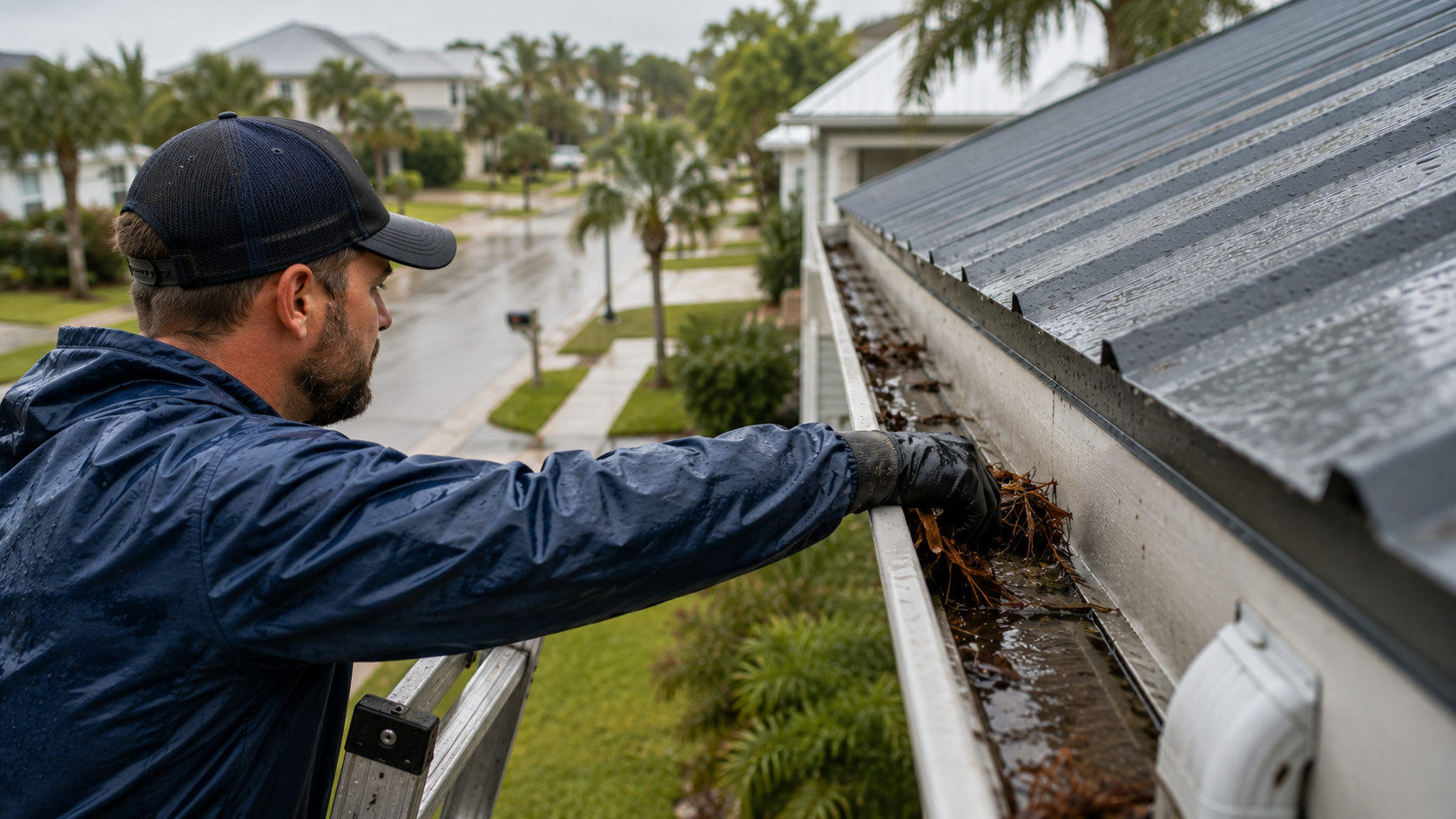
Mechanical failure. A joint has separated, a bracket has come loose, or a section is clogged. The downspout is the right size and in the right location. It just needs repair.
Sizing failure. The downspout is too narrow for the volume of water your roof sheds. It overflows not because it's broken, but because it was never adequate for the drainage load.
Layout failure. The downspout terminates in the wrong place, or the entire gutter system routes water toward the structure instead of away from it. No repair or replacement of the downspout alone will fix this.
Getting the diagnosis wrong is expensive. A homeowner who replaces a perfectly adequate downspout because it's overflowing, without realizing the gutter pitch is the actual problem, will have the same issue within a season.
When Repair Is the Right Call
Repair works when the failure is mechanical and the system around it is sound.
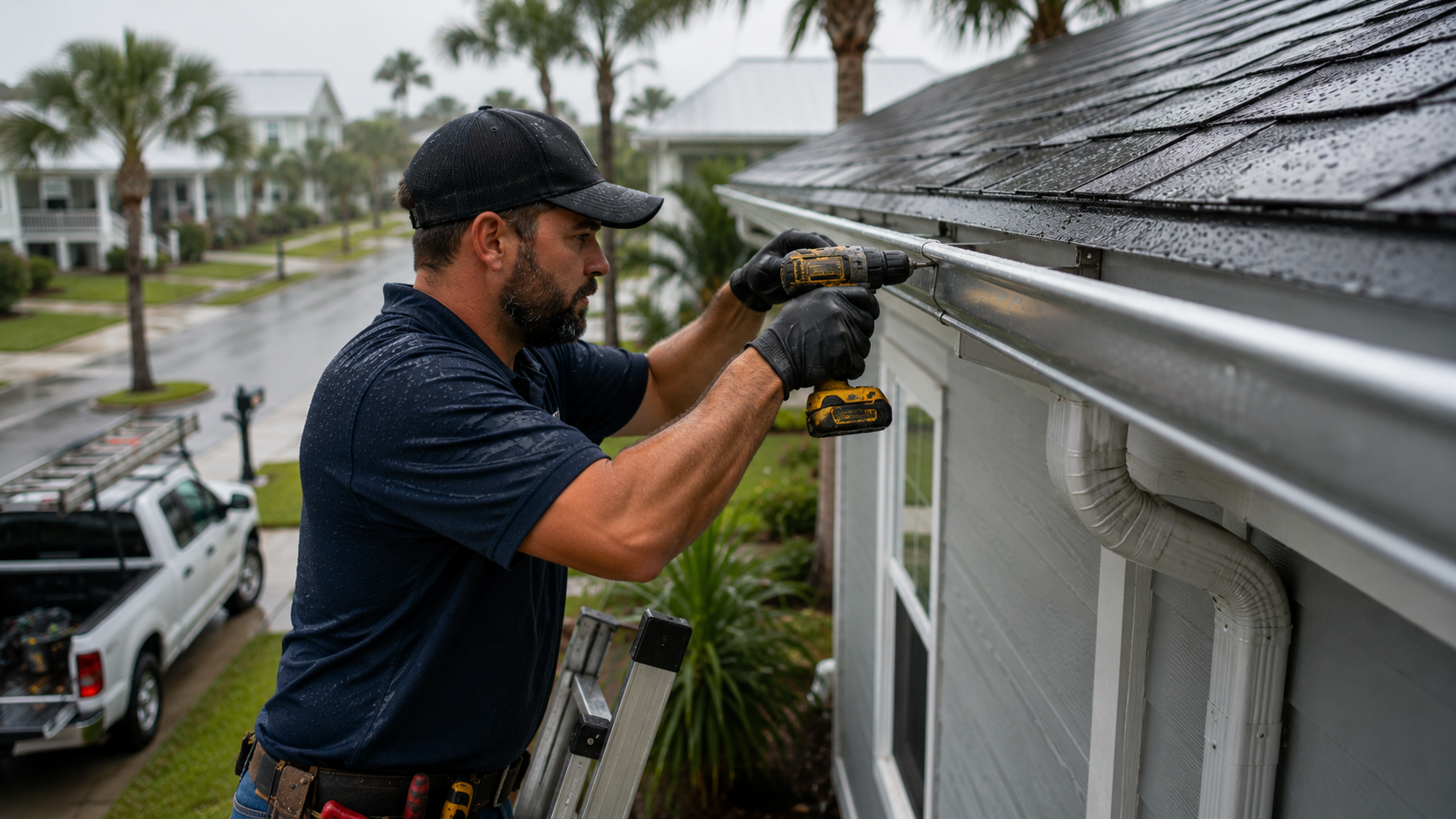
Specifically, repair is appropriate when a joint has separated and can be resealed with a compatible sealant. Martin's Seamless Gutters & Fencing uses Geocel specifically because it bonds to aluminum and holds up in Gulf Coast heat without cracking over time. That detail matters: a repair done with the wrong sealant fails within a season here because of the temperature swings and UV exposure this climate delivers.
Repair also makes sense when a bracket has failed but the downspout material itself is intact, when a clog is causing overflow and the downspout is otherwise correctly sized, and when corrosion is isolated to one short section rather than running along the full length.
The honest limitation of repair: it only addresses what's broken. If the downspout was installed with the wrong outlet size for your roof's square footage, resealing the joint doesn't change the math. You'll be back on a ladder next summer with the same problem.
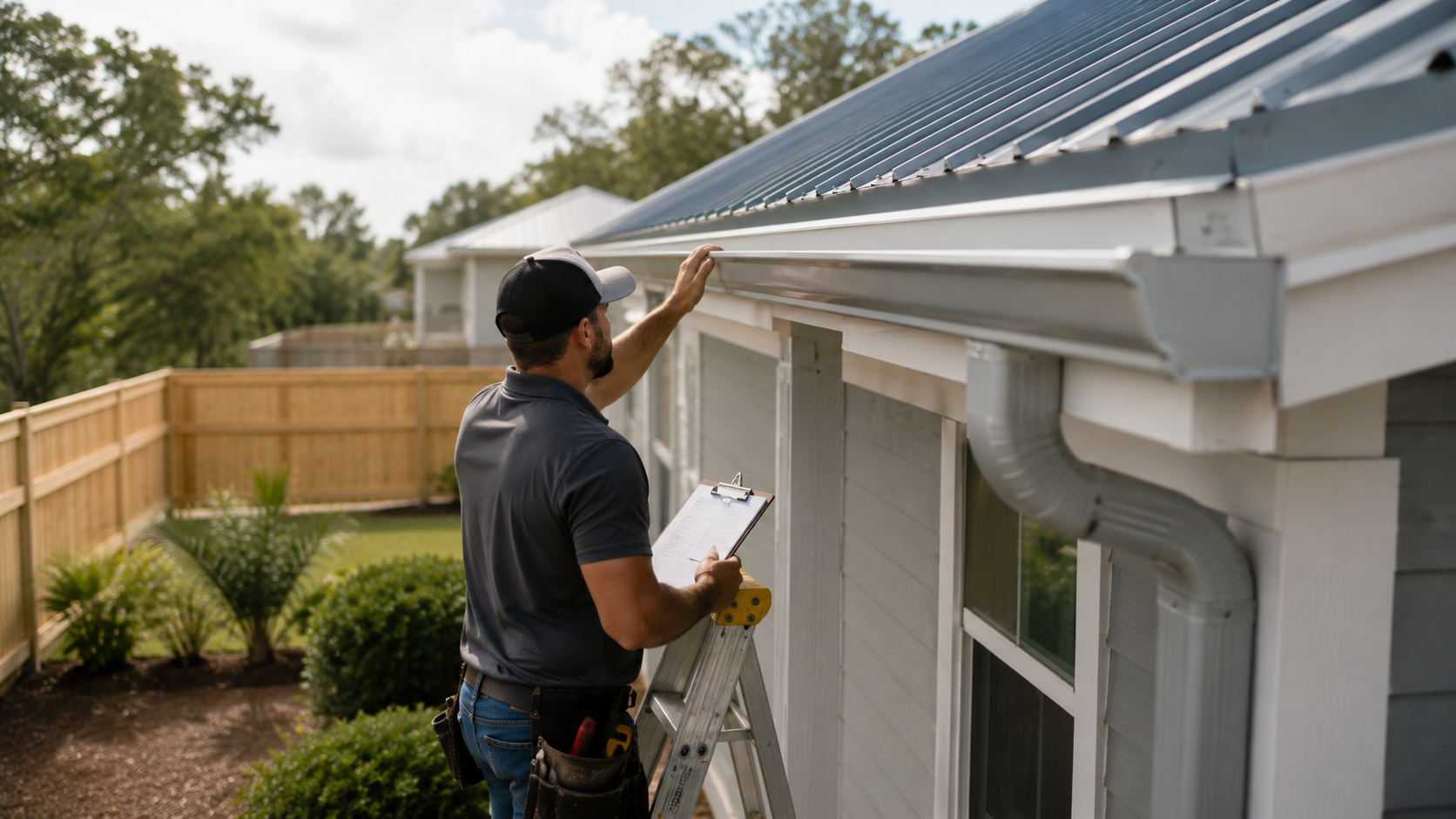
Consider a common situation: a homeowner notices a downspout leaking at the elbow joint every time a storm rolls through. The joint has separated from years of thermal expansion and contraction, which is typical on older sectional systems in this climate. If the downspout is the correct size for the roof section it drains and the gutter pitch is sound, a professional resealing and bracket re-attachment addresses the problem directly. Replacement in that case would be unnecessary spending. But getting to that conclusion requires checking the sizing and pitch first, not just sealing the visible leak.
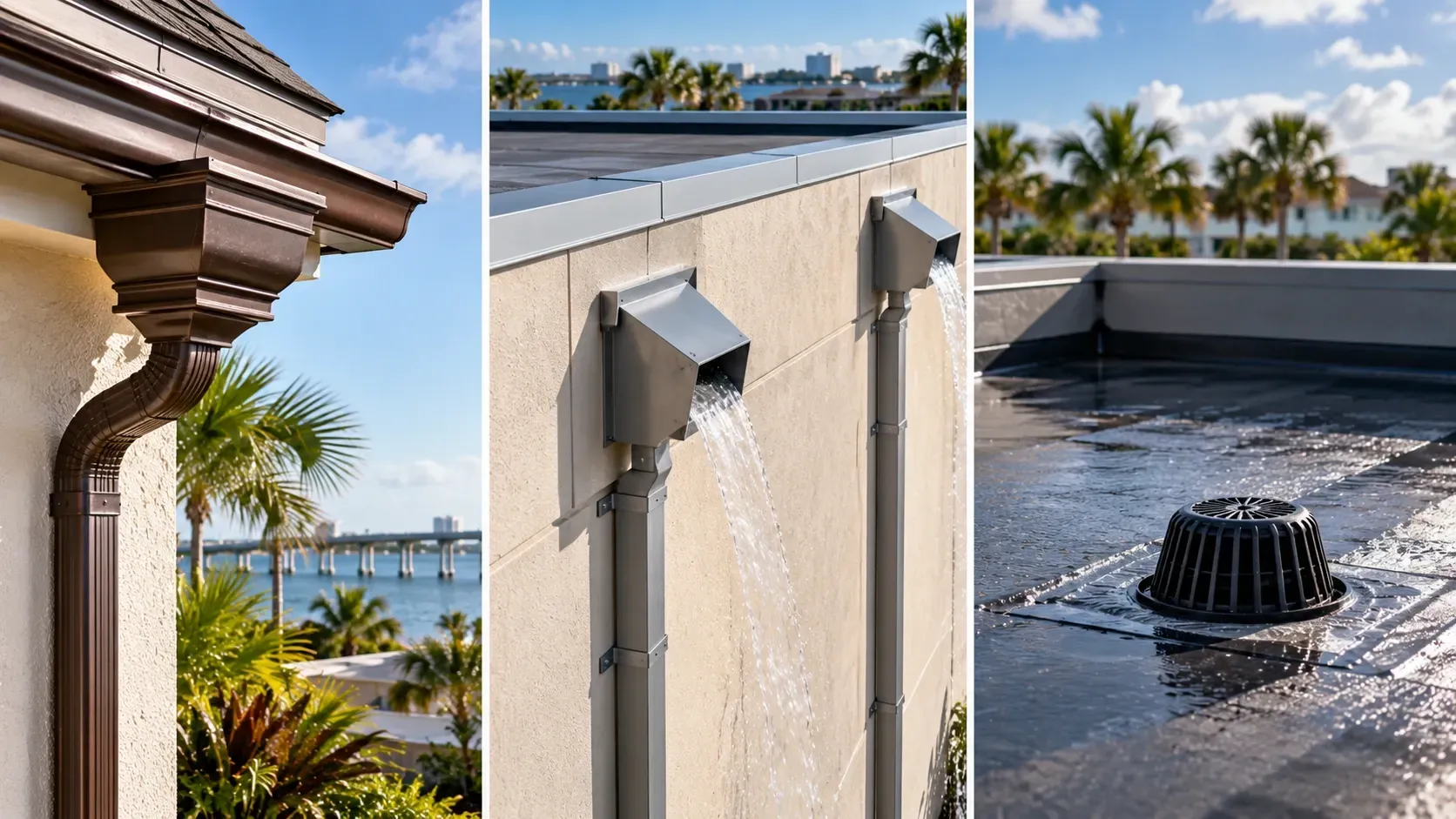
To understand how proper gutter installation affects long-term performance, it helps to see what a correctly configured system looks like from the start.
When Replacement Makes More Sense Than Repair
Replacement is the right answer when the downspout itself is the problem, not just one joint or bracket.
Replace when the downspout is crushed or kinked and restricting flow along its length. Replace when corrosion has worked through the material in multiple locations, not just one spot. Replace when the downspout is undersized for the roof area it drains. A narrower downspout paired with a large roof section creates a bottleneck that no amount of maintenance resolves. The system overflows because it was designed that way, not because anything broke.
Replacement also makes sense when you're dealing with a sectional downspout that has recurring joint failures. Multiple joints mean multiple failure points. That's a design problem, and the right answer is replacing the sectional system with a continuous downspout that eliminates most of those joints.
Northwest Florida gets intense, fast-moving summer storms. A downspout sized for a moderate rainfall climate isn't adequate here. When you're looking at your downspout configuration, the diameter, material, and placement need to account for the actual drainage load your roof produces during a typical Gulf Coast storm, not average conditions somewhere else.
Replacement also lines up naturally when you're upgrading the gutter system itself. If you're moving to seamless gutters, the existing sectional downspouts often don't match the new outlet configuration anyway, so the decision tends to resolve itself.
The Option Most People Don't Consider: System Redesign
Here's the part worth sitting with: most downspout failures aren't really downspout failures. They're drainage system failures that show up at the downspout because that's the last point before water hits the ground.
A downspout can only move water as fast as the gutter feeds it. If the gutter pitch is wrong, if there aren't enough outlets for the roof's square footage, or if the downspout terminates six inches from the foundation, the downspout is technically doing its job and water is still ending up somewhere it will cause damage.
Water has to go somewhere specific, not just away from the house.
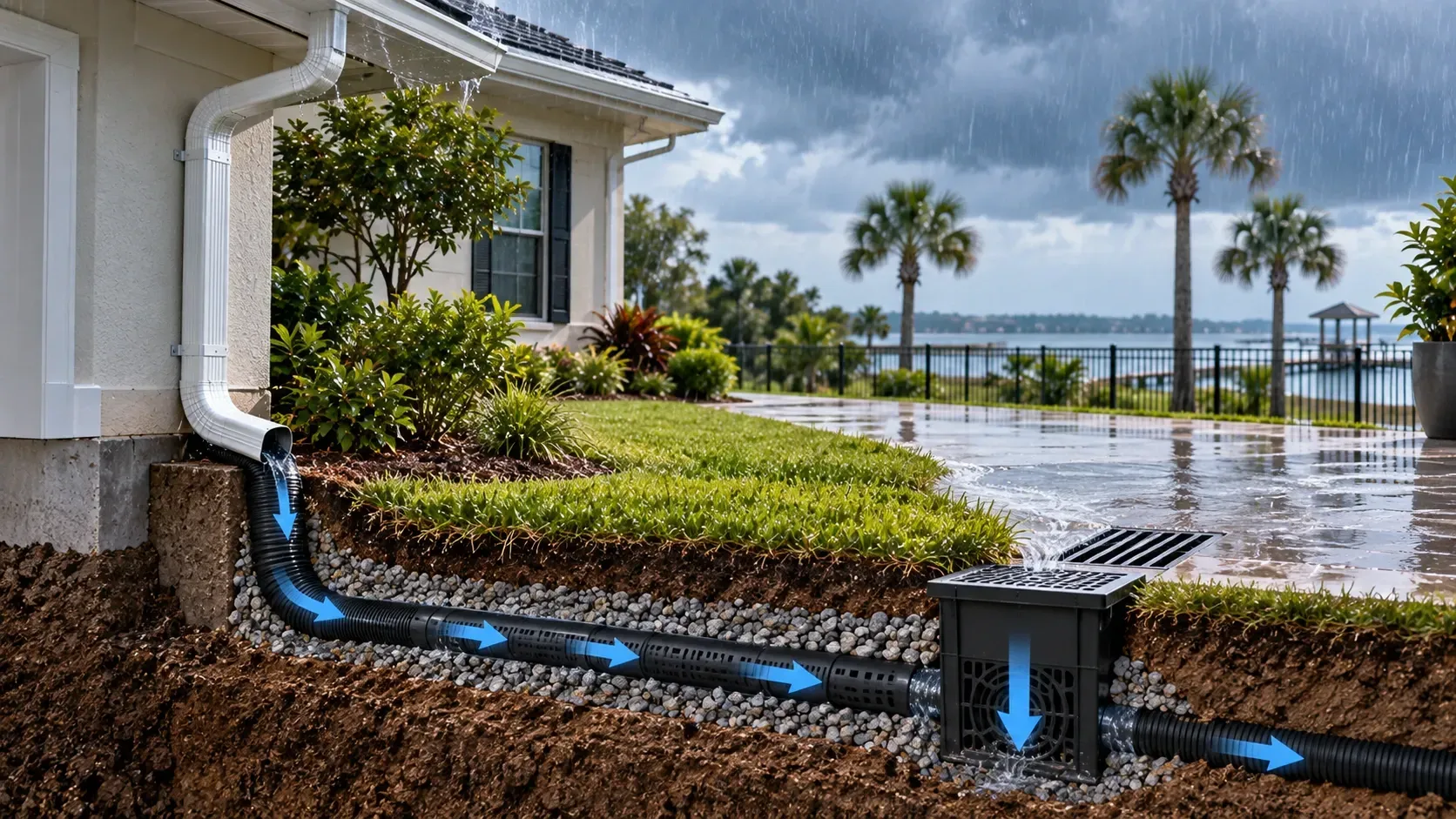
In those situations, the right answer is a system-level fix. That might mean adding French drains to move water away from the structure at grade. It might mean installing grate drains to handle overflow in areas where surface water collects. It might mean looking at the drainage system as a whole, including how downspout outlets, yard grading, and subsurface drainage work together.
This option costs more upfront. It also prevents the kind of structural damage at the fascia, siding, and foundation that results from years of misdirected water. Foundation and structural repairs routinely run into large figures that dwarf the cost of a properly designed drainage system. That's not a scare tactic. It's just the direction the math points when you trace what happens to a structure that sheds water incorrectly for several years in a high-humidity climate like this one.
If you're in Pensacola, Gulf Breeze, or anywhere along the Gulf Coast and you've had the same downspout repaired more than once without the problem going away, the repair isn't failing. The system design is the problem.
Repair vs. Replace vs. Redesign: A Decision Framework
The right diagnostic question to start with is: what kind of failure is this?
Mechanical failures, where a component broke but the system design is sound, call for repair. Dimensional failures, where the downspout is the wrong size for the drainage load, call for replacement. Positional failures, where the system routes water incorrectly regardless of what the downspout does, call for redesign.
| Situation | Right Call | Why |
|---|---|---|
| Joint separated, sizing correct, system intact | Repair | Component failure only |
| Downspout crushed, kinked, or corroded along its length | Replace | Material is compromised |
| Overflow during rain despite intact, unclogged downspout | Resize or add outlets | Sizing failure, not mechanical |
| Water pooling at foundation despite working downspout | System redesign | Layout or drainage failure |
| Recurring joint failures on sectional system | Replace with continuous downspout | Design creates repeated failure points |
| Downspout functional but yard drainage still fails | Add French drains or grate drains | Problem scope is beyond the downspout |
The most expensive mistake isn't choosing the wrong repair method. It's treating a system problem as a component problem and paying for the same repair multiple times before the real issue gets addressed.
What Waiting Actually Costs You
Deferred downspout repair doesn't stay cheap. The mechanism is straightforward: water that can't exit efficiently finds another path. It backs up into the gutter, overflows at the fascia line, saturates the wood behind the gutter, and begins working on the structure it was installed to protect. In a humid Gulf Coast climate, that process moves faster than most homeowners expect, because moisture has nowhere dry to go between rain events.
By the time you see siding stains or soft spots in the fascia, the damage has been accumulating for a while. The
gutter repair itself is often straightforward. What drives the cost up is the collateral damage that builds while the repair gets put off.
Martin's Seamless Gutters & Fencing has been family-operated since 2004. The free estimate process exists specifically because the right diagnosis at the start is what separates a minor repair from a much larger project. Getting that assessment before committing to a repair approach is the lowest-cost decision available to you right now.
Does Leaf Guard Installation Change This Calculation?
It can, and it's worth addressing directly.
If you're repairing a downspout on a system that clogs regularly, the repair addresses the symptom. Adding
leaf guard protection to a system that's already being serviced changes the long-term maintenance picture, particularly if clog-driven overflow was what caused the downspout failure in the first place.
The question to ask is whether this is a one-time failure or part of a recurring pattern. One-time failures call for targeted repair. Recurring patterns call for a system-level solution, and leaf guards are often part of that solution on properties with significant tree coverage.
What About Commercial Properties?
Commercial properties shift the repair-versus-replace calculation quickly toward replacement and redesign. The drainage loads are larger, the consequences of failure tend to be more immediate, and the tolerance for a wrong call is lower.
A commercial building with an undersized or failing downspout system isn't just a maintenance item. It's a water intrusion liability.
Martin's Seamless Gutters & Fencing's commercial services are built for this context, with the same diagnostic approach applied to larger, more complex systems where getting it right the first time carries real financial weight.
How do I know if my downspout is the right size?
A general rule is that each square inch of downspout cross-section handles roughly 100 square feet of roof area, adjusted for local rainfall intensity. In Northwest Florida, where summer storms can deliver several inches in a short period, undersizing is a real risk. If your gutters overflow during moderate rain and the downspout is clear, sizing is the first thing to check.
Can I repair a downspout myself?
Reattaching a loose bracket or clearing a simple clog is a reasonable DIY task if you're comfortable on a ladder and the downspout is otherwise intact. Anything involving resealing joints, correcting pitch, or diagnosing overflow that persists after cleaning is better handled by someone who can assess the whole system. The visible problem is rarely the full problem.
How long does a properly done downspout repair last?
A joint resealing on an aluminum downspout, done with a compatible sealant like Geocel, should hold for several years under normal conditions. Gulf Coast conditions are harder on sealants than most regions because of temperature swings and UV exposure, so material choice matters. Repairs done with the wrong sealant or without addressing the underlying cause of joint stress tend to fail within a season.
What's the difference between a downspout extension and a full replacement?
An extension adds length to move the outlet point further from the foundation. It solves a termination problem and does nothing about the downspout above grade. Replacement addresses the downspout itself when the material or sizing is the actual problem. These solve different things. Confusing them is how you end up spending money twice.
Does Martin's Seamless Gutters & Fencing warranty repair work?
Martin's Seamless Gutters & Fencing offers a lifetime warranty on materials and an extended warranty on new gutter installations included with service packages. For specific warranty terms on repair work, the free estimate appointment is the right time to ask, since scope varies by project.
My downspout looks fine but water still pools at my foundation. What's happening?
The downspout is probably working correctly and discharging water too close to the foundation, or the yard grading is directing water back toward the structure. This is a drainage layout problem, not a downspout problem. Solutions typically involve extending the outlet, adding a splash block, or installing a French drain or dry well to move water further from the building.
How often should downspouts be inspected on Gulf Coast properties?
At minimum, inspect after every significant storm and do a full system check twice a year. Properties with heavy tree coverage or older sectional systems need more attention. The combination of high rainfall volume, wind-driven debris, and persistent humidity means small problems compound faster here than they would in a drier climate.
If you're in Pensacola, Gulf Breeze, Navarre, Milton, Pace, or anywhere across Escambia, Santa Rosa, Okaloosa, or Walton County, Martin's Seamless Gutters & Fencing has been working through exactly these decisions since 2004. The free estimate isn't a sales call. It's a diagnosis. Come in knowing what you're actually dealing with before you spend money on the wrong fix.
Contact Martin's Seamless Gutters & Fencing to schedule your free estimate.
About the Author
Patrick Martin is the owner of Martin's Seamless Gutters & Fencing, a family-operated company serving residential and commercial customers across Northwest Florida and the Gulf Coast since 2004. With more than 20 years of hands-on experience in seamless gutter systems, drainage solutions, and fencing installations, he focuses on quality craftsmanship, durable materials, and honest assessments that match the right solution to each property's actual needs. Martin's Seamless Gutters & Fencing serves 14 or more locations across Florida and Alabama and offers free estimates and lifetime warranty-backed installations for both residential and commercial clients.