Your backyard doesn't feel private because it isn't. Maybe it's a neighbor's elevated deck with a direct sightline into your pool. Maybe it's a property line with nothing on it but a vague sense of exposure. Either way, the question isn't whether to put up a fence. It's which fence actually solves the problem.
Direct Answer
Privacy fence installation is the right call when your goal is visual screening, noise reduction, or creating an outdoor living space that feels enclosed rather than just bordered. Wood and vinyl privacy fences deliver complete sightline separation. Chain link and aluminum fencing cost less upfront but provide no visual privacy at any height. The right material depends on your function, your site conditions, and how long you plan to stay.
Key Takeaways
- Privacy fences block sightlines completely; decorative options like aluminum or chain link don't, regardless of how tall they are
- Vinyl resists Gulf Coast humidity and moisture far better than wood and requires significantly less ongoing maintenance
- Chain link is the correct choice for containment and perimeter security where appearance is secondary
- Sandy soil, salt air, and heavy seasonal rainfall in Northwest Florida make material selection a durability question, not just a style preference
- Your lot grade, drainage patterns, and HOA rules can each change the right answer for your specific property
Why Do So Many Homeowners End Up with the Wrong Fence?
The most common fencing mistake isn't picking a bad material. It's picking the right material for someone else's problem.
Consider a homeowner who wants privacy from a two-story neighbor and installs a six-foot wood fence, only to find it barely clears the neighbor's first-floor windows. Or a property manager who installs a solid privacy fence along a parking lot perimeter without accounting for drainage, then deals with warped panels after two summers of standing water pooling against the posts. These aren't unusual situations. They're what happens when functional requirements get treated as afterthoughts.
The root cause is that most people frame the fence decision around aesthetics first and function second. They find something that looks good in photos and reverse-engineer a justification. The things that actually determine long-term performance, such as drainage around posts, wind load in a coastal environment, and the actual height needed for real visual screening, get addressed last, if at all.
Northwest Florida makes this worse. Sandy soil, high humidity, salt air in coastal areas like Gulf Breeze and Navarre, and the possibility of severe wind events mean a fence that performs reliably in Georgia may struggle here. Material selection on the Gulf Coast isn't just a style question. It's a durability question with real consequences. The fence installation page at Martin's Seamless Gutters & Fencing breaks down what's available and what each option is built to handle.
What Does a Privacy Fence Actually Do That Other Options Don't?
Privacy fence is a defined category, not just a tall fence.
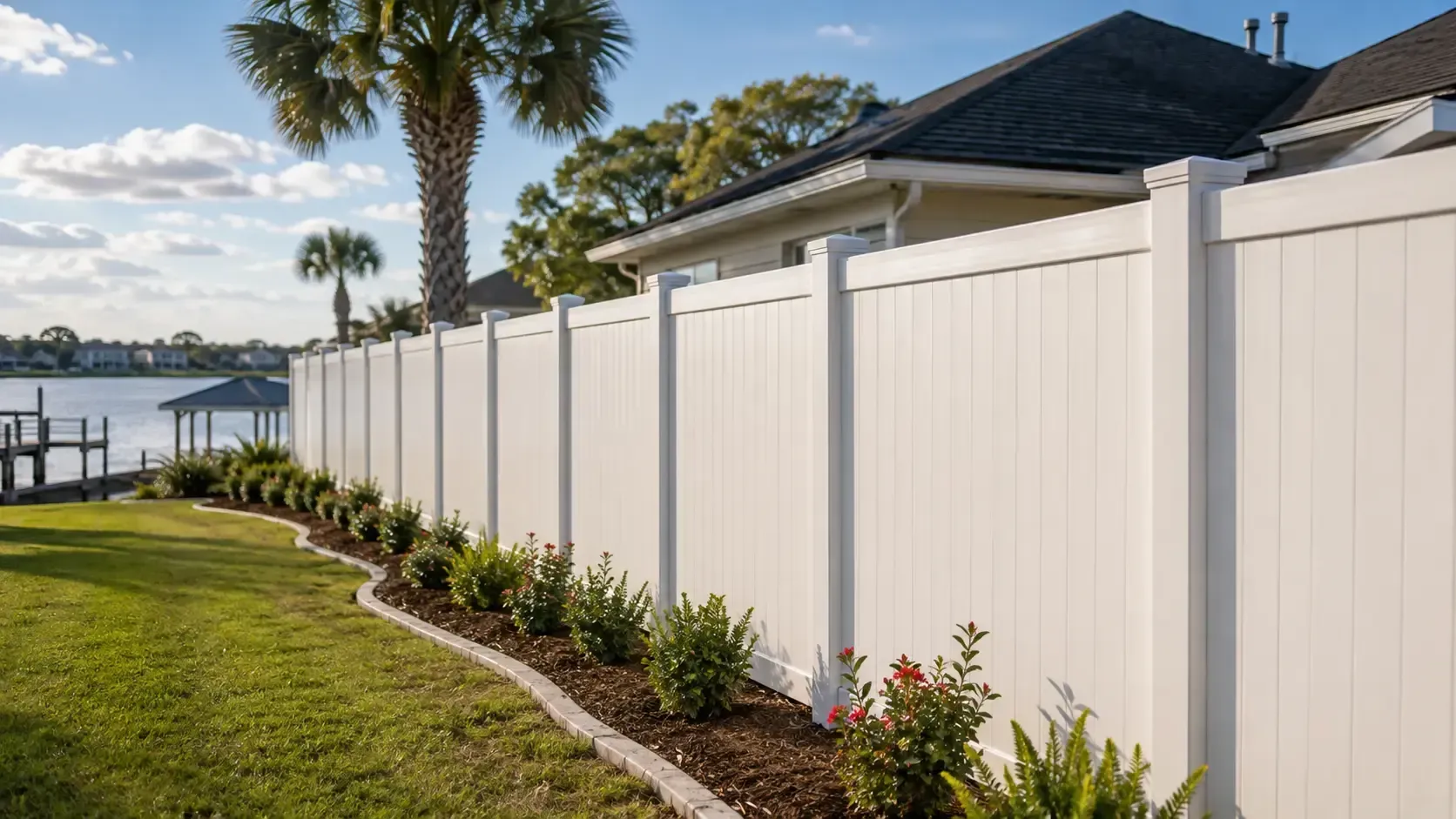
A privacy fence is designed to block sightlines from adjacent properties or public spaces, with no meaningful gaps between boards or panels. That distinction matters more than it sounds. A six-foot aluminum ornamental fence is tall, but it's open by design. You can see straight through it, which means your neighbor can too. Height doesn't create privacy when the fence structure itself is transparent.
A true privacy fence with solid tongue-and-groove vinyl panels or tightly fitted wood boards does what no open-style fence can replicate: it creates visual separation from neighbors, street traffic, and adjacent commercial activity. Solid panels also absorb and deflect sound in ways that open fencing can't, which matters if you're near a busy road or a commercial property. The result is an outdoor space that actually feels like yours rather than just technically bounded.
If you're weighing options, the expert fence contractor page covers what Martin's Seamless Gutters & Fencing offers and why each material is specified the way it is.
The Material Decision: What Each Option Actually Costs You
Every material has a legitimate use case. Here's the honest breakdown.
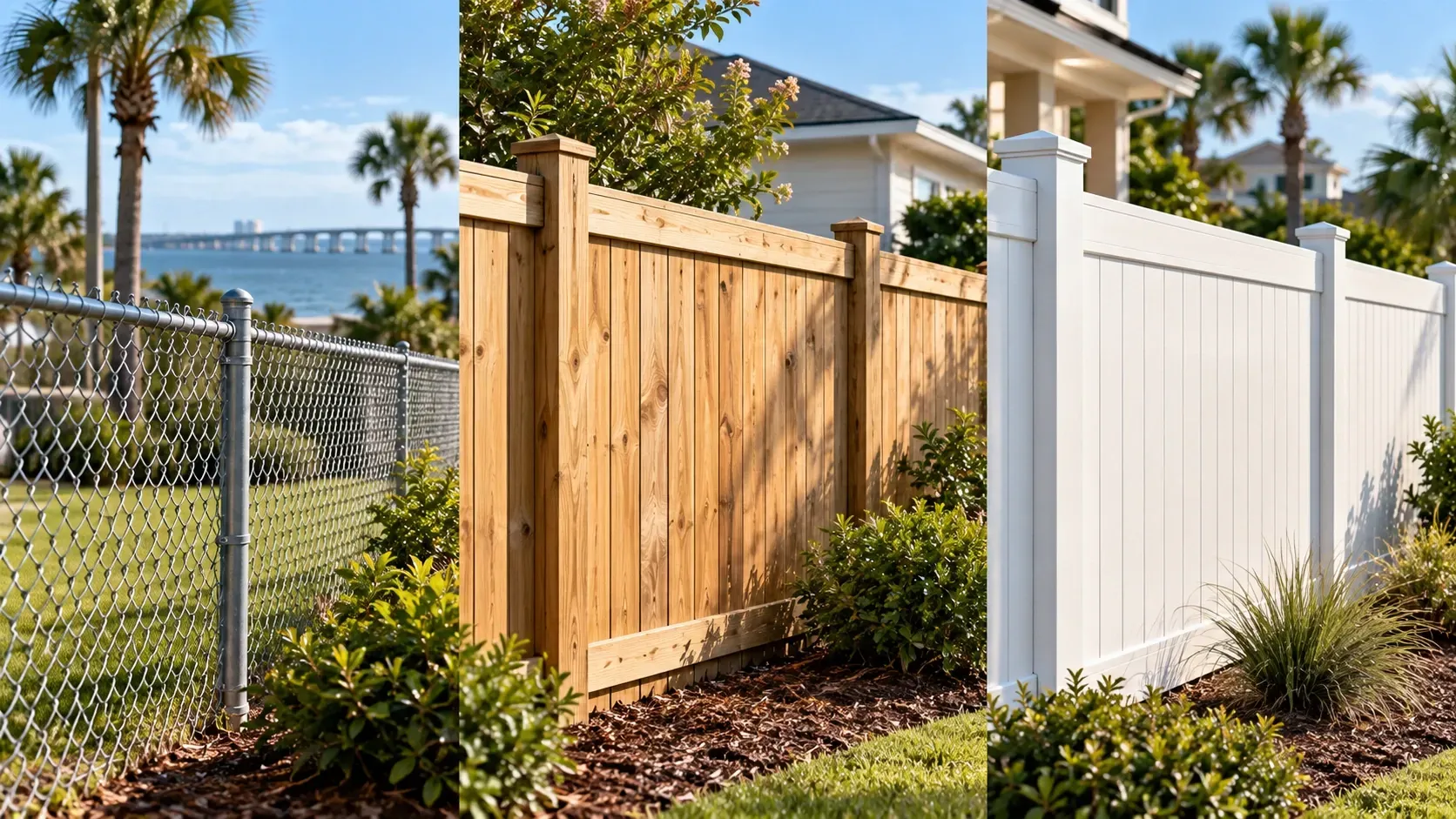
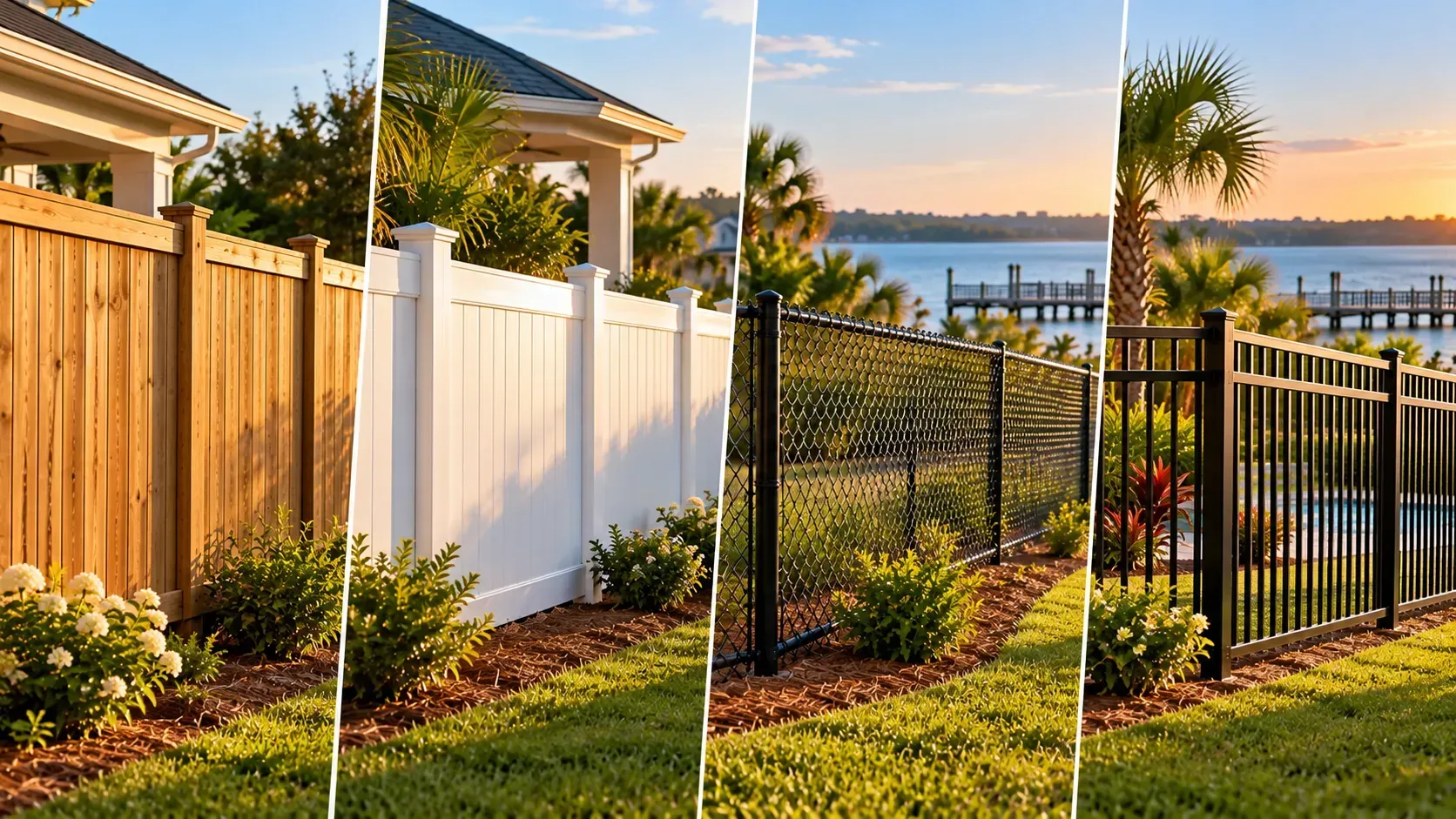
| Material | Privacy Level | Maintenance Demand | Gulf Coast Durability | Best Application |
|---|---|---|---|---|
| Wood (pine or cedar) | Full | High, ongoing | Variable, depends heavily on installation quality and upkeep | Budget installs, natural aesthetic, shorter time horizons |
| Vinyl | Full | Very low | Strong, resists moisture and humidity | Long-term residential value, low-maintenance preference |
| Chain Link | None | Very low | Long-lasting | Security perimeters, pet containment, commercial applications |
| Aluminum or Ornamental | None | Low | Long-lasting | Curb appeal, pool code compliance, decorative boundaries |
| Wood-Composite | Full | Low | Good | Premium residential, HOA communities |
The column most people skip is maintenance, and in the Gulf Coast climate, that's where the real cost lives.
Wood fencing, when post bases and end grain are exposed to ground moisture and standing water, is vulnerable to rot at the base over time. This is a basic material property: wood absorbs water, and in high-humidity environments with seasonal flooding like those common across Escambia and Santa Rosa Counties, post bases in direct ground contact tend to be the first point of failure. The structural damage often develops below grade before it's visible at the fence surface. By the time a post is visibly leaning, the deterioration has typically already progressed underground.
Vinyl doesn't absorb moisture. That's not a marketing claim; it's a physical property of the material. Vinyl panels won't rot, won't support the mold growth that wood often develops in this climate, and don't require staining or sealing to maintain structural integrity. If you're deciding between wood and vinyl for a long-term installation, the maintenance gap between them in a wet, humid coastal environment is one of the most important factors to weigh honestly.
When Should You Choose Chain Link Instead?
Chain link is the most misunderstood fencing category. People treat it as the option you pick when you can't afford anything better. That framing leads to bad decisions in both directions.
Chain link is the correct choice when your actual goal is containment or perimeter security, not visual separation. A dog run, a commercial equipment yard in Cantonment or Milton, a school property boundary: these are chain link applications. Not because chain link is cheap, but because it does exactly what those situations require. It's a durable, low-maintenance physical barrier you can see through, which is actually an advantage when the goal is monitoring rather than screening.
Installing a privacy fence where chain link is the right tool wastes money. Installing chain link where you actually need privacy creates a problem no fence height can solve.
The commercial gutter and fence services page covers how these decisions play out for commercial properties, where security requirements and maintenance budgets shape the right call in ways that residential projects don't.
How to Work Through the Decision for Your Specific Property
Before you pick a material, run through four variables in this order.
Start with primary function. Are you screening sightlines, containing pets or children, securing a perimeter, or improving curb appeal? Each function points toward a different material and a different installation spec. Getting this wrong at the start means everything downstream is built on a false premise.
Look at your site conditions. Sandy coastal soil typically requires deeper post setting than clay-heavy inland lots. Salt air accelerates corrosion in metal fencing. Low-lying lots with drainage challenges create conditions where vinyl or composite is the practical choice over wood. These aren't preferences. They're physical constraints that should drive the spec.
Be honest about maintenance tolerance. If you won't realistically sand, seal, and inspect a wood fence on a consistent cycle, don't install a wood fence. That's not a judgment. A material that demands more upkeep than you'll realistically give it will fail on your timeline, not its own.
Then factor in your time horizon. If you're planning to sell in a few years, the economics of your material choice look different than if you're staying for fifteen. Neither answer is wrong, but they point toward different decisions. Pretending otherwise just leads to buyer's regret.
What a Privacy Fence Won't Fix
A privacy fence is not a drainage solution. This matters more in Northwest Florida than most homeowners expect.
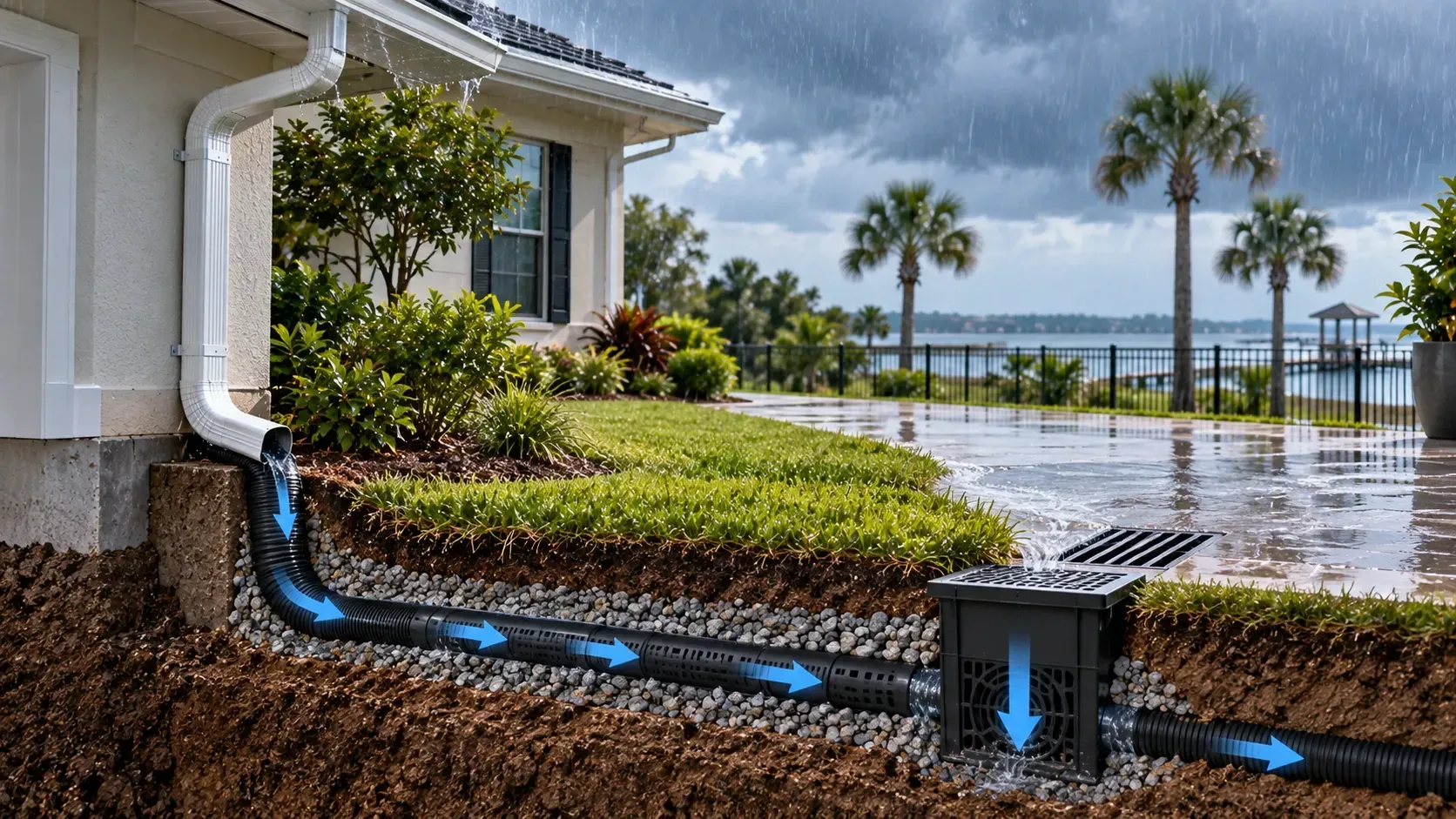
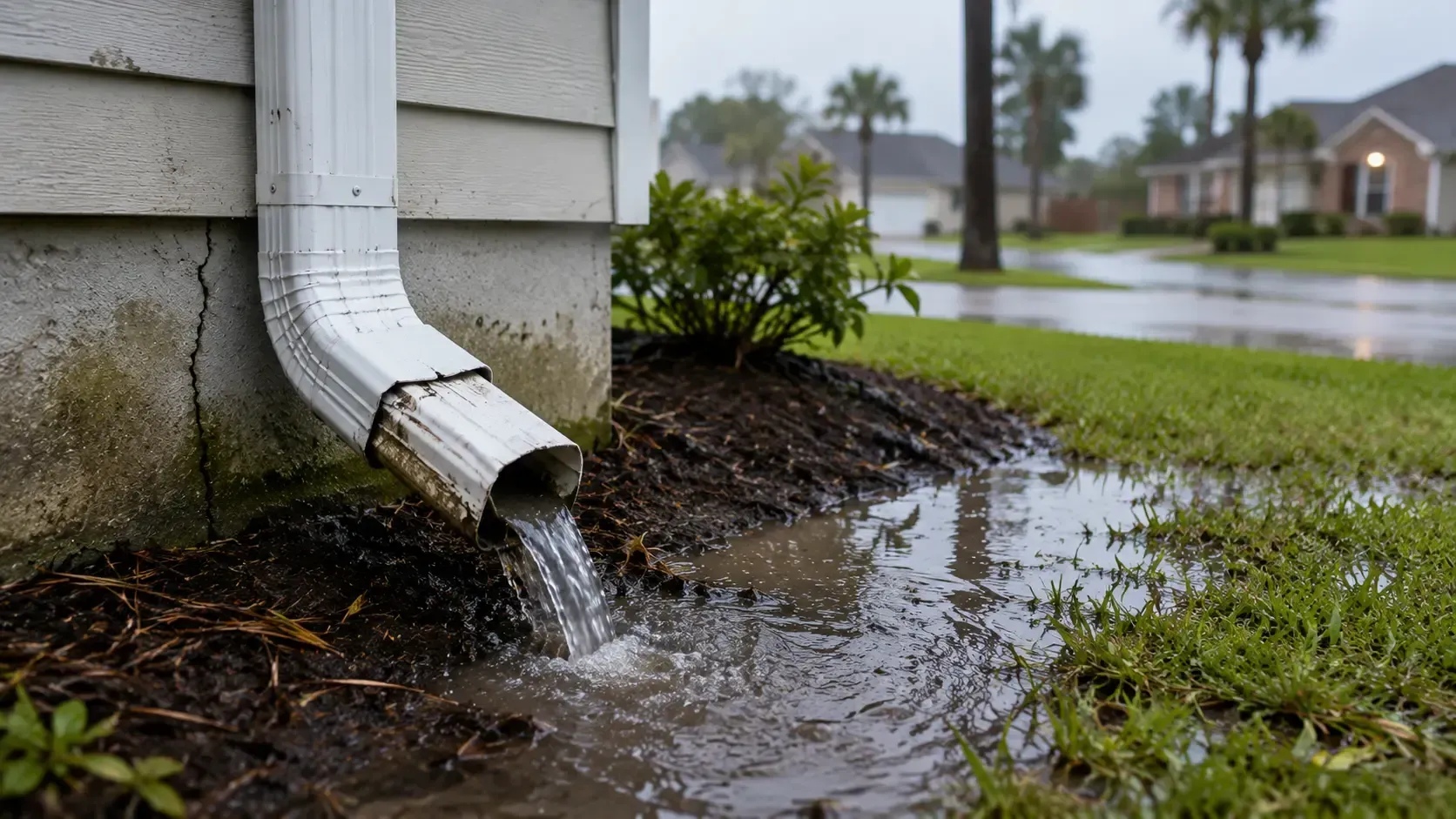
A solid fence line can redirect surface water runoff in ways that pool against your foundation or your neighbor's. On lots in Pace, Beulah, or anywhere with a notable grade change, installing a fence without accounting for existing drainage patterns can create a water problem where none existed before. This is why Martin's Seamless Gutters & Fencing approaches fence projects with the same property-level thinking they bring to drainage work. A fence changes how water moves across a lot, and that's not a secondary concern.
A privacy fence also won't resolve a property line dispute. If you're not certain where your lot ends, get that confirmed before installation begins.
And a fence won't substitute for a retaining wall on a sloped lot. If grade is the issue, the grade has to be addressed first.
Acting vs. Waiting: What the Decision Really Costs
| Scenario | What Happens |
|---|---|
| Professional installation with correct material and post spec | Fence performs as intended, post bases hold through wet seasons, maintenance requirements stay low |
| Delaying the project another season | The sightline problem, containment gap, or drainage issue continues without resolution |
| DIY post setting in Gulf Coast sandy soil | Posts tend to lean within a few seasons; fixing a leaning post means pulling it and starting over from scratch |
| Using an unqualified installer who skips footing depth | Visible panels look fine initially; below-grade deterioration or lean develops before anyone notices |
The real cost of the wrong fence isn't the purchase price. It's the replacement cycle you didn't plan for. A fence that fails because the material was wrong for this climate, or because post setting didn't account for sandy soil and seasonal flooding, costs more across its life than getting it right the first time.
Martin's Seamless Gutters & Fencing has been doing this work since 2004. Every project starts with a free estimate that accounts for your actual site conditions, not a generic quote built from square footage alone. Installations are backed with a lifetime warranty on materials, which is only possible because the material and installation method are matched to the real conditions of the property. Military, first responder, and senior discounts are available.
To understand the full approach before you call, the why choose us page explains how the process works and what to expect from start to finish.
Ready for a real recommendation for your property? Contact Martin's Seamless Gutters & Fencing to schedule your free estimate across Pensacola, Milton, Navarre, Pace, Gulf Breeze, Cantonment, and throughout Baldwin County, Alabama.
Frequently Asked Questions
How tall does a privacy fence need to be to actually block sightlines from a neighbor's yard?
Six feet is the standard residential height and handles most single-story situations. If your neighbor has a two-story home or an elevated deck, eight feet or more may be needed for complete visual screening. The grade difference between your lots matters too. If a neighbor's yard sits noticeably higher than yours, your fence accomplishes less from their perspective regardless of its height, and that's a site condition worth discussing before you settle on a spec.
Does vinyl fencing hold up to hurricanes and high winds in the Pensacola area?
Vinyl panels are engineered to flex under wind load rather than resist it rigidly, which works in their favor during high-wind events. The more critical factor is the post-to-ground connection. Properly set posts with adequate concrete footing depth determine whether a fence survives a major storm. An installer who doesn't account for local wind load requirements is skipping a step that will cost you after the next named storm.
What's the real maintenance difference between wood and vinyl in this climate?
Wood fencing in Northwest Florida needs cleaning, staining or sealing, and regular inspection for rot and insect damage. Skip that cycle and you're shortening the fence's lifespan faster than the material alone would dictate. Vinyl needs washing when it looks dirty and occasional inspection of post caps and panel locks. The difference comes down to material properties: vinyl doesn't absorb moisture, so the rot and mold pathways that shorten wood's lifespan in high-humidity environments simply don't apply.
Can I save money by installing a privacy fence myself?
Post setting is where most DIY fence projects fail in Gulf Coast conditions. Posts that aren't set deep enough with proper concrete footings in sandy soil will lean within a few seasons, particularly after a wet stretch. The visible panels above ground are the straightforward part. The below-grade work is where professional installation earns its cost, because a leaning fence can't be fixed without pulling the posts and starting over entirely.
Does a privacy fence increase property value?
A well-installed privacy fence in good condition adds value in markets where outdoor living space matters to buyers, which describes most of Northwest Florida. A fence in poor condition or mismatched to the neighborhood's aesthetic can work against you at sale. The condition and material matter more than the simple presence of a fence, which is one more reason installation quality and material selection aren't details to cut corners on.
How do HOA rules in the Pensacola area affect what fence I can install?
HOA restrictions vary significantly by community and can govern height, material, color, and which side of the fence faces outward. Some communities in Santa Rosa and Okaloosa Counties prohibit wood entirely in favor of vinyl or aluminum. Always confirm your HOA's fence requirements before getting an estimate. A contractor who doesn't ask about HOA rules before quoting is not doing you a favor.
What's the difference between a privacy fence and a semi-privacy fence?
A privacy fence has no gaps between boards or panels, blocking sightlines completely. A semi-privacy fence uses spaced pickets or lattice tops that allow partial visibility and airflow. Semi-privacy fencing is a legitimate choice when you want to define a boundary with some screening but not full enclosure, or when local wind load concerns make solid panels a structural consideration. It won't give you the complete separation of a solid panel fence, but it's not a compromise if partial screening is genuinely what your situation calls for.
About the Author
Patrick Martin is the owner of Martin's Seamless Gutters & Fencing, a family-operated business serving residential and commercial customers across Northwest Florida and the Gulf Coast since 2004. With more than 20 years of hands-on experience in seamless gutter systems, drainage solutions, and fencing installations, he specializes in matching durable materials and proven installation methods to the specific demands of the Gulf Coast environment. Martin's Seamless Gutters & Fencing serves 14-plus locations across Florida and Alabama, offering lifetime warranty backing on materials and free estimates for every project.