When to Act and When to Wait: Timing Decisions for Seamless Gutters in Pensacola
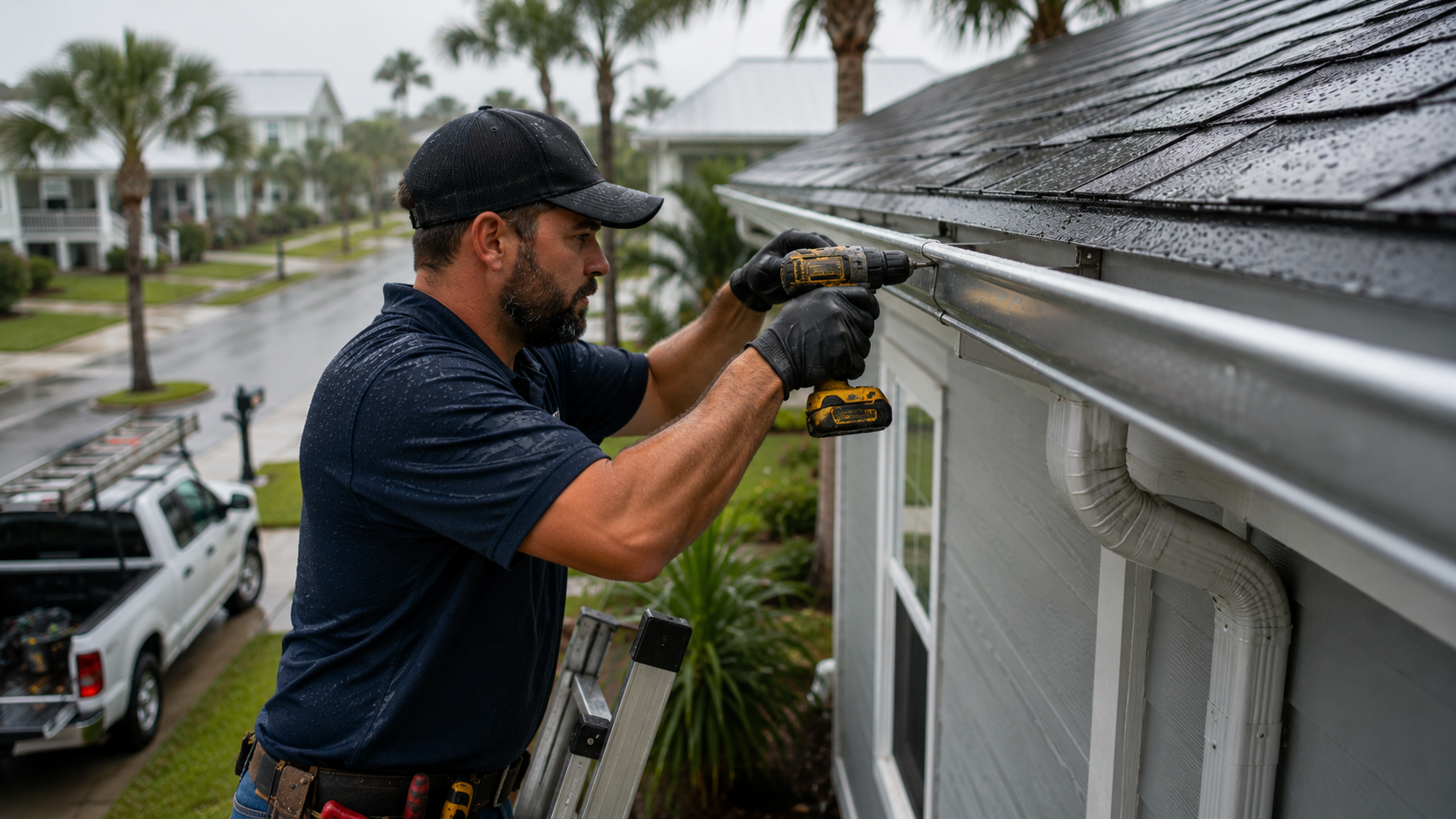
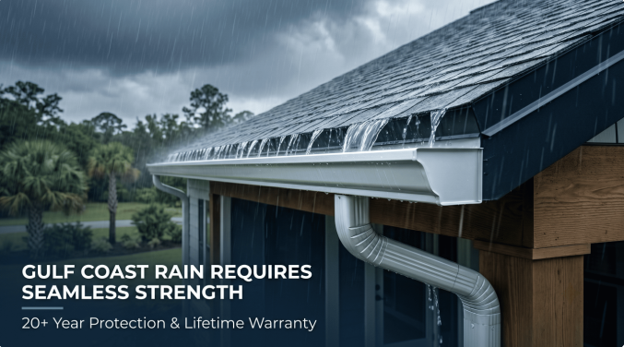
The Gulf Coast doesn't give you much warning. One afternoon thunderstorm can drop two inches of rain in under an hour, and if your gutters aren't handling that volume correctly, the water goes somewhere you don't want it.
Knowing when to call a contractor and when to hold off isn't just about saving money. It's about understanding what the signals actually mean before a small problem becomes a structural one.
The wrong call in either direction costs you. Acting too late means water damage to fascia, soffits, and foundation. Acting without the right information means paying for repairs that don't address the real failure point.
Direct Answer
The right time to act on seamless gutters in Pensacola is when you see standing water near your foundation, visible sagging or separation at joints, paint peeling on fascia boards, or overflow during moderate rain. Waiting through a Gulf Coast storm season with a compromised system isn't a neutral decision. It's an active choice to absorb the repair costs that follow.
Key Takeaways
- Overflow during moderate rain is a stronger warning sign than overflow during a hurricane-level event
- Seamless gutters eliminate the joint failures that sectional systems develop over time in Florida's heat and humidity
- Foundation erosion and fascia rot are the two most expensive downstream consequences of delayed gutter repair
- Pensacola's rainfall intensity, not annual volume alone, is what overwhelms undersized or damaged systems
- Waiting until visible damage appears inside the home means the exterior failure has already been underway for months
What Makes Pensacola's Rainfall Different From the Rest of the Country?
A gutter system that works fine in Tennessee can be completely overwhelmed in Pensacola.
The difference isn't just total annual rainfall. It's intensity. Pensacola regularly receives rainfall at rates that exceed what most standard gutter profiles are sized to handle, especially when debris accumulation reduces effective capacity. The National Weather Service has documented Pensacola as one of the wettest cities in the continental United States by annual precipitation, with a significant portion of that arriving in concentrated summer storm events.
Standard 4-inch K-style gutters, common on homes built before 2000, were not sized for this region's peak flow rates. The real problem isn't that gutters fail here. It's that most gutters installed in this region were never built for it.
When you're evaluating whether your system needs attention, the question isn't "did it overflow during the last hurricane?" It's "did it overflow during an ordinary afternoon storm?" That second scenario is the diagnostic one.
The drainage solutions available for Gulf Coast properties go beyond the gutter itself. Downspout placement, grading, and supplemental systems all interact with how well your gutters perform under pressure.
What Are the Actual Warning Signs Worth Acting On?
Not every gutter issue demands immediate replacement. Some signals mean repair. Some mean replacement. Knowing the difference saves you from both under-responding and over-spending.
Signs that mean act now:
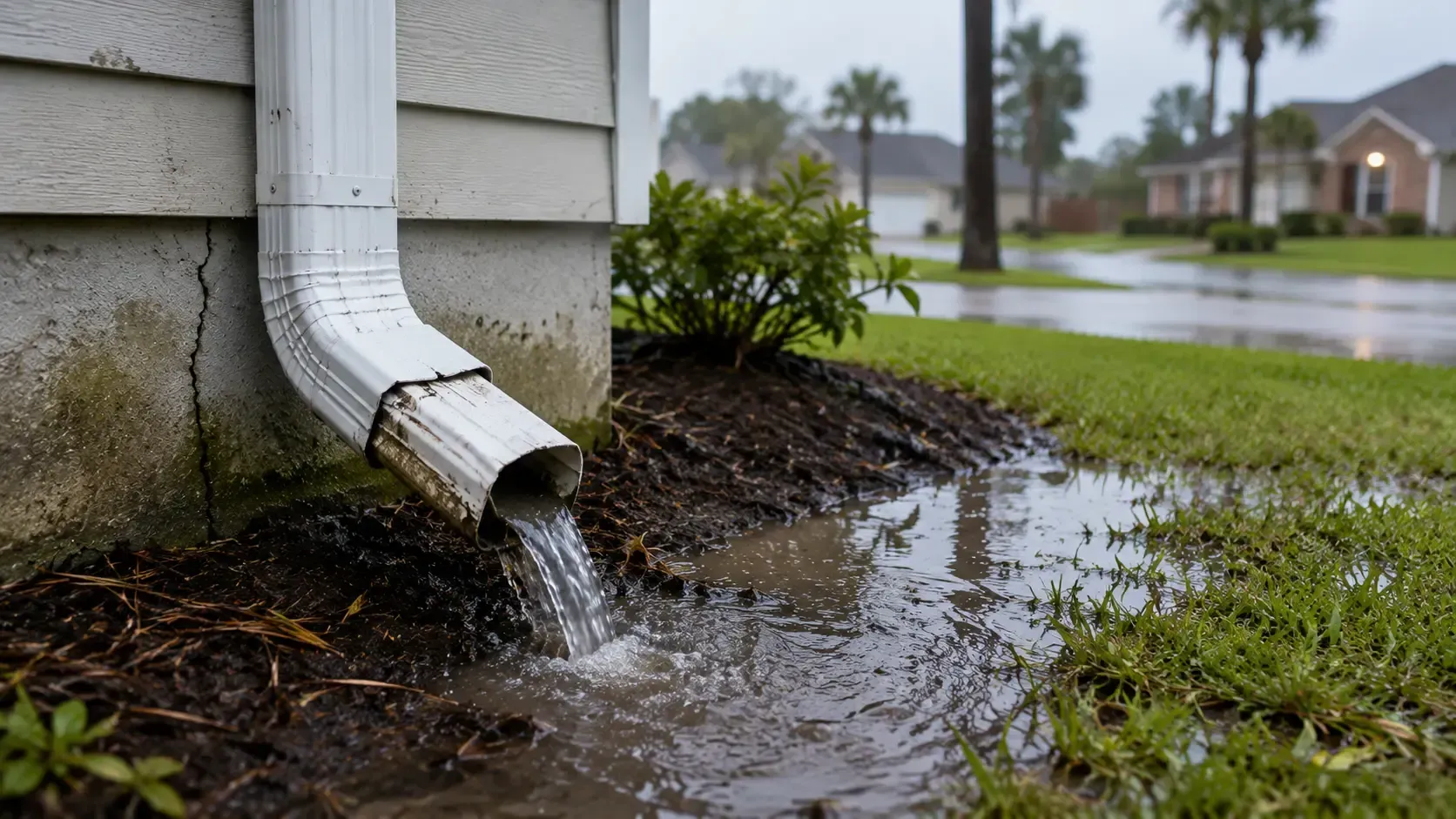
- Water pooling within three feet of your foundation after rain
- Gutters pulling away from the fascia or visibly sagging between hangers
- Paint peeling or staining on exterior walls directly below gutters
- Gutters overflowing during moderate rain (not just severe storms)
- Visible rust streaks, cracks, or holes in the gutter channel
- Mildew or rot on fascia boards behind the gutter
Signs that mean monitor and schedule soon:
- Minor debris buildup without overflow
- Slow drainage that clears within 30 minutes after rain stops
- Slight discoloration on exterior paint without active peeling
Signs that don't require immediate action:
- Leaf accumulation that hasn't caused overflow yet
- Surface oxidation on aluminum without structural compromise
The distinction matters because misreading a "monitor" situation as a "wait" situation is exactly how deferred maintenance turns into a $4,000 fascia replacement. The full range of gutter services covers both repair and full replacement depending on what the assessment finds.
The Gulf Coast Timing Framework: A Decision Tool for Acting vs. Waiting
The Gulf Coast Timing Framework is a decision structure that maps gutter warning signals against two variables: storm season proximity and visible damage severity. Use it when you're unsure whether to schedule now or watch for another season.
| Situation | Storm Season Proximity | Recommended Action |
|---|---|---|
| Active overflow during moderate rain | Any time of year | Act immediately |
| Fascia rot or paint peeling at gutter line | Pre-storm season | Act before next rain cycle |
| Sagging or separated sections | Pre-storm season | Schedule repair within 2 weeks |
| Minor debris, no overflow | Post-storm season | Schedule cleaning, monitor |
| Sectional gutters 10+ years old | Pre-storm season | Schedule assessment now |
| No visible issues, gutters under 5 years old | Any time | Annual inspection only |
Use this framework when: you're deciding whether to call before storm season or after it.
Don't use it when: you've already seen water intrusion inside the home. At that point, the exterior system has failed and the question is damage scope, not timing.
Why Do Homeowners Keep Waiting Even When They Know Something's Wrong?
The most expensive gutter decision most Pensacola homeowners make is the one they keep not making.
There's a specific behavioral pattern here. Gutters fail gradually. The first overflow seems like an anomaly. The second one happens during a severe storm, so it gets attributed to the storm. By the time the third event occurs, the fascia behind the gutter has already been absorbing moisture for two seasons.
This isn't about ignoring the problem. It's about the way gradual failures don't trigger the same urgency as sudden ones. A burst pipe demands action. A slow leak at the gutter joint gets noted and forgotten.
The root cause is what you could call the "threshold delay": the gap between when a system starts failing and when the failure becomes undeniable. In Pensacola's climate, that gap is shorter than homeowners expect because humidity accelerates wood rot and the storm season doesn't give you recovery time between events.
A common scenario: a homeowner notices overflow during a July storm, assumes it's storm-related, and decides to address it in the fall. By fall, the fascia board behind the gutter has softened enough that the hanger screws no longer hold. What was a $300 repair is now a $1,200 fascia and gutter replacement.
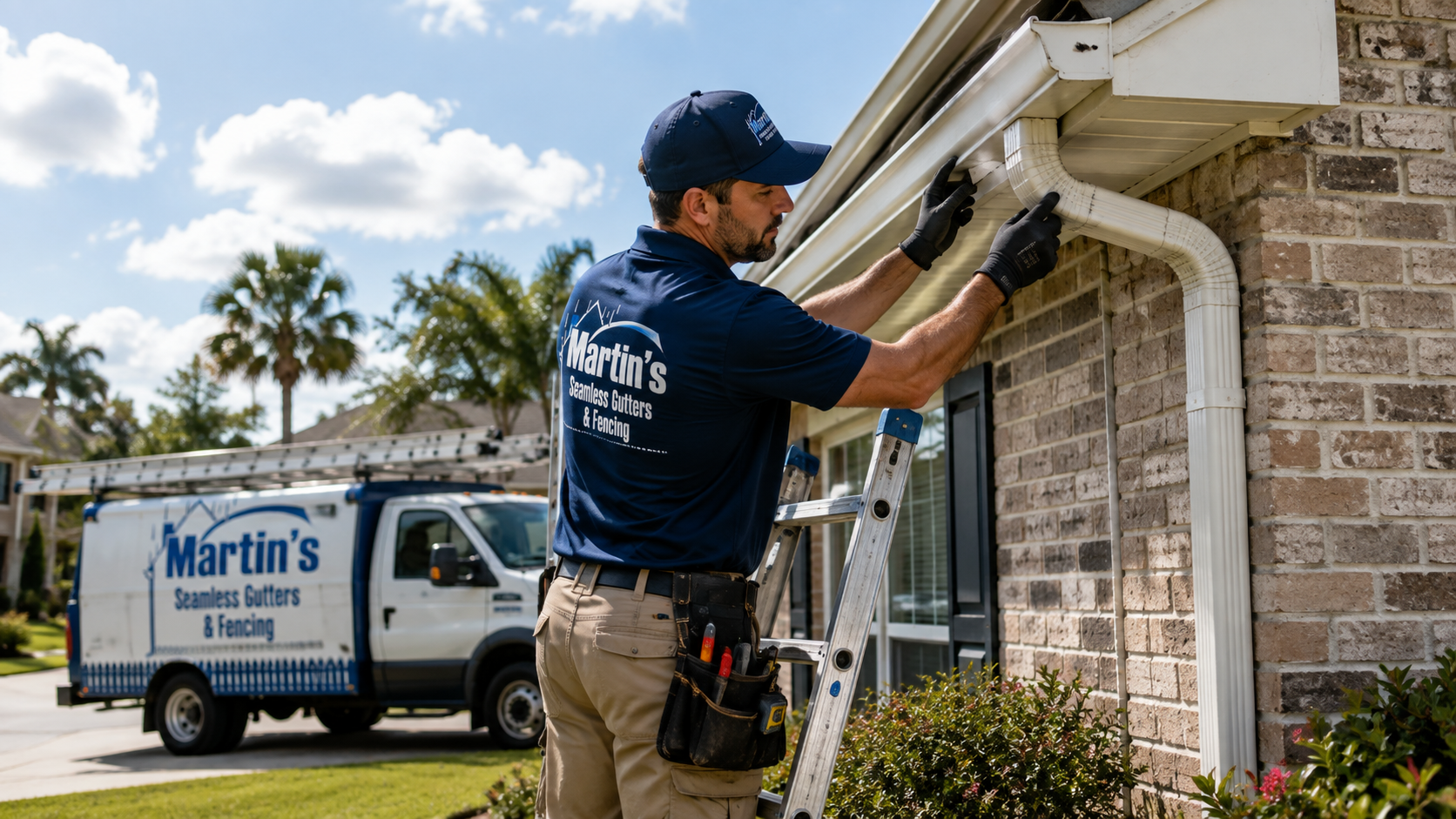
The installation process for seamless gutters eliminates the joint failures that sectional systems develop, but timing the installation before damage compounds is what makes the investment worthwhile.
If you're already seeing the early signals, don't wait for the storm season to confirm them.
Contact Martin's Seamless Gutters & Fencing to schedule an assessment before the next rain cycle.
What's the Real Difference Between Seamless and Sectional Gutters in This Climate?
Seamless gutters are gutter systems fabricated in a single continuous run from one piece of material, eliminating the seams where sectional gutters connect every 10 to 12 feet.
That definition matters here because seams are where sectional gutters fail. The joints are sealed with caulk or gaskets that expand and contract with temperature changes. In Northwest Florida, where summer heat pushes metal to its limits and afternoon storms drop the temperature rapidly, those joints cycle through stress repeatedly. Practitioners in this region consistently report that joint failure is the primary cause of gutter leaks in older sectional systems.
Seamless systems remove that failure point entirely. The seamless gutter options available in Pensacola are custom-fabricated on-site to fit your roofline exactly, which also means fewer gaps where water can escape at the fascia connection.
The tradeoff is honest: seamless gutters cost more upfront than sectional systems. But the comparison that matters isn't seamless vs. sectional. It's seamless gutters vs. the cumulative repair cost of a sectional system that needs resealing every few years in a high-rainfall climate.
For properties in Gulf Breeze, Navarre, and Milton, where salt air adds corrosion pressure on top of rainfall stress, the durability gap between seamless and sectional systems is even more pronounced.
What Happens If You Wait Too Long?
Water damage is the slow emergency most Gulf Coast property owners don't take seriously until it's already expensive.
When gutters fail to move water away from the structure, the damage sequence is predictable. Water backs up behind the gutter and saturates the fascia board. Fascia rot spreads to the soffit. Once the soffit is compromised, moisture enters the attic space. At that point, you're no longer talking about a gutter repair. You're talking about a roofline repair that can run several times the cost of the original gutter installation.
Foundation erosion follows a parallel track. Overflow that consistently drops water at the base of the foundation wall creates hydrostatic pressure over time. In sandy Gulf Coast soils, that erosion happens faster than it would in denser soil types.
Leaf guards and proper downspout placement extend the effective life of any gutter system by keeping flow capacity at its designed level. But neither solves a system that's already structurally compromised.
Who Should Think Carefully Before Assuming They Can Wait?
This matters most when the stakes are higher than a single-family home repair budget.
Commercial property managers and real estate investors face a different calculus. A gutter failure on a rental property doesn't just create a repair cost. It creates a liability exposure and a tenant relations problem. The commercial gutter and fencing services available through Martin's Seamless Gutters & Fencing address multi-structure properties where a single assessment can catch system-wide issues before they become property-wide problems.
Homeowners preparing to sell should also treat gutter condition as a pre-listing issue, not a buyer's problem. Visible gutter failure shows up in home inspections and tends to get negotiated down at a multiple of its actual repair cost.
The one situation where waiting genuinely makes sense: if your system is performing correctly, less than five years old, and showing no warning signs, an annual inspection is all you need. Don't replace what isn't failing. But don't convince yourself that "no visible damage inside the house" means the exterior system is fine.
Frequently Asked Questions
How do I know if my gutters need repair or full replacement?
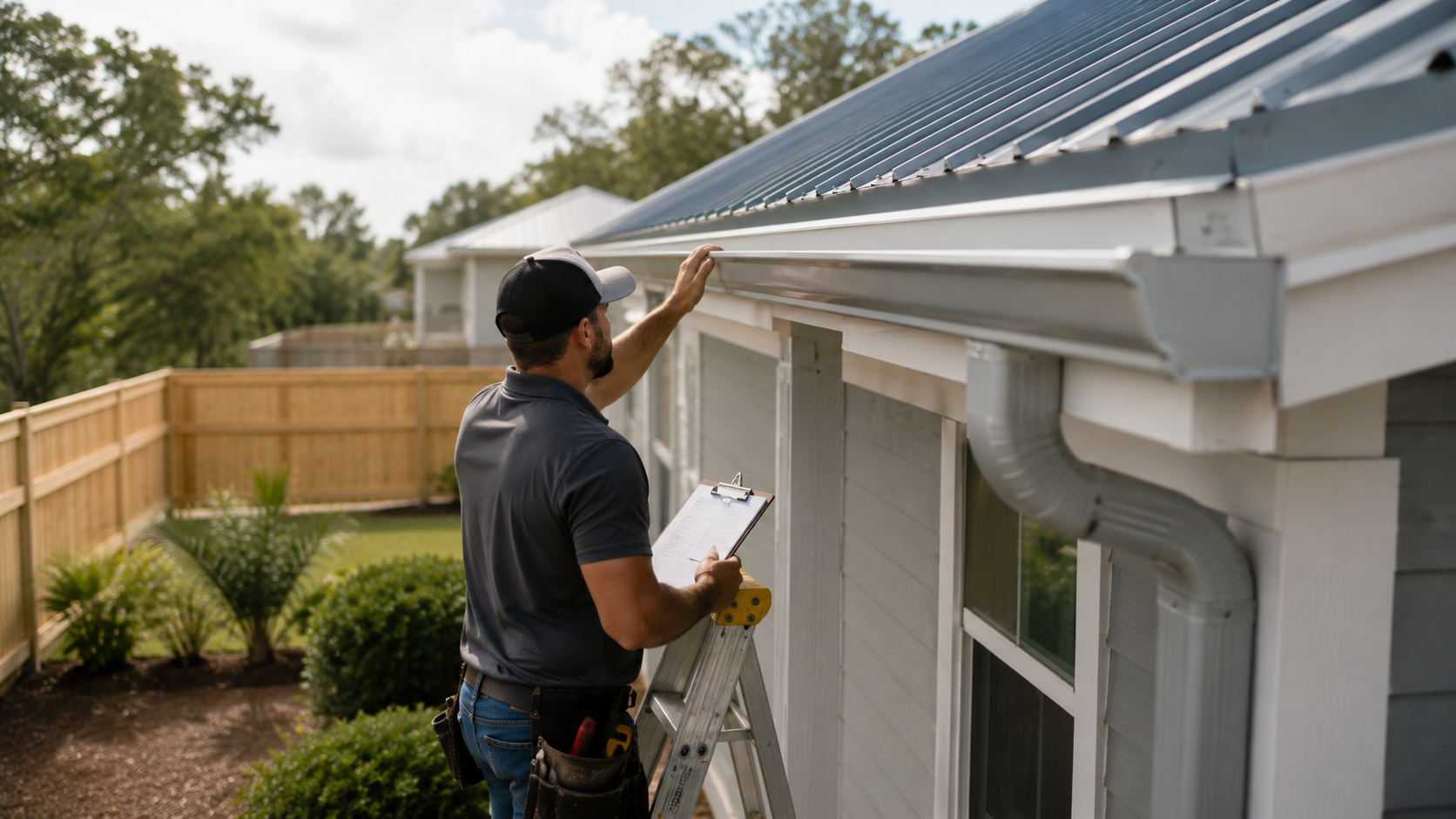
If the gutter channel itself is cracked, rusted through, or sagging because the fascia behind it has rotted, replacement is usually the right call. Repairs make sense when the structure is sound but a section has separated or a joint has failed. A professional assessment takes about 30 minutes and gives you a clear answer before you commit to either option.
How long does seamless gutter installation actually take?
For a typical single-family home, installation is usually completed in one day. The gutters are fabricated on-site from a roll of aluminum or steel, cut to the exact length of each run, and installed the same visit. There's no waiting on pre-cut sections to arrive.
Do I really need gutters if my roof has a wide overhang?
Wide overhangs reduce splash-back but don't eliminate the need for gutters in Pensacola's rainfall environment. The volume of water coming off a roof during a Gulf Coast storm exceeds what any overhang can redirect away from the foundation. Without gutters, that water drops directly at the base of the structure on every side.
How often should gutters be cleaned in Northwest Florida?
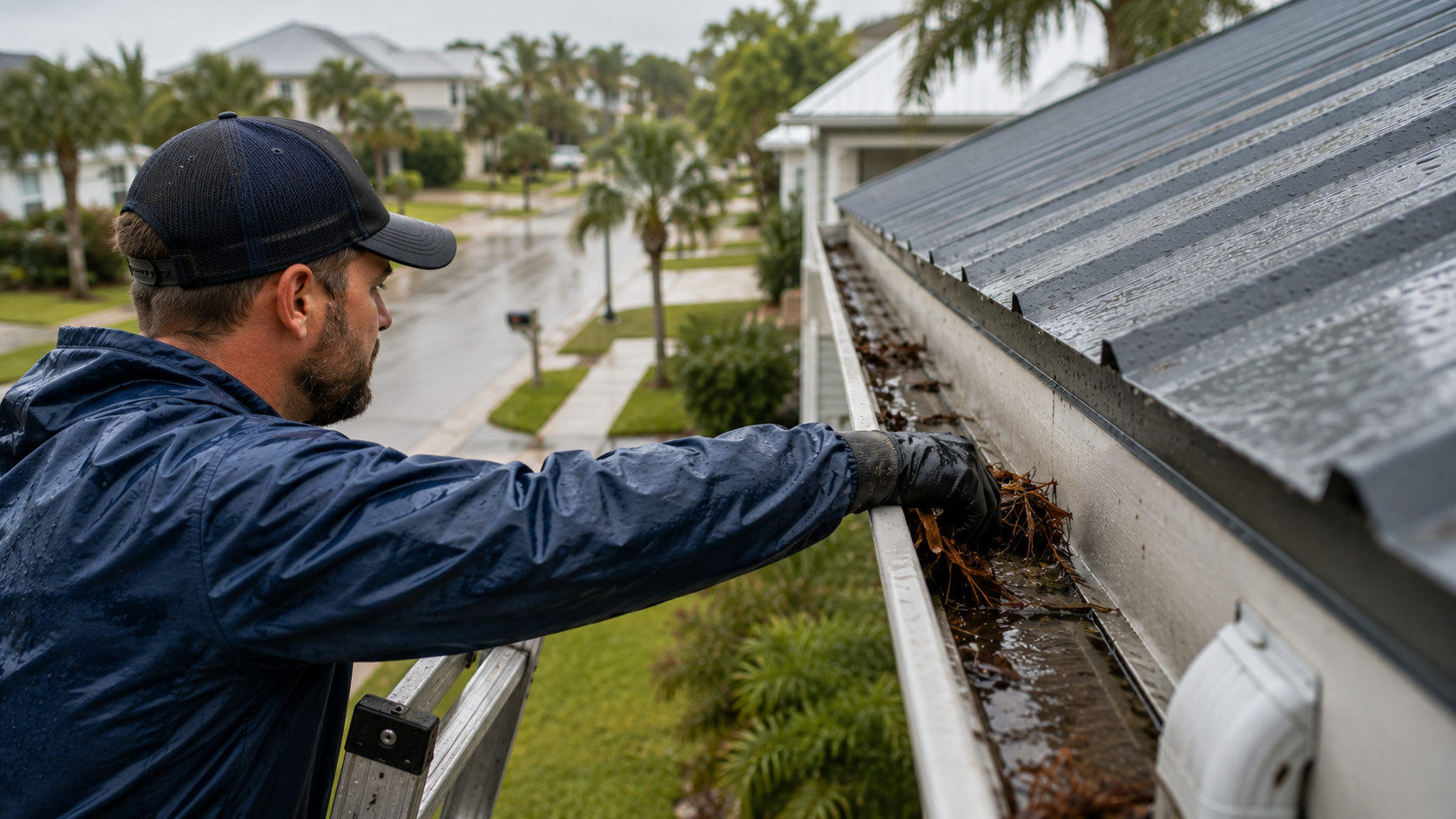
Twice a year is the standard recommendation for most properties, with one cleaning in late spring before storm season and one in late fall after pine needle and leaf drop. Properties under heavy tree cover may need quarterly attention. Leaf guard systems reduce cleaning frequency significantly.
What's the difference between a French drain and a downspout extension?
A downspout extension moves water a few feet away from the foundation. A French drain is a subsurface drainage system that collects and redirects water across a larger area. They solve different problems. If your yard has standing water after rain that isn't directly tied to gutter overflow, a French drain addresses the grading and soil absorption issue that a gutter system alone can't fix.
Are there discounts available for military families or seniors?
Martin's Seamless Gutters & Fencing offers discounts for military personnel, first responders, and senior citizens. It's worth asking when you schedule your appointment.
What gutter size is right for a Florida home?
Most Gulf Coast homes benefit from 5-inch or 6-inch K-style gutters rather than the 4-inch profiles common on older construction. The larger profile handles higher flow rates without overflowing during peak rainfall events. The right size depends on your roof pitch and drainage area, which a professional assessment will calculate specifically for your structure.
Don't let another storm season make the decision for you. If you're seeing any of the warning signs described here, the cost of waiting is higher than the cost of acting. Schedule an appointment with Martin's Seamless Gutters & Fencing and get a straight answer about what your system actually needs.
About the Author
Martin's Seamless Gutters & Fencing is a family-operated gutter and fencing company serving Northwest Florida and South Alabama since 2004. They specialize in seamless gutter installation, gutter repair, drainage solutions, and professional fence installation for residential and commercial properties across 14+ locations throughout the Gulf Coast region. Their work focuses on protecting properties from water damage through proven installation methods, top-grade materials, and reliable service backed by lifetime warranty coverage.