What Downspout Problems Actually Cost Gulf Coast Homeowners (And When Repair Is the Wrong Answer)
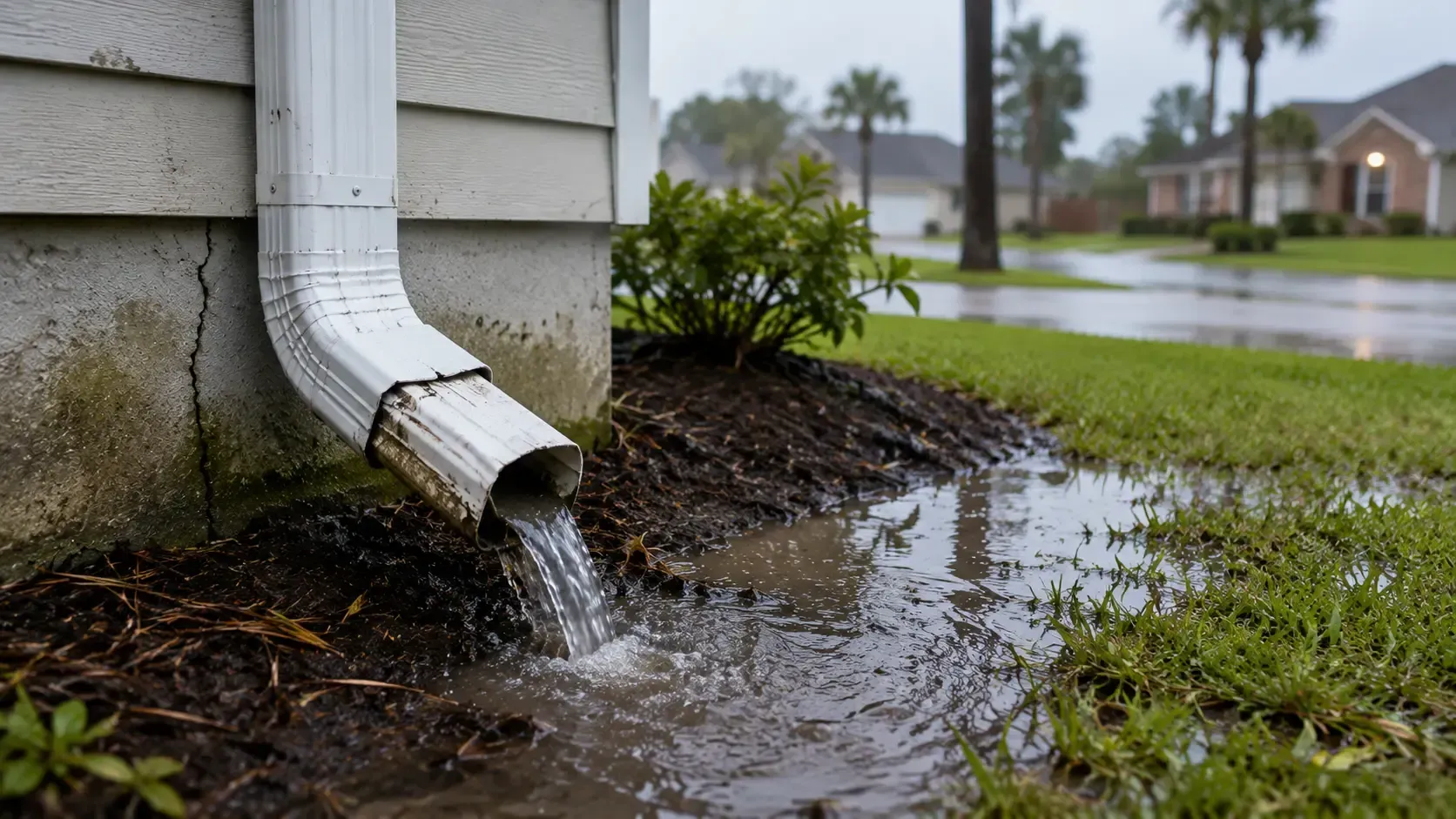
A failing downspout rarely announces itself. It just redirects every drop of roof runoff to the one place you least want water to collect: right against your foundation. Catch the problem while the hardware is still sound and the fix is often straightforward. Miss it through a few Gulf Coast storm seasons and you're dealing with something much larger than a downspout.
Key Takeaways
• Downspout failures stay invisible until secondary damage appears, at which point the repair scope has usually grown well past the downspout itself.
• Gulf Coast storms are short and intense, not steady and gradual, so a partially blocked downspout can appear fine in light rain and fail completely under a summer storm.
• Repair makes sense when hardware is structurally intact but disconnected, clogged, or angled wrong. Replacement makes sense when material is corroded, undersized, or was never routed correctly for the roof area it drains.
• Correcting a downspout stops the water source. It doesn't undo damage already done to soil, grading, or structural materials.
• A free estimate before deciding almost always changes the decision, because what's visible and what's actually failing are rarely the same thing.
Why Do Downspout Problems Stay Hidden Until They're Expensive?
The failure is quiet. A clogged or disconnected downspout doesn't spray water dramatically across the yard. It concentrates roof runoff against your foundation at ground level, where it saturates soil that wasn't built to stay wet. That moisture moves inward slowly. By the time it shows up on your walls, floor, or framing, it's already traveled through soil, concrete, or slab material to reach you.
Northwest Florida and South Alabama add a specific wrinkle. The Gulf Coast weather pattern favors short, intense storms rather than the steady, moderate rainfall more common inland. A thunderstorm can push a significant volume of water through your drainage system in a very short window. A partially blocked downspout might handle a light shower without any visible problem. That same downspout can fail completely under a true summer storm, pushing the full load of roof runoff against your foundation before the rain even stops.
That gap between the failing downspout and the visible damage is exactly why homeowners defer the problem. The soil gets a little softer. The grade shifts slightly. Water finds a new path, and that path usually runs toward the house rather than away from it. By the time someone connects a soft corner, a damp crawl space, or a cracked foundation section to the drainage system, the damage has been accumulating quietly for months. Reviewing your
downspout system before storm season is one of the lowest-cost forms of property protection available.
What Does a Failing Downspout Actually Do to a Property?
Consider a situation common on Gulf Coast properties. A downspout discharges onto a concrete splash block that's settled over time and now tilts back toward the house rather than away from it. The homeowner notices soft soil near a rear corner but hasn't connected it to the drainage system at all.
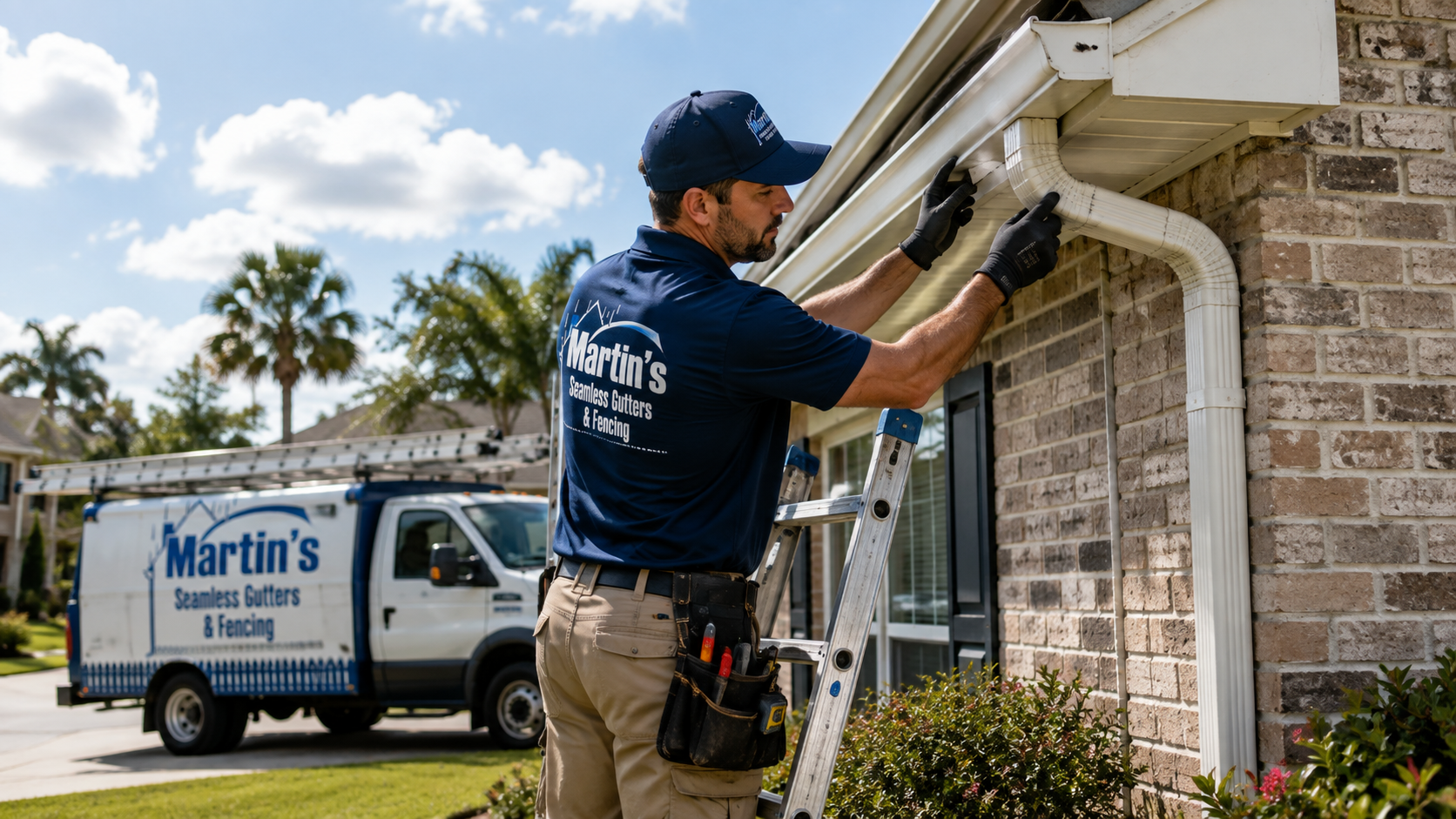
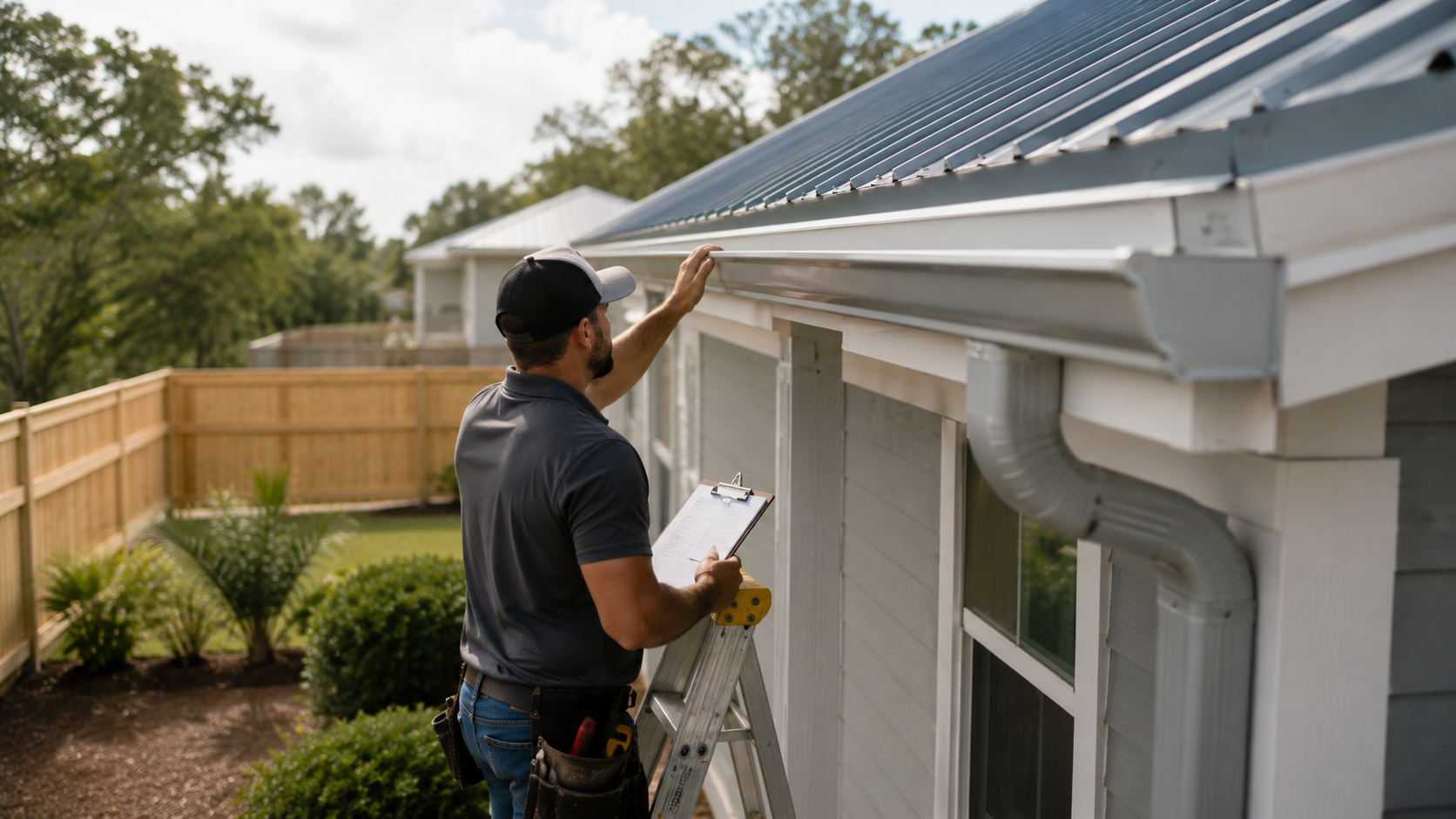
A thorough assessment in that kind of scenario might uncover the settled splash block, a partially crushed underground extension beneath it, and a cracked elbow joint where the downspout meets the underground run. Fix only the visible cracked elbow and you've spent money without solving the problem. The settled splash block is still directing water back toward the foundation after every storm.
That's the kind of thing you catch only by working these properties regularly. The cracked elbow gets noticed because it's visible. The splash block angle gets missed because it looks normal at a glance. Addressing the obvious failure while the actual cause stays in place is exactly why homeowners find themselves dealing with the same problem through the following storm season.
The full drainage path matters from the gutter outlet all the way to where water exits the property. An assessment that stops at eye level is an incomplete assessment.
Repair vs. Replacement: What Actually Drives the Right Call
Three factors determine the right decision: where the system is failing, how long water has been misdirected, and whether the original downspout was ever sized and positioned correctly for the roof area it serves.
A disconnected joint with intact hardware is a repair. A corroded or undersized downspout body is a replacement. A downspout discharging in the wrong location is a routing correction. These aren't interchangeable.
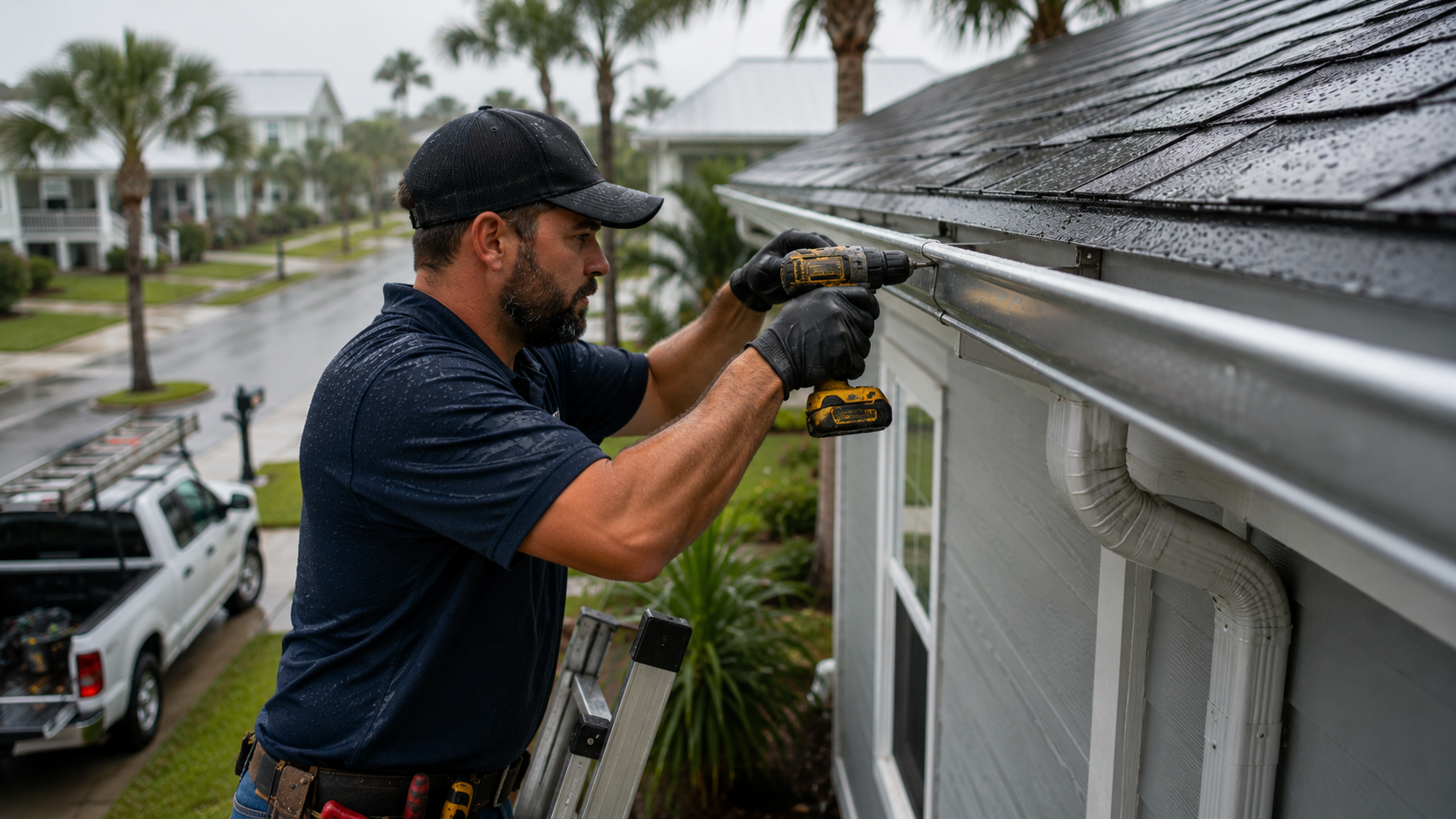
To understand why treating a replacement situation as a repair is a reliable way to pay for the same problem twice, consider a typical scenario. A homeowner has a disconnected section reattached at the joint. The repair holds in dry conditions but fails again under load during heavy rain. In cases like this, the original installation commonly used undersized hangers spaced too far apart for the weight the system carries during a real Gulf Coast storm. The joint itself isn't the problem. The hanger spacing is. Reattaching the joint without correcting the underlying issue addresses the symptom, not the cause, and the next storm confirms it.
That's why a proper assessment looks at the full run, not just the point where failure became visible.
Here's how acting with qualified help compares to waiting or applying a partial fix:
| Situation | Acting Now with Professional Help | Waiting or Using a Partial Fix |
|---|---|---|
| Disconnected joint, hardware intact | Repair stops active saturation at the source | Water keeps concentrating at the foundation with every storm |
| Clogged downspout, no structural damage | Full drainage capacity restored before storm season | Overflow continues and soil saturation worsens through summer |
| Corroded or cracked downspout body | Full replacement ends the recurring repair cycle | Repeated patches address symptoms while the root cause stays |
| Undersized for the roof area it serves | Correct-size replacement fixes the actual cause | Every storm overloads a system that was always wrong |
| Improper discharge location | Rerouting moves water away from the structure permanently | Foundation exposure continues and secondary damage compounds |
| Secondary damage already present | Full drainage correction stops the compounding cycle | Each delay allows moisture intrusion and grading shifts to worsen |
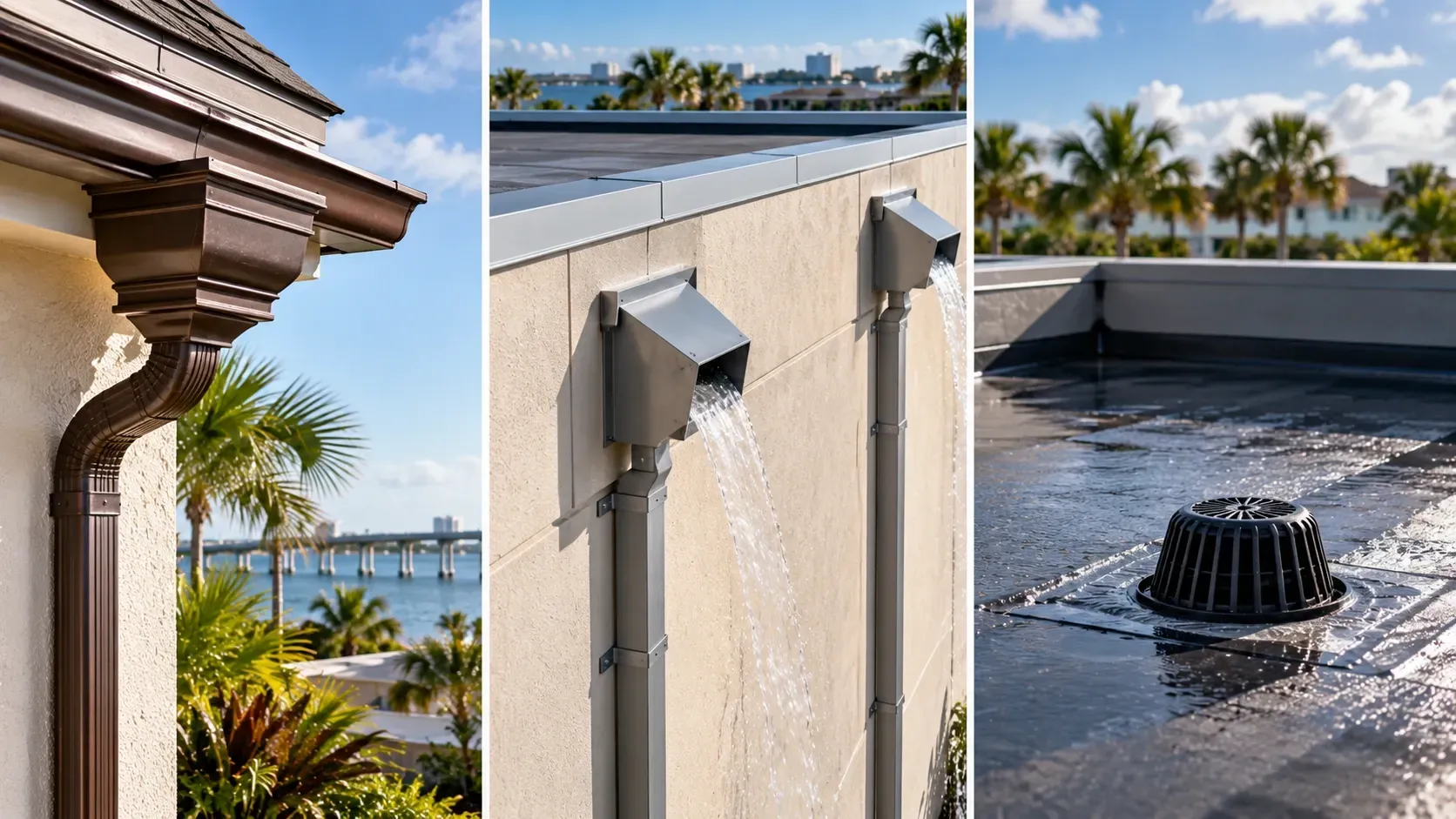
For commercial properties or buildings with complex rooflines, the assessment scope is different. The commercial gutter and drainage services page covers what those evaluations involve.
What Downspout Work Doesn't Fix
Correcting a downspout stops the source of water misdirection. It doesn't reverse damage that's already happened.
If a foundation has shifted, if there's existing moisture in a crawl space, or if landscaping grade has already settled toward the structure, those are separate problems requiring separate solutions. Correcting the downspout first is still the right move because it stops the active source. But the work downstream of that correction is its own category with its own scope.
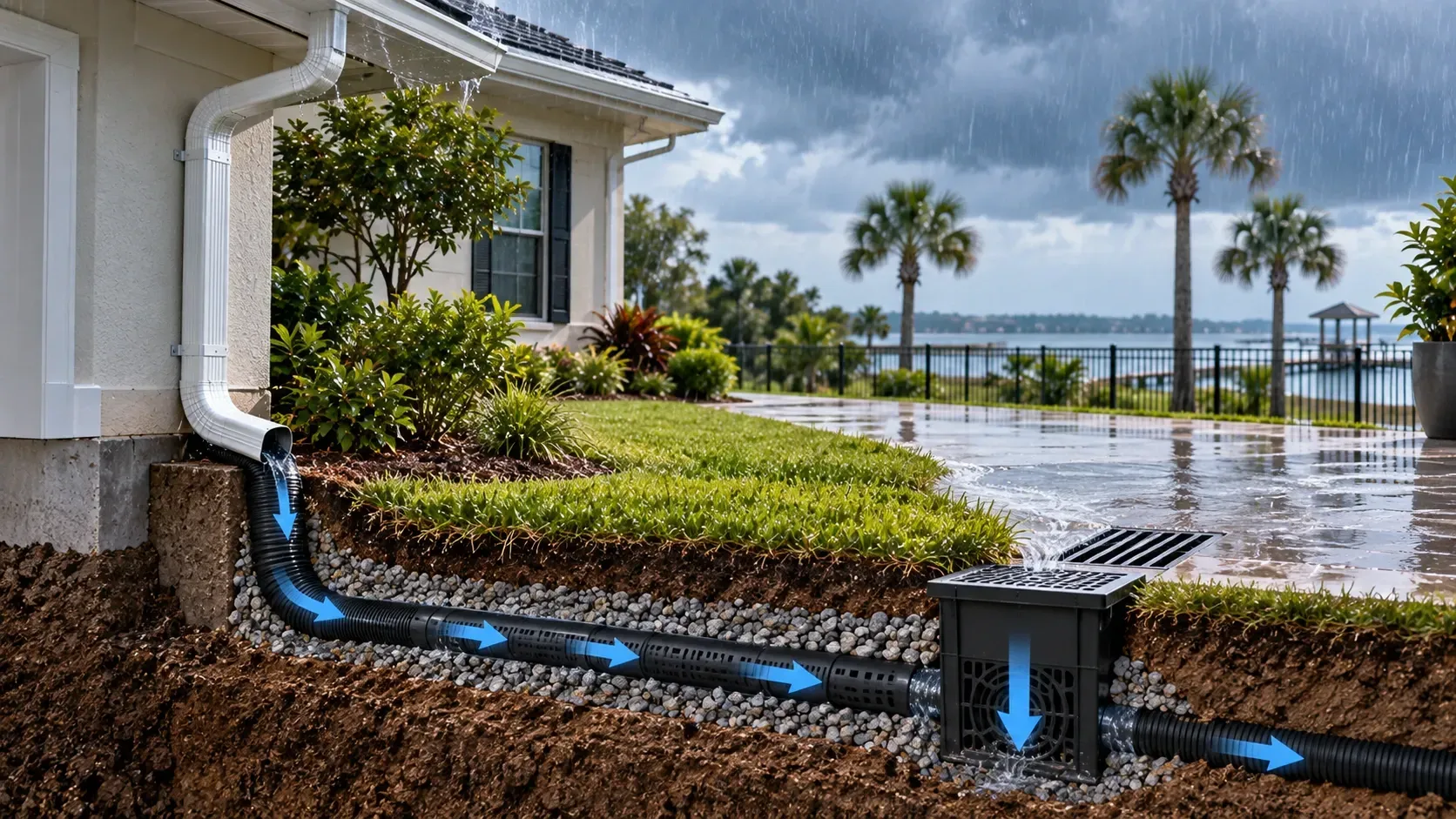
It's worth being direct about something else. Some properties in low-lying areas of Escambia or Santa Rosa County have drainage challenges that go well beyond gutters and downspouts. In those cases, a French drain system or a grate drain installation may be part of the answer. A downspout repair alone won't resolve chronic standing water or persistent soil saturation when the property-level drainage is the underlying problem.
A contractor who tells you this upfront is one worth listening to. If an estimate addresses only the downspout on a property with obvious broader drainage issues, ask what happens to the water after it exits the repaired section. That answer tells you whether the assessment was thorough or just surface-level.
7 Questions Homeowners Ask Before Deciding
How do I know if my downspout is causing a foundation problem or if something else is responsible?
The clearest indicator is the soil condition directly at the discharge point. Consistently soft, eroded, or depressed soil at that location is a strong signal the downspout is contributing. A drainage professional can assess whether the saturation pattern matches the discharge location or points to a different source, such as a grading problem or a subsurface issue.
Is it worth repairing a downspout on an older home where the gutters will probably need replacing soon?
It depends on your timeline. If you're planning a full gutter replacement within the next year or so, a targeted repair to stop active water damage makes sense as a bridge. If you're further out than that, deferring the repair means water keeps working against the foundation through every storm between now and when you act. That's a compounding cost, not a savings.
What's the difference between a downspout extension and a full reroute?
An extension shifts the discharge point a few feet further from the foundation. A reroute changes the path of the downspout itself, often running it underground to an exit point well clear of the structure. Extensions work when the discharge location just needs to move a short distance. A reroute is necessary when the entire discharge path was wrong from the start.
How long do downspouts typically last on Gulf Coast properties?
Salt air, UV exposure, and high-intensity rainfall accelerate wear compared to inland installations. Aluminum downspouts that were properly installed, correctly sized, and maintained can last 20 years or more. Downspouts in coastal zones close to salt water, or those that were undersized or improperly installed originally, often need attention sooner. Material quality at installation matters more than age alone. Martin's Seamless Gutters & Fencing works with top-rated manufacturers including Spectra, Senox, ACM, Raytec, and Geocel because the performance difference between standard and quality materials becomes clear over time in this climate.
Can I clear a clogged downspout myself, or is this a job for a professional?
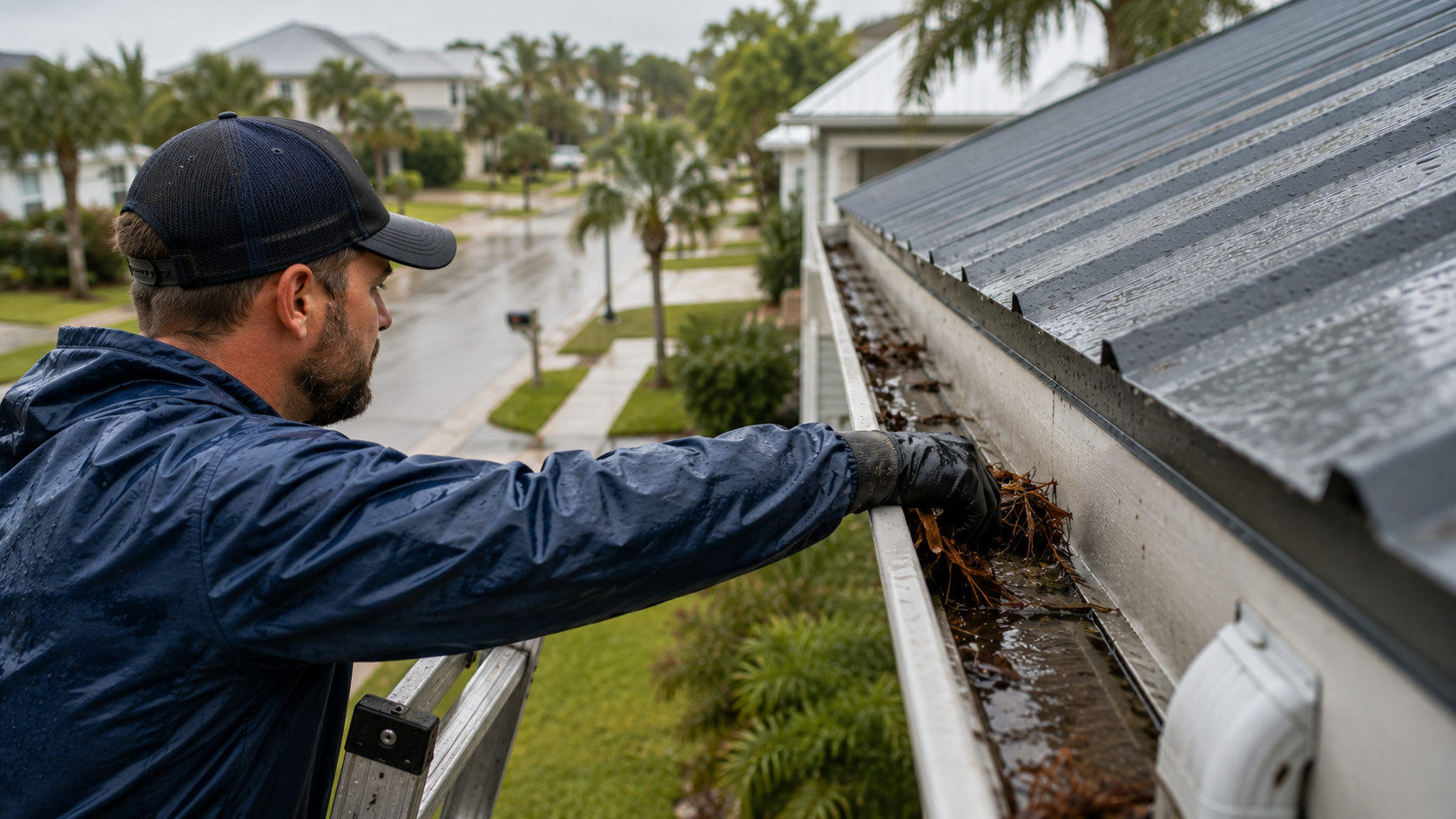
A surface clog at the top of a downspout is something many homeowners can clear with a garden hose and basic tools. A clog that's deep in the run, inside an underground extension, or one that keeps returning after clearing is a different situation. Recurring clogs almost always point to a structural issue inside the downspout or a problem within the underground drainage path. Those require a professional assessment to diagnose correctly, because the blockage is usually a symptom of something else.
Does Martin's Seamless Gutters & Fencing handle downspout work as a standalone service?
Yes. Every project starts with a free estimate to evaluate the specific problem. Whether it's a single disconnected section or a full drainage correction across the property, the assessment covers what's actually needed. Martin's has been family-operated since 2004, serving Pensacola, Milton, Navarre, Pace, Gulf Breeze, and communities throughout Northwest Florida and South Alabama. Military, first responder, and senior citizen discounts are available.
What's the most common mistake homeowners make with downspout problems?
Treating it as a cosmetic issue. A visibly damaged section gets noticed and fixed. A downspout that's discharging in the wrong location, or one that's partially blocked and overflowing only during heavy storms, gets left alone because it doesn't look broken from the outside. The invisible failures are the costly ones. They run quietly for months before the damage surfaces, and by then the bill includes more than just the downspout hardware.
If your downspouts haven't been checked since the last active storm season, now is the right time to take a closer look. Request a free estimate and find out what your drainage system is actually doing, not just what it looks like from the ground. Every installation at Martin's is backed by a lifetime warranty on materials, with an extended warranty included on new gutter installations as part of the service package.
You can also visit the full services page to see the range of gutter, drainage, and fencing solutions available for residential and commercial properties across the Gulf Coast.
About the Author
Patrick Martin is the owner of Martin's Seamless Gutters & Fencing, a family-operated company founded in 2004 serving residential and commercial customers across Northwest Florida and the Gulf Coast. He specializes in seamless gutter systems, drainage solutions, and fencing installations with a focus on quality craftsmanship and honest customer service. Martin's Seamless Gutters & Fencing serves locations across Florida and Alabama, offering free estimates and lifetime warranty-backed installations for both residential and commercial properties.