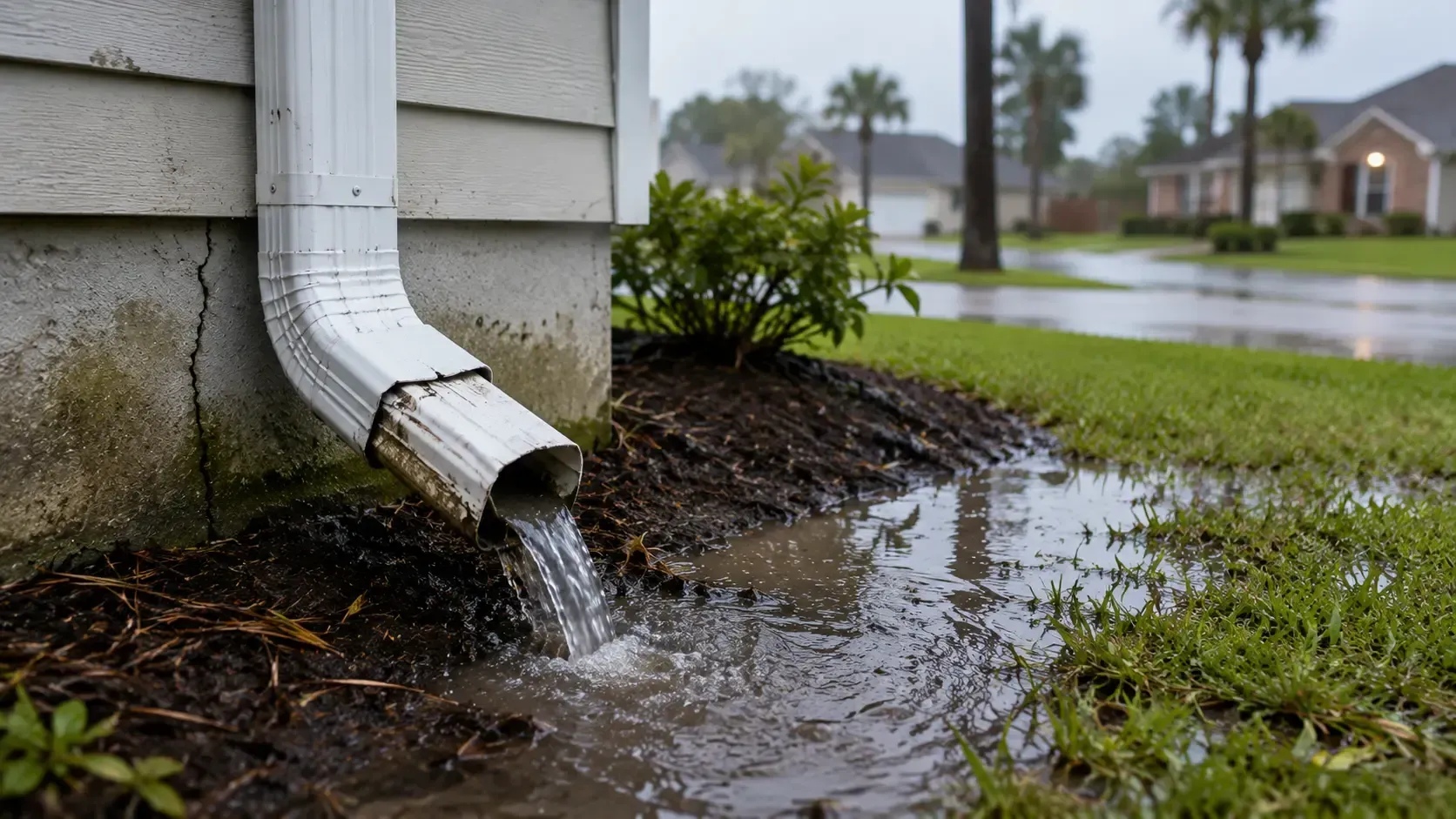

Water doesn't wait for you to figure out your drainage system. It finds the path of least resistance, and if that path runs through your fascia board, your soffit, or the interior of your wall cavity, you'll be dealing with rot and mold long before you connect it back to a drainage decision you made two years ago.
Direct Answer
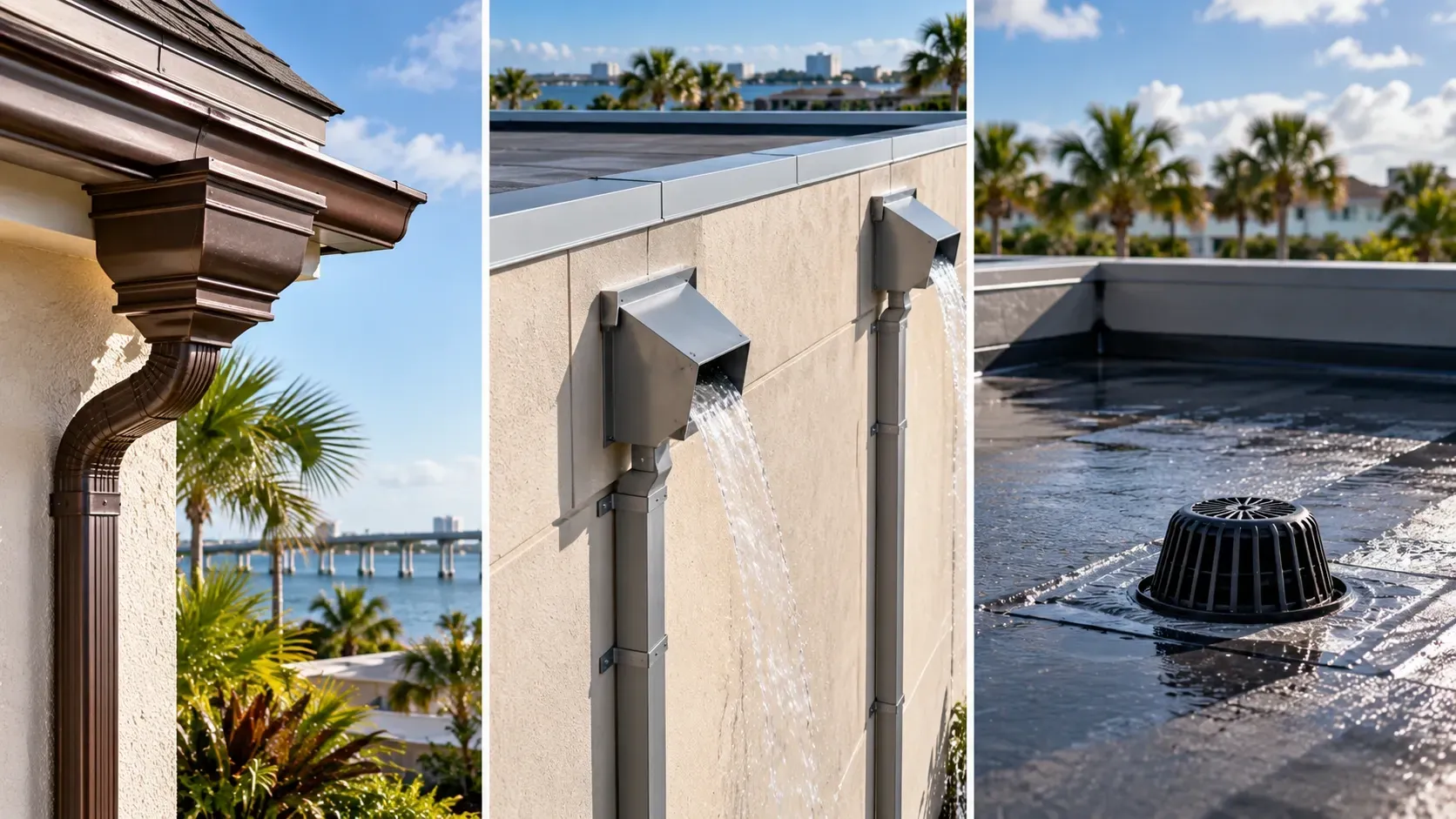
Leader heads and scupper boxes solve different parts of the same problem. A leader head is a collector box that transitions roof drainage into a downspout, typically used on sloped residential roofs with conventional gutter systems. A scupper box is a wall-mounted or parapet-mounted opening that drains flat or low-slope roofs directly outward. The right choice depends on your roof type, drainage volume, and building structure, not preference.
Key Takeaways
- Leader heads work best on sloped residential roofs where you need to transition high-volume drainage into a downspout without overflow
- Scupper boxes are the correct solution for flat or low-slope commercial roofs with parapet walls
- Mixing the two incorrectly creates pooling, overflow, and accelerated fascia damage
- Gulf Coast rainfall intensity (short, heavy storms) makes drainage capacity more important than drainage aesthetics
- Getting a free on-site estimate before choosing either system prevents the most expensive mistakes
What's the Actual Difference Between a Leader Head and a Scupper Box?
A leader head is a decorative and functional collector box installed at the top of a downspout, designed to receive water from a gutter or roof valley and funnel it into the downspout below. Think of it as a funnel with walls: it catches overflow before it escapes the system and gives the downspout time to handle volume spikes.
A scupper box is a through-wall or through-parapet opening, typically rectangular, that allows water to exit a flat roof by passing directly through the parapet wall or edge curb. It doesn't connect to a gutter in the traditional sense. Water exits the roof plane through the scupper and either drops freely or connects to a conductor pipe that carries it to grade.
The real decision hinges on roof type, drainage volume, and whether your building has parapet walls. Everything else is secondary.
Why Does Roof Pitch Change the Entire Equation?
On a sloped roof, gravity does most of the work. Water moves toward the eave, enters the gutter, and needs a controlled exit point. Leader heads serve that exit point well because they buffer high-velocity flow from valleys or long gutter runs before it hits the downspout inlet. Without one, a downspout inlet that's too small for peak flow will overflow at the connection point, and that overflow lands directly on your fascia.
Flat roofs don't have eaves in the traditional sense. Water ponds toward drains or toward the building's perimeter, and if you have a parapet wall, it has nowhere to go except through or over that wall. Scupper boxes are built into the parapet to give it a controlled exit. Installing a conventional gutter system on a flat-roof commercial building with parapets isn't just ineffective; it's structurally incompatible.
A common scenario: a commercial building in Pensacola with a low-slope membrane roof and 18-inch parapet walls. Without properly sized scupper boxes, ponding water during a Gulf Coast thunderstorm can exceed the membrane's load tolerance within a single storm event. The scupper isn't decorative. It's a relief.
The Gulf Coast Variable That Changes the Math
Here's what most drainage guides written for national audiences miss: Northwest Florida and South Alabama don't get gentle, consistent rain. They get short, high-intensity storms, especially from late summer through fall. A system sized for average rainfall fails during peak events, and peak events are the ones that cause damage.
Standing water doesn't announce a drainage problem. It just sits there, doing quiet work on your foundation.
That's why drainage capacity matters more than drainage aesthetics in this region. A leader head that looks proportional but is undersized for your roof's square footage will overflow during a 2-inch-per-hour storm even if it handles a light rain without issue. The gutter styles and sizing options you choose have to account for peak flow, not average flow.
Martin's Seamless Gutters & Fencing has been working in this climate since 2004. The free estimate process includes evaluating your roof's drainage area, not just measuring linear footage.
The Tradeoff Framework: Which System Fits Your Building?
Use this as a starting filter, not a final answer. A professional evaluation accounts for variables a checklist can't.
| Condition | Leader Head | Scupper Box |
|---|---|---|
| Roof type | Sloped (residential or commercial) | Flat or low-slope |
| Parapet walls present | No | Yes |
| Connects to downspout | Yes | Yes (via conductor pipe) or free-draining |
| Handles high-volume valley drainage | Yes, that's its primary job | Not applicable |
| Works with seamless gutter system | Yes | Not typically |
| Common in Gulf Coast residential | Yes | Less common |
| Common in Gulf Coast commercial | Occasionally | Frequently |
| DIY-friendly | No | No |
The table above is a starting point. A building with a partial parapet and a sloped section may need both systems at different points on the same roofline.
What Happens When You Use the Wrong One?
This is where the real cost lives.
Installing a leader head on a flat-roof commercial building with a parapet doesn't just fail to drain the roof. It creates a false sense of drainage capacity while water continues to pond. Membrane roofs aren't designed for sustained ponding. The seams fail first, usually at the parapet base, and by the time you see interior water damage, the membrane repair is already a significant cost.
Going the other direction, skipping a leader head on a high-volume residential roof valley and connecting directly to a standard downspout inlet, means the inlet becomes the bottleneck. During a heavy storm, water backs up, overflows at the gutter seam, and runs down the fascia. Fascia rot is quiet and progressive. You won't see it until it's structural.
Substituting based on cost alone creates compounding water damage that costs far more to fix.
If you're in Pensacola, Milton, Navarre, or anywhere across Escambia or Santa Rosa County and you're not sure which system your roof actually needs, that's exactly what a free estimate is for. Martin's Seamless Gutters & Fencing evaluates the full drainage picture before recommending anything.
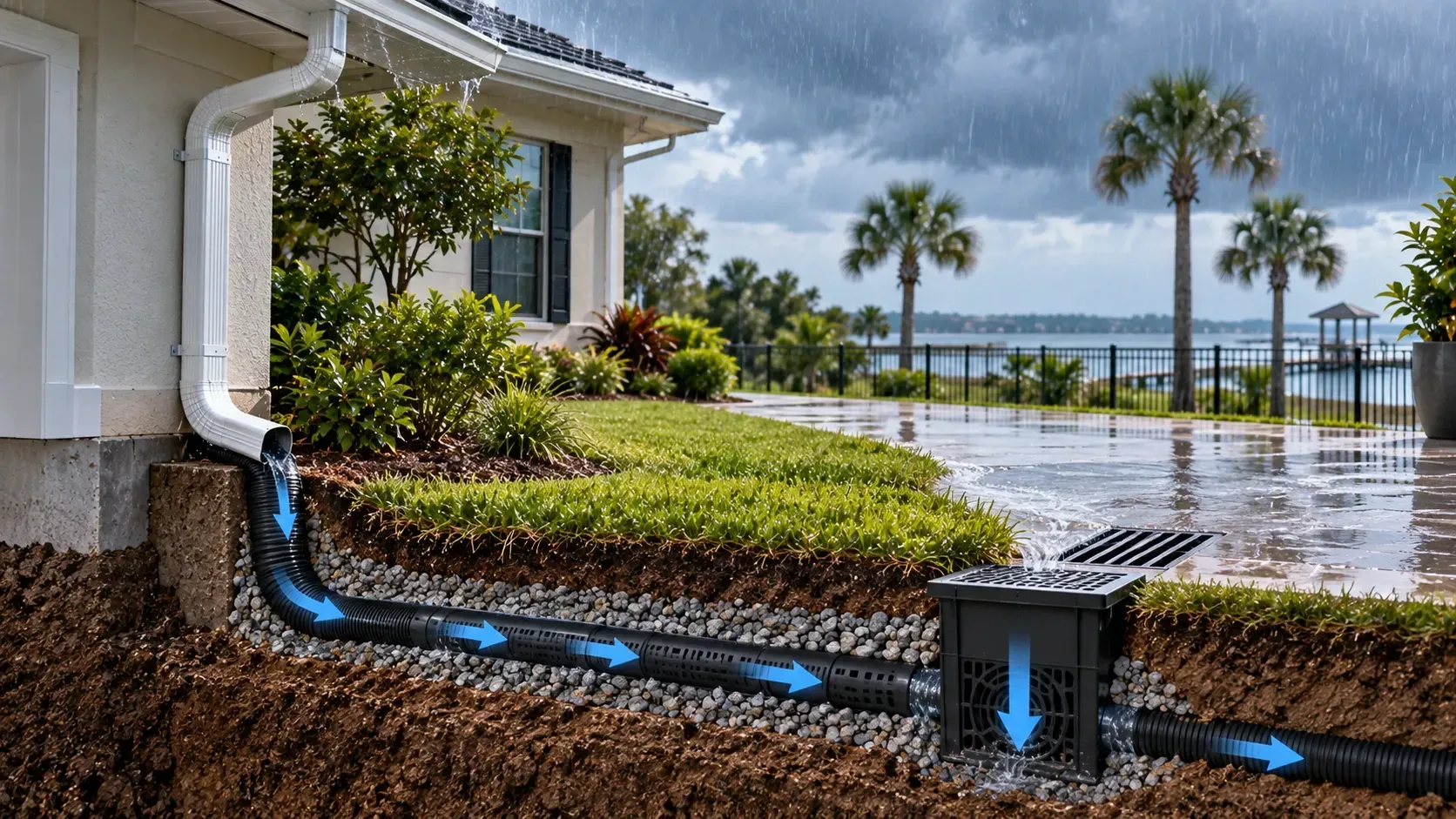
If your property already has water management issues beyond the roofline, French drains and surface drainage solutions may need to work alongside whatever roof drainage system you install.
Who Should Consider Leader Heads Specifically?
Leader heads make the most sense when:
- Your roof has one or more valleys that concentrate flow from two planes into a single point
- Your downspout inlets are smaller than the gutter run feeding them
- You have a historic or architecturally detailed home where exposed downspout connections look unfinished
- You've had overflow at the gutter-to-downspout transition before
They're not a universal upgrade. On a simple gable roof with short gutter runs and correctly sized downspouts, a leader head adds cost without solving a problem that exists. The honest answer is that not every roof needs one.
For residential properties across Gulf Breeze, Pace, and Cantonment, the full gutter installation process starts with understanding the roof geometry before any hardware gets specified.
Who Should Consider Scupper Boxes Specifically?
Scupper boxes are the right call when:
- Your building has a flat or low-slope roof with parapet walls
- You're managing a commercial property where roof drainage is a code compliance issue, not just a preference
- Your current scuppers are undersized, blocked, or deteriorating
- You're seeing ponding water after storms that doesn't clear within 48 hours
Scupper sizing is not arbitrary. The opening dimensions have to correspond to the roof's drainage area and the local rainfall intensity. An undersized scupper is functionally the same as no scupper during a peak storm.
Commercial property managers in Baldwin County and Okaloosa County dealing with flat-roof drainage issues should look at the commercial gutter and drainage services Martin's Seamless Gutters & Fencing provides. The scope goes well beyond residential gutter work.
What About Downspouts? Where Do They Fit In?
Both leader heads and scupper boxes eventually need to move water away from the building's foundation. That's the downspout's job, or in commercial applications, the conductor pipe.
A leader head that drains into an undersized downspout is still a bottleneck. A scupper box that free-drains against a building's foundation without a splash block or conductor pipe is trading one problem for another.
The downspout sizing and placement decisions downstream of either system matter just as much as the collector itself. Water management is a system, not a component.
If you're in the middle of a roof replacement, a renovation, or you've just noticed overflow or ponding that wasn't there before, don't wait for the next storm to confirm the problem. Request a free estimate from Martin's Seamless Gutters & Fencing and get a clear picture of what your roof's drainage actually needs.
Frequently Asked Questions
Can I add a leader head to my existing gutters without replacing the whole system?
Yes, in most cases. A leader head installs at the top of an existing downspout connection and doesn't require replacing the gutter run. The key is matching the leader head's outlet size to the downspout diameter you already have. If the downspout itself is undersized for your roof area, adding a leader head helps buffer overflow but doesn't fix the root capacity problem.
How do I know if my scupper boxes are the right size for my roof?
Scupper sizing is based on the roof's drainage area in square feet and the local design rainfall intensity. If you're seeing ponding water that takes more than 48 hours to clear after a storm, or if water is visibly overtopping the parapet during heavy rain, your scuppers are likely undersized or blocked. A professional evaluation will measure both the roof area and the existing scupper dimensions against local rainfall standards.
Do leader heads require a lot of maintenance?
More than a standard downspout inlet, yes. Because a leader head has a larger opening and often collects debris from roof valleys, it needs to be checked and cleared at least twice a year in this region. Leaf guards installed upstream on the gutter run can reduce debris load significantly. Martin's Seamless Gutters & Fencing offers leaf guard installation that reduces how often the system needs manual clearing.
What materials are leader heads and scupper boxes typically made from?
Both come in aluminum, copper, and galvanized steel. Aluminum is the most common for residential applications because it's lightweight, corrosion-resistant, and compatible with seamless aluminum gutter systems. Copper is used primarily for architectural or historic applications where appearance matters as much as function. In the Gulf Coast's salt-air environment, material selection matters more than it does in drier inland climates.
Is this something I can install myself to save money?
The physical installation isn't the hard part. Getting the sizing right is. An incorrectly sized leader head or scupper box that looks properly installed will still fail during the storms that matter most. The cost of a professional installation is small compared to the fascia replacement, membrane repair, or foundation remediation that follows a sizing error.
Do commercial buildings in Florida have code requirements for roof drainage?
Yes. Florida Building Code addresses roof drainage design, including minimum scupper sizing requirements for flat roofs with parapet walls. Non-compliant drainage systems can create liability exposure during property inspections or insurance claims. If you're managing a commercial property and aren't certain your drainage meets current code, that's a conversation worth having before your next lease renewal or property sale.
How does Martin's Seamless Gutters & Fencing determine which system my property needs?
The process starts with a free on-site estimate. The team evaluates the roof type, pitch, drainage area, existing downspout sizing, and any current overflow or ponding issues. From there, they recommend a system sized for your specific roof geometry and local rainfall conditions, using materials from top-rated manufacturers including Spectra, Senox, ACM, Raytec, and Geocel. You can see the full scope of what that evaluation covers on the services page.
Water doesn't care about your roofline's architectural intent. It follows physics, and the only thing that redirects it is a drainage system sized and installed correctly for your specific building. Get the assessment done before the next storm makes the decision for you.
Schedule your free estimate with Martin's Seamless Gutters & Fencing and find out exactly which system your property needs.
About the Author
Patrick Martin is the owner of Martin's Seamless Gutters & Fencing, a family-operated company serving residential and commercial customers across Northwest Florida and the Gulf Coast since 2004. With more than 20 years of hands-on experience in seamless gutter systems, drainage solutions, and fencing installations, he focuses on quality craftsmanship, durable materials, and honest assessments that protect properties from water damage. Martin's Seamless Gutters & Fencing serves Pensacola, Milton, Navarre, Pace, Gulf Breeze, Cantonment, and communities throughout Escambia, Santa Rosa, Okaloosa, Walton, and Baldwin Counties.