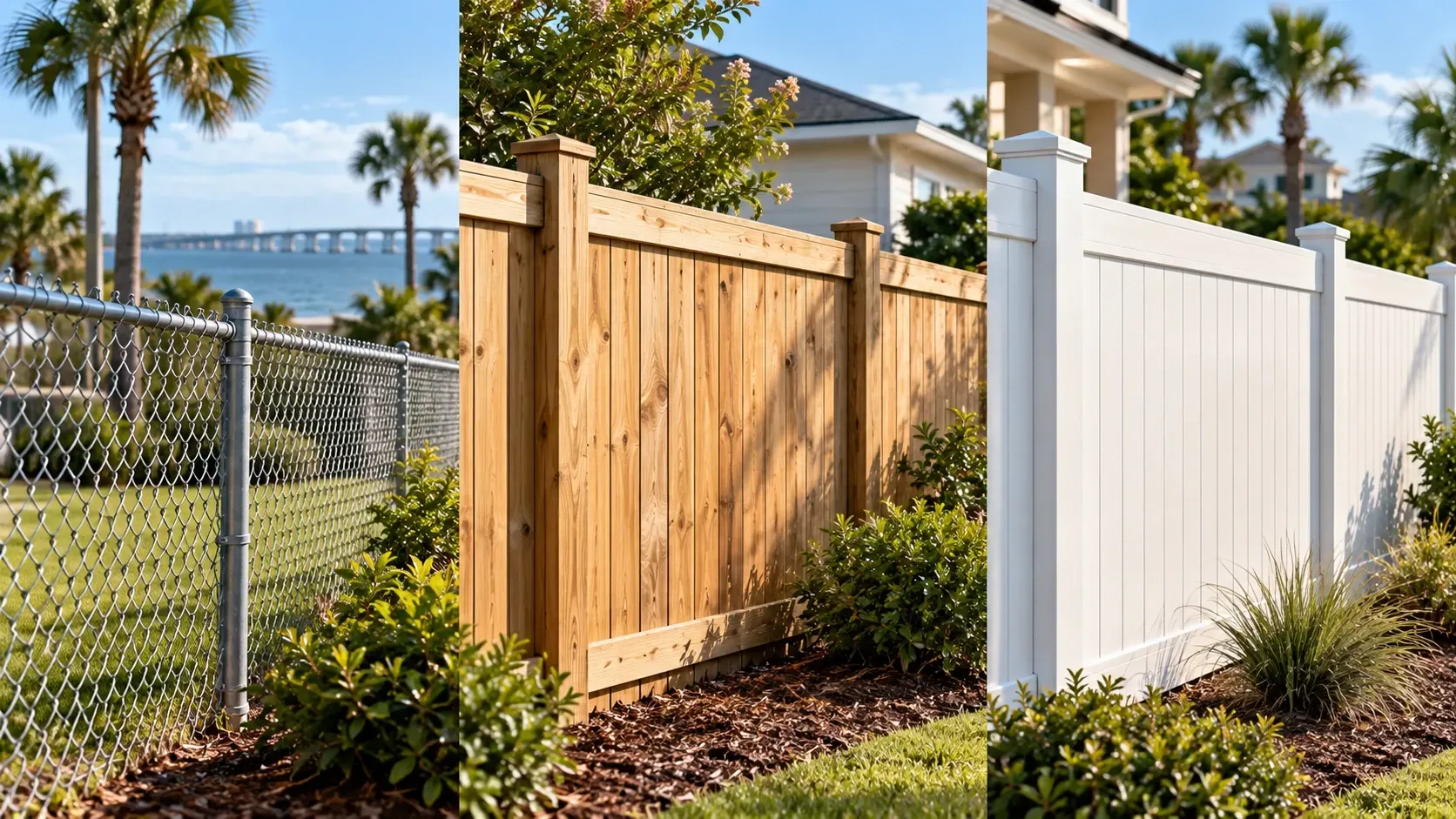
Choosing a fence feels simple until you're trying to balance privacy, budget, durability, and how the thing will look after three Gulf Coast summers. Each of those priorities points toward a different material. The right answer isn't the cheapest option or the most popular one. It's the one that fits what your property actually needs.
Key Takeaways
- Chain-link excels at perimeter coverage and containment but provides no privacy and doesn't perform well where appearance or privacy matters
- Wood fencing offers the best design flexibility and curb appeal but requires consistent maintenance in the Gulf Coast's humid, high-heat climate
- Vinyl costs more upfront but carries the lowest lifetime maintenance burden of the three materials
- The fence that looks best at installation isn't always the fence that holds its value five years later
- Choosing the wrong material for your use case doesn't save money. It creates a replacement or repair cost that exceeds what the right fence would have cost from the start
What Does Each Material Actually Do Well?
Start here before you start pricing: every fence material has a primary job it does well and a set of conditions where it falls short. Most bad fence decisions come from buying a material for what you hope it will do rather than what it was designed to do.
Chain-link defines a perimeter. It contains pets, children, and equipment. It deters casual trespass. It costs less per linear foot than any other material, which matters when you're enclosing a large commercial yard or a multi-acre property in Pace or Baldwin County. What chain-link doesn't do is provide privacy or look like anything other than a utilitarian barrier. That's not a flaw. It's just what the product is.
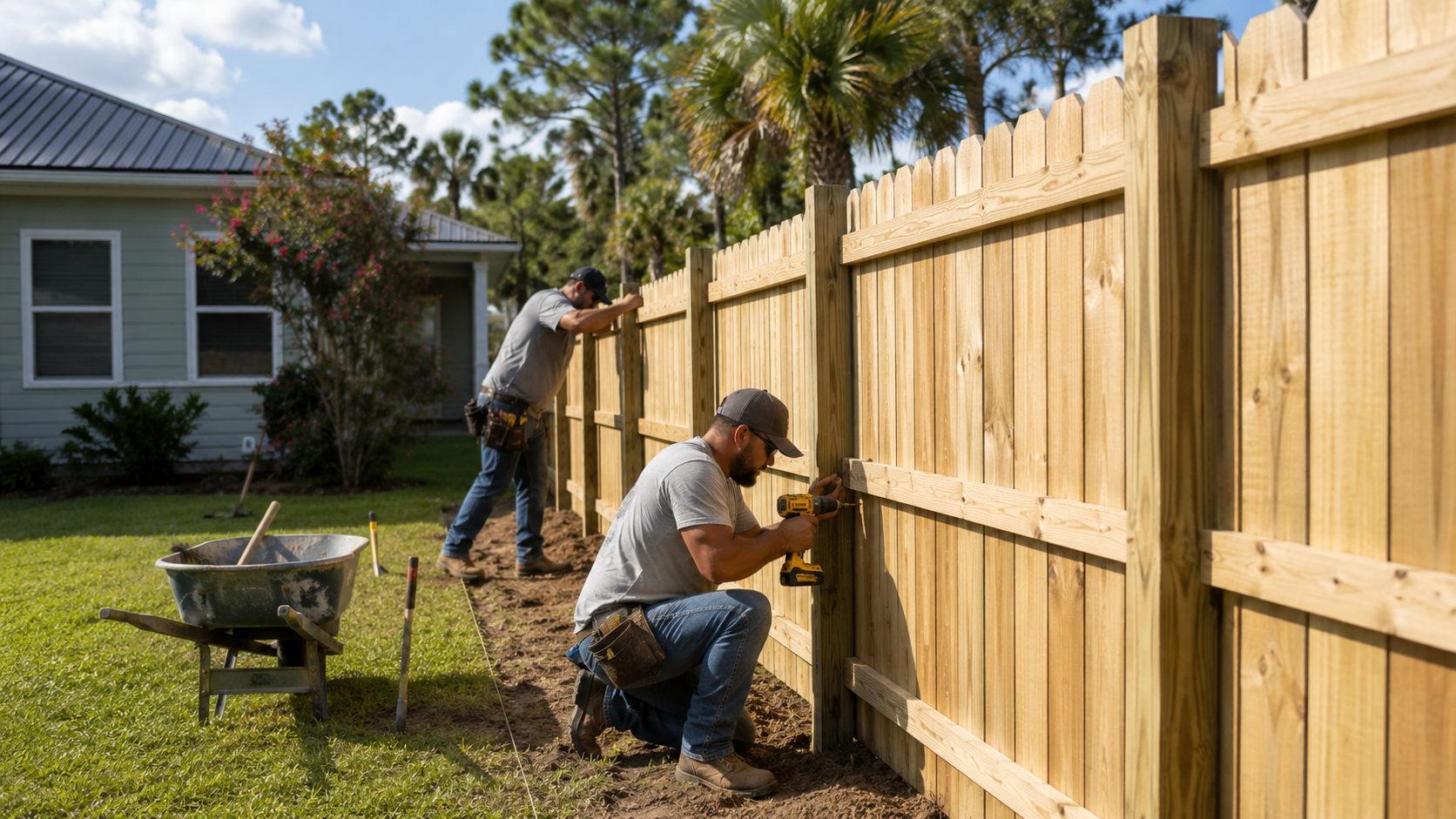
Wood gives you design control. You can paint it, stain it, match it to your home's exterior, and shape it to nearly any style. For a residential property in Gulf Breeze or Navarre where curb appeal affects both day-to-day satisfaction and eventual resale value, wood has a visual return that chain-link and vinyl can't match at installation.
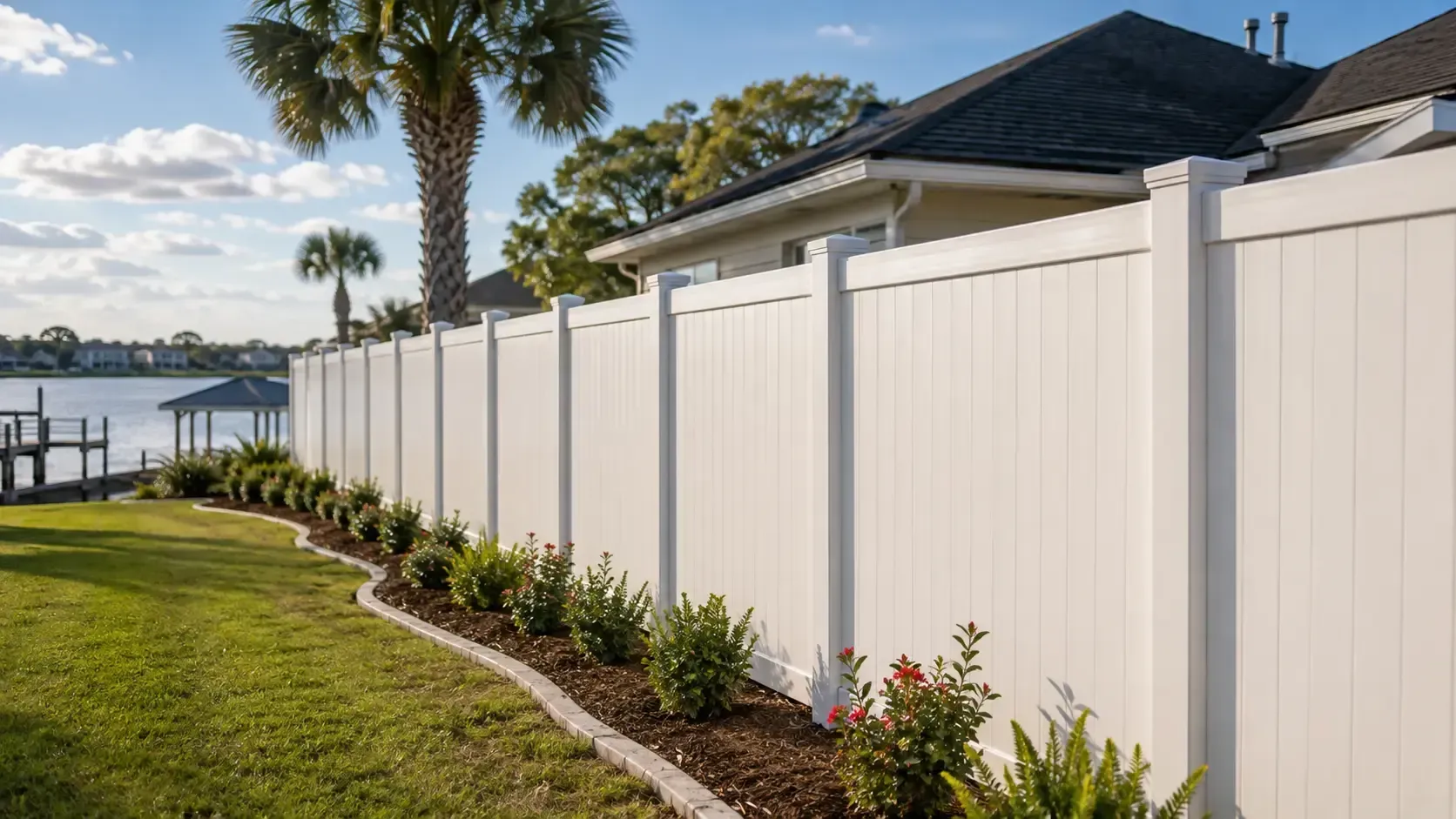
Vinyl's core value is low involvement. Once it's installed, it doesn't need painting, staining, or rot treatment. It won't draw termites. In the Gulf Coast climate, that maintenance-free quality isn't a minor convenience. It's a meaningful cost and time advantage that compounds over years of ownership.
Our fence installation services cover all three materials, and every estimate starts with a conversation about what the property actually requires, not just what's easiest to quote.
Why the Gulf Coast Climate Changes the Wood Fencing Calculation
Wood fencing performs differently here than it does in a drier climate, and that difference is worth understanding before you commit.
Northwest Florida and South Alabama combine sustained humidity, intense summer heat, and frequent heavy rainfall. That combination accelerates every failure mode wood has. Rot begins at the post base where moisture contacts untreated wood. Boards warp when they're repeatedly soaked and then dried in high heat. Termites and carpenter ants find entry points through any cracked or unpainted surface, and in this region they're not slow about it.
None of that makes wood the wrong choice. It makes wood a choice that requires a commitment to maintenance. If you or a property manager will treat, inspect, and repaint the fence on a regular cycle, wood can hold its appearance and structural integrity for years. If consistent upkeep isn't realistic, the fence will degrade faster than you expect, and the cost of partial replacement or repair can outrun what a vinyl installation would have cost from the start.
Consider a common scenario: a homeowner chooses wood privacy fencing partly because of its lower initial price. A few years in, the boards at soil level are softening and two posts have begun to shift. In a typical case like this, the repair costs combined with the original installation end up approaching what vinyl would have cost initially. That's not a failure of wood as a material. It's a mismatch between material and maintenance reality.
The honest tradeoff with wood is this: you're getting the best-looking fence at installation in exchange for an ongoing maintenance commitment that Gulf Coast conditions make non-negotiable.
The Vinyl Argument Goes Beyond "No Painting Required"
Vinyl costs more to install. That's a real number, and it's not worth pretending otherwise. But the installation quote is only part of what you're actually paying over a decade of ownership.
Wood fencing in this climate commonly needs staining or repainting, board replacement as rot sets in, and post repair as moisture works at the base. Each of those service cycles costs money and time. Vinyl eliminates all of them. It holds its color, it doesn't rot, and it doesn't require a contractor visit every few years just to stay functional.
That makes vinyl the strongest choice for rental property owners who can't rely on tenants to report early-stage maintenance issues, for commercial property owners who want appearance consistency across a long ownership window, and for homeowners who want a privacy fence with genuine low-maintenance performance.
One tradeoff worth stating directly: vinyl doesn't repair as simply as wood. If a section is damaged, you're typically replacing a full panel rather than swapping individual boards. And lower-grade vinyl products can warp or fade under sustained heat. Material quality matters more with vinyl than with wood or chain-link. That's why sourcing from top-rated manufacturers is worth discussing before any contract is signed. Martin's Seamless Gutters & Fencing works with Spectra, Senox, ACM, Raytec, and Geocel to make sure the material quality holds up to what this climate asks of it.
Chain-Link Performs Best Where Most Homeowners Don't Want It
Chain-link's strongest case is in commercial and utility settings. A property manager securing a storage yard, a business owner enclosing a job site in Cantonment or Escambia County, or a homeowner containing pets across a large lot are situations where chain-link does exactly what's needed at the lowest possible cost.
The structural argument for chain-link in Gulf Coast conditions is wind resistance. A solid panel fence acts as a surface for wind to push against. Chain-link lets wind pass through. That's a meaningful difference when a storm puts significant lateral pressure on anything that doesn't flex. For commercial properties where perimeter security matters more than aesthetics, that resilience is a real advantage.
Where chain-link fails is where privacy was always the actual goal. Adding privacy slats to chain-link is a workaround, not a solution. It adds wind resistance the installation wasn't sized to handle and still doesn't deliver the visual result of a solid panel fence. If privacy is the requirement, chain-link with modifications costs more than plain chain-link and delivers less than wood or vinyl. You're paying for two compromises at once.
For commercial properties where fencing and drainage infrastructure share the same project footprint, our commercial gutter and fence services page explains how we approach both systems together.
A Decision Framework for Property Owners in Northwest Florida and South Alabama
Three questions narrow the choice quickly.
First: Is privacy required? If no, chain-link is worth serious consideration, especially on commercial or utility properties. If yes, move to the second question.
Second: Will regular maintenance actually happen? If you or a property manager will consistently treat, inspect, and repaint the fence, wood is a strong option with excellent curb appeal. If consistent maintenance isn't realistic, the honest answer is vinyl.
Third: What's the ownership horizon? Short-term property owners and house flippers often choose wood because it improves perceived value at sale. Long-term owners, rental property managers, and commercial property operators benefit more from vinyl's durability over time.
The framework breaks down when two conditions pull in different directions. A rental property owner who wants maximum curb appeal but can't guarantee maintenance is in a vinyl situation. The fence that photographs well at year one but deteriorates without attention doesn't serve that owner's interests, even if it looked like the better choice at installation.
Martin's has been working through these decisions with homeowners and property managers across Pensacola, Milton, Navarre, Gulf Breeze, Pace, and Baldwin County since 2004. The free estimate isn't just a price quote. It's a property walkthrough that factors in your lot, your drainage situation, and your realistic maintenance capacity before a recommendation is made. Learn more about who we are and how we work before you schedule.
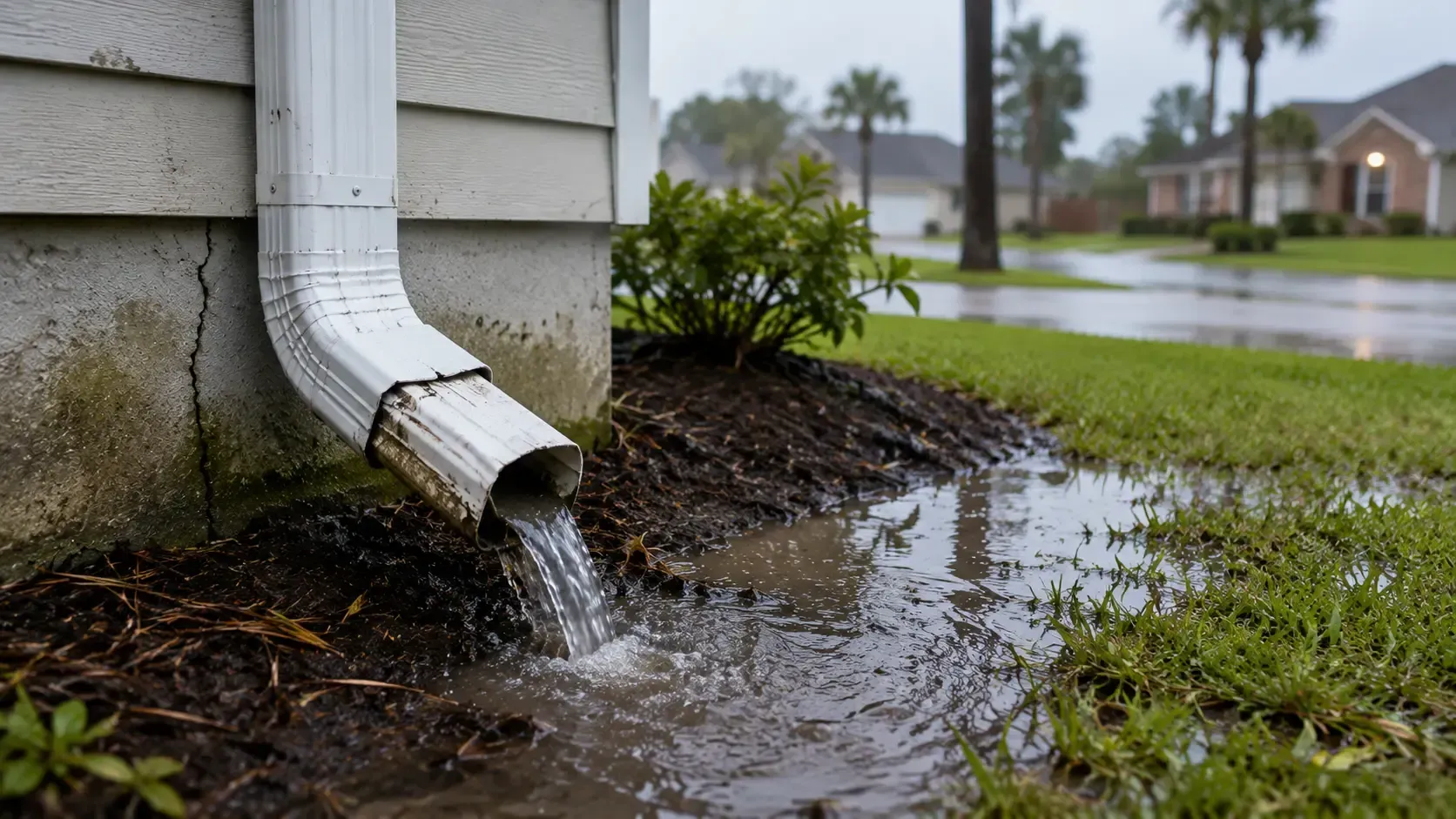
If you're also dealing with water management questions on the same property, drainage solutions and fence placement interact more than most homeowners expect. A fence line running through a drainage slope can redirect runoff in ways that cause pooling at the foundation or along the property line. Addressing both at the same time prevents one contractor's work from creating a problem for the other.
Request a free estimate and get a straight answer on what your property actually needs.
Fencing Decision Comparison: Acting Now with the Right Material vs. Guessing or Waiting
| Decision | With Martin's Professional Assessment | Guessing on Material or Delaying |
|---|---|---|
| Material fit | Matched to your property, climate, and use case | Based on upfront price or what you've seen before |
| Gulf Coast durability | Addressed through material selection and installation method | Discovered after premature rot, warp, or failure |
| Maintenance reality | Factored into the recommendation before installation | Becomes apparent after the first maintenance cycle |
| Long-term cost | Optimized at the front end | Compounds through repair, replacement, or re-installation |
| Wind and drainage interaction | Assessed on-site during the estimate | Missed until a storm or drainage event reveals the problem |
| Warranty backing | Lifetime warranty on materials, extended warranty included with service packages | Depends entirely on which contractor you chose and what they put in writing |
| Discounts available | Military, first responder, and senior citizen discounts available | Not applicable without a qualified local contractor |
Frequently Asked Questions
How long does a chain-link fence last in Florida's climate?
A chain-link fence installed with galvanized or vinyl-coated steel performs well in Gulf Coast conditions. The main failure points over time are post corrosion at the soil line and tension wire degradation from UV exposure. The coating quality at installation is the primary factor in how quickly those issues develop.
Is wood fencing a bad idea in Pensacola because of the humidity?
It's not a bad idea, but it requires more active management here than it would in a drier climate. The humidity and heat accelerate rot at the post base and along any cracked or unpainted surfaces, and termite pressure in this region is real. Wood fencing works well when it's properly treated, installed with attention to moisture management at the post base, and maintained on a consistent schedule.
Can I add privacy to an existing chain-link fence without replacing it?
Privacy slats or screens can be added to an existing chain-link fence. The practical issue is that solid screening adds wind resistance that the original chain-link installation wasn't designed to handle. The visual result is also different from a solid panel fence. If privacy was always the goal, replacing with wood or vinyl typically delivers better long-term performance than a modified chain-link setup.
What permit requirements apply to residential fencing in Escambia and Santa Rosa County?
Permit requirements depend on fence height, material, and proximity to property lines and easements. Most residential fences above a certain height require a permit in both counties, but the specifics vary by municipality. The right move is to confirm with your local building department before installation starts. A contractor who skips that conversation entirely is worth being cautious about.
Does fencing placement affect drainage on a property?
Yes. A fence line that crosses a drainage slope can redirect water flow in ways that cause pooling against a foundation or in low-lying areas of the yard. If your property has downspout outlets, French drains, or other drainage infrastructure near the planned fence line, those factors need to be part of the installation plan, not an afterthought.
Does Martin's Seamless Gutters & Fencing handle fencing and gutter work on the same project?
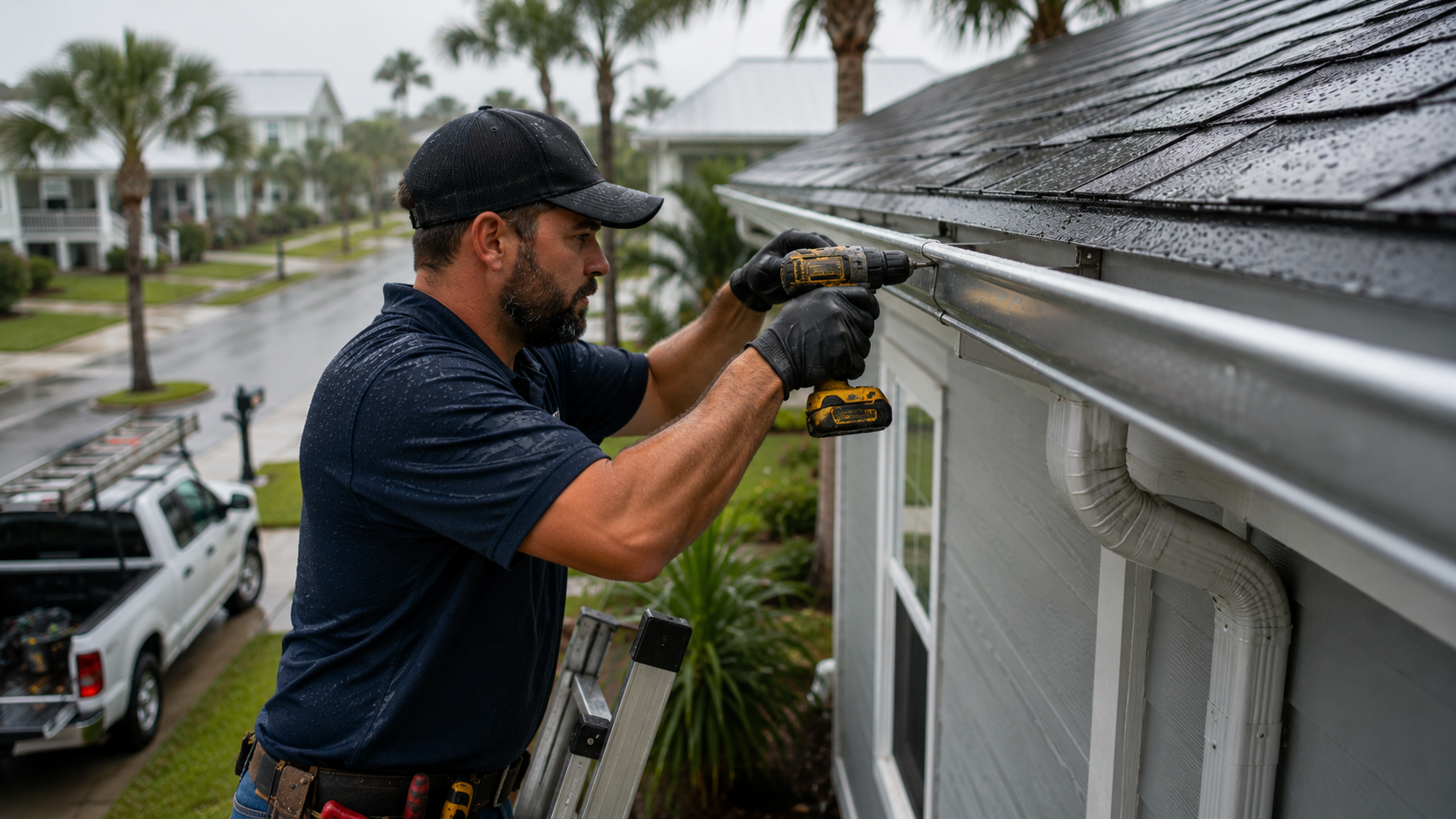
Yes. Working with one company on both systems means the fence placement and gutter drainage paths are evaluated together rather than independently. Water management and property boundary decisions interact in ways that most homeowners don't anticipate, and addressing them as a combined project avoids the situation where one system creates a problem for the other.
What's the best fencing choice for a rental property in Northwest Florida?
For most rental property owners, vinyl is the stronger long-term choice. The reason is that deferred maintenance is a real risk in rental situations. Wood fencing that isn't maintained on schedule will deteriorate faster in this climate than it would elsewhere, and repair costs add up. Vinyl removes most of that maintenance variable. The higher upfront cost tends to look more reasonable once you account for what wood maintenance actually costs over a full ownership cycle.
About the Author
Patrick Martin is the owner of Martin's Seamless Gutters & Fencing, a family-operated company he founded in 2004. With more than 20 years of hands-on experience in seamless gutter systems, drainage solutions, and fencing installations across Northwest Florida and South Alabama, he focuses on durable, low-maintenance property solutions built for the specific demands of Gulf Coast conditions. Martin's Seamless Gutters & Fencing serves Pensacola, Milton, Navarre, Pace, Gulf Breeze, Cantonment, and communities across Escambia, Santa Rosa, Okaloosa, Walton, and Baldwin Counties.