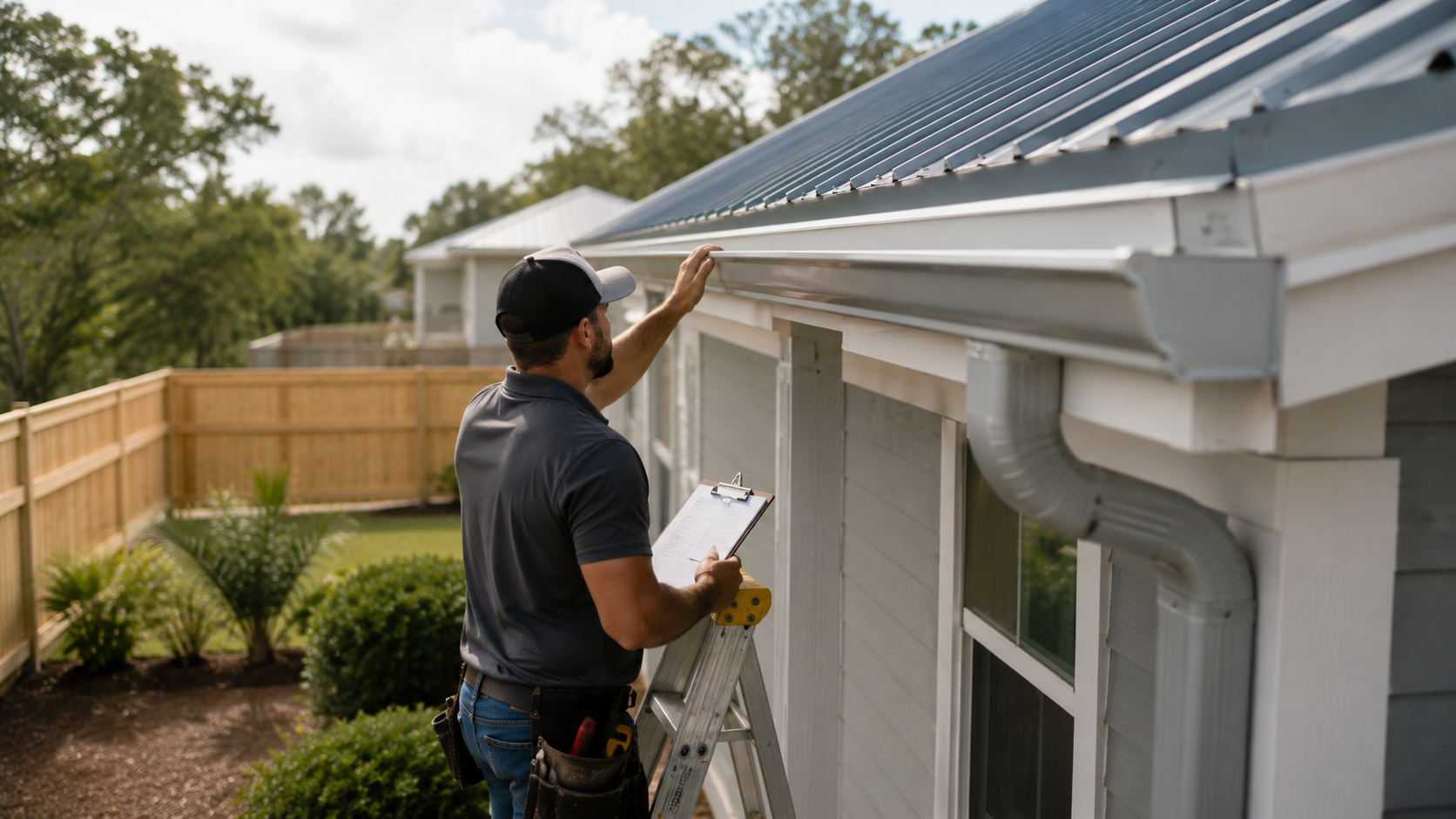
Gutters vs. French Drains vs. Drainage Systems: What Gulf Coast Properties Actually Need

Gutters, French drains, and surface drainage systems don't compete with each other. They handle different stages of the same water problem. Most Gulf Coast properties need at least two working together. Choosing only one, or choosing the wrong one first, doesn't eliminate the problem. It just relocates it until the damage becomes visible.
Key Takeaways
• Gutters intercept roof runoff before it reaches the ground. French drains move water that's already in the soil. Surface drains handle sheet flow across hardscaped areas. None of these does what the others do.
• On Gulf Coast properties, undersized gutters create false confidence. They appear functional until a real storm hits.
• Most residential properties in Escambia, Santa Rosa, and Baldwin Counties need roof-level and subsurface drainage working together at minimum.
• No drainage system corrects a grading problem. If your yard slopes toward the foundation, water management systems reduce damage but can't override physics.
• Martin's Seamless Gutters & Fencing provides free estimates covering the full water management picture, not just one component.
Why Does Water Keep Ending Up in the Wrong Place?
Water damage rarely announces itself. It shows up as a wet corner in a crawl space, erosion along the fence line, or mulch washing out of beds after every storm. By the time you see it, the water has been going somewhere wrong for months, sometimes longer.
The issue isn't the water itself. It's gaps in the water management chain.
Rain hits the roof, flows into gutters, moves through downspouts, exits at grade, and then needs somewhere specific to go. That last part is where most systems fail. Water doesn't disappear. It follows the path of least resistance, and on a flat Gulf Coast lot with sandy or clay-heavy soil, that path often leads toward the foundation, not away from it.
The gap usually isn't a broken component. It's a missing one.
What's the Real Difference Between These Systems?
Before comparing them, it helps to define each one precisely.
A
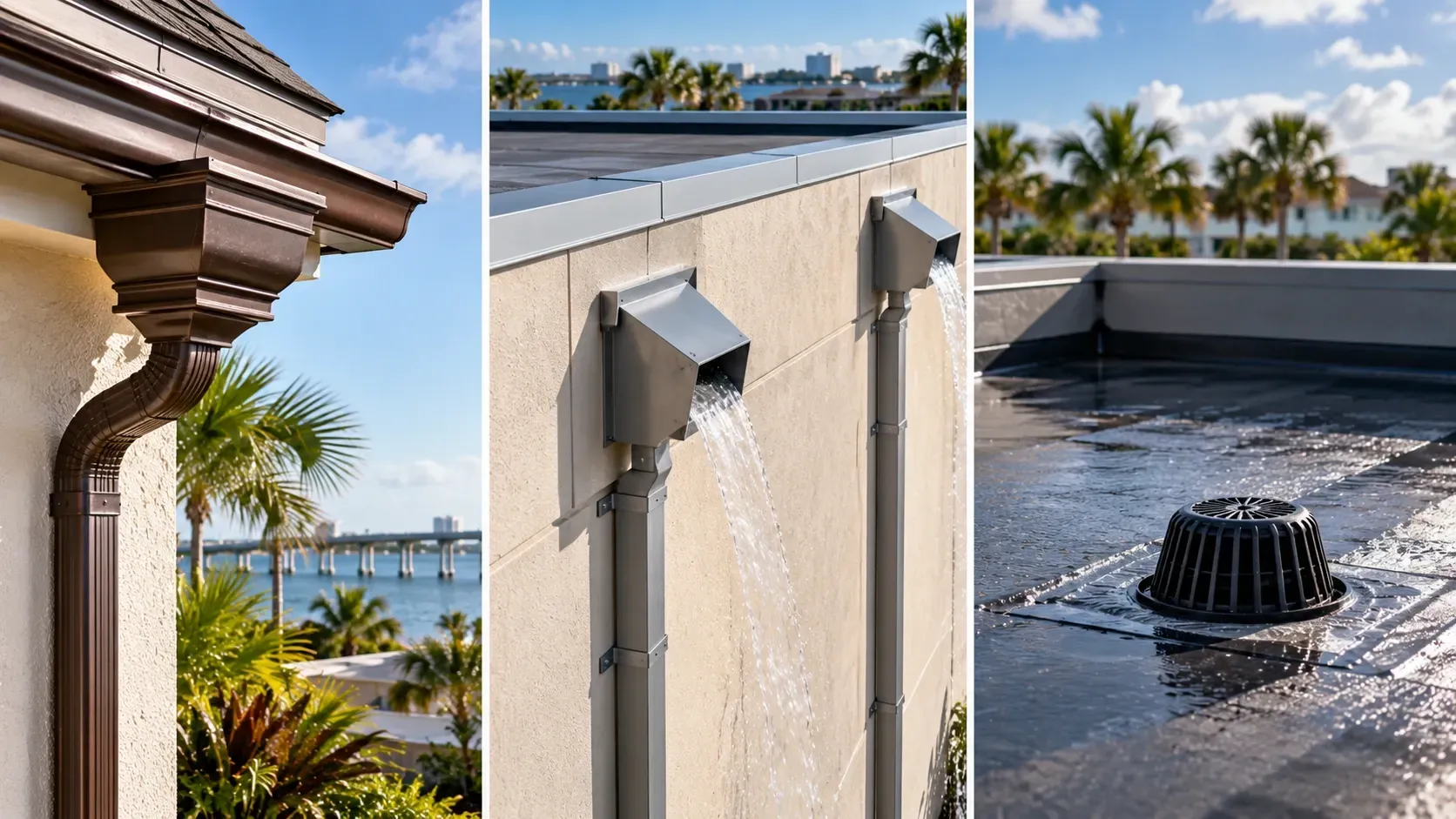
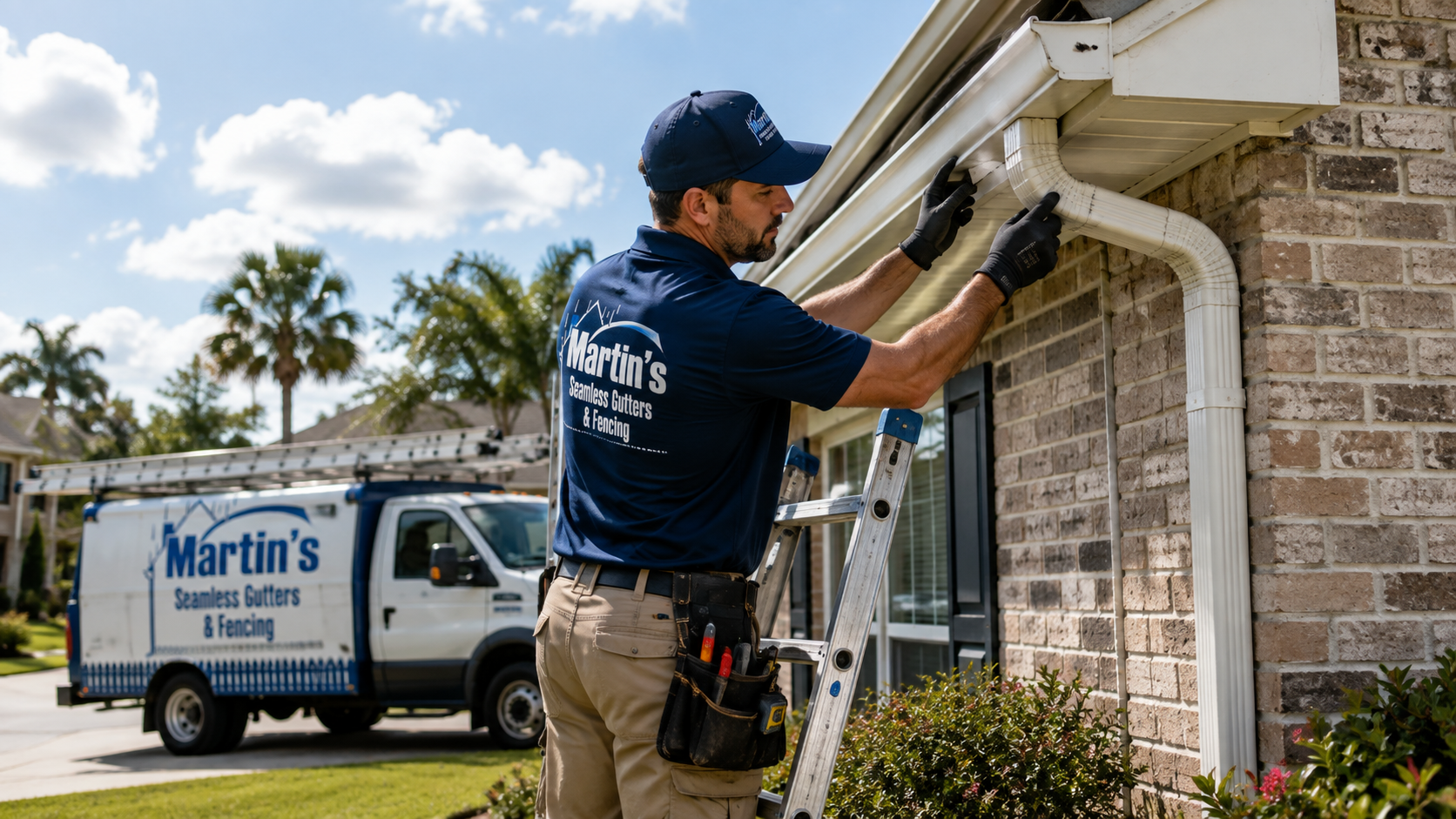
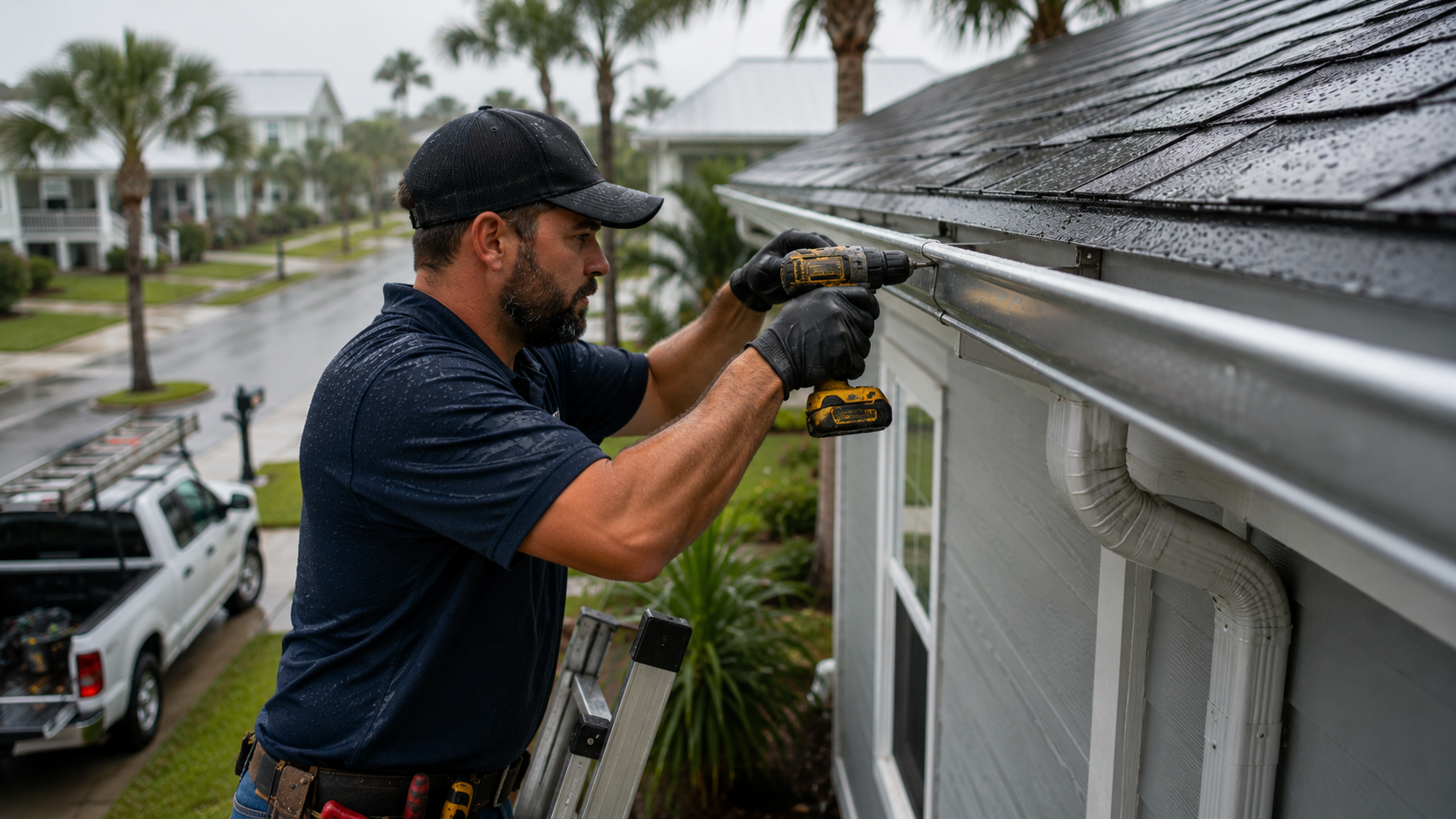
gutter system mounts at the roofline, captures rainfall as it runs off the roof surface, and directs it to controlled exit points through downspouts. It solves the roof-to-ground problem. Nothing else does.
A
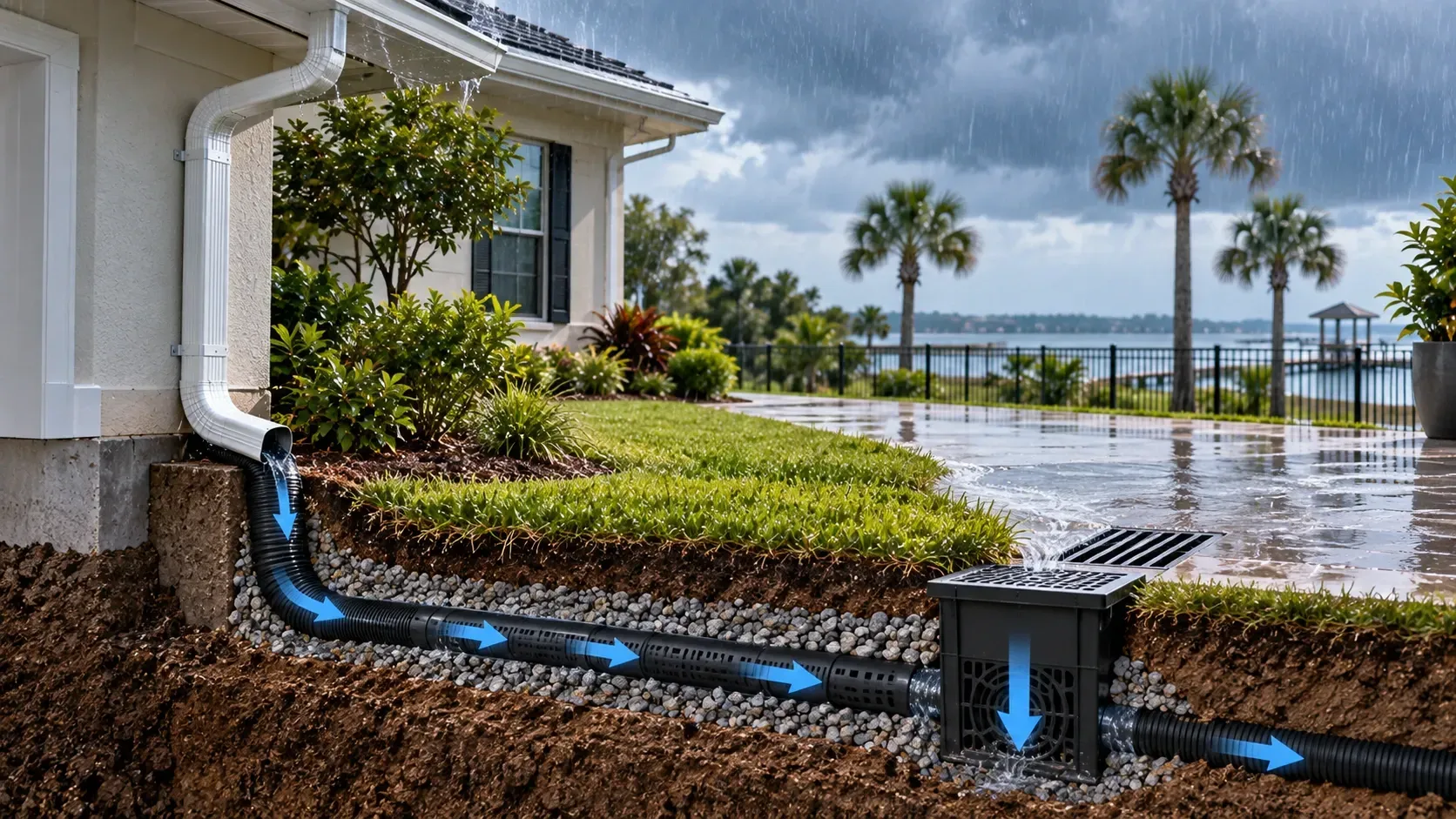
French drain is a subsurface trench packed with gravel and a perforated pipe. It intercepts groundwater or redirected surface water and carries it away from saturated soil near a structure. It solves the waterlogged-soil problem.
A
surface drainage system, which includes
grate drains and channel drains, intercepts water that's already moving across the ground, typically over driveways, patios, or other hard surfaces where absorption isn't possible. It solves the sheet-flow problem.
A
dry well is a buried chamber that receives water from a downspout or drain outlet and disperses it gradually into the surrounding soil. It solves the discharge problem when there's no natural grade to carry water away.
These four systems address four distinct stages of a storm's work on your property. Fixing one stage while leaving another open doesn't protect the property. It just determines which part takes the damage next.
French Drain or Better Gutters: How Do You Know Which One You Need?
This is the question most homeowners get wrong, and it tends to be expensive.
If water pools in your yard well away from the house, and the soil stays wet for hours after rain stops, that's a subsurface drainage problem. The soil is absorbing water faster than it can move it, and it has nowhere to go. A French drain intercepts that water below grade and routes it away before pooling begins.
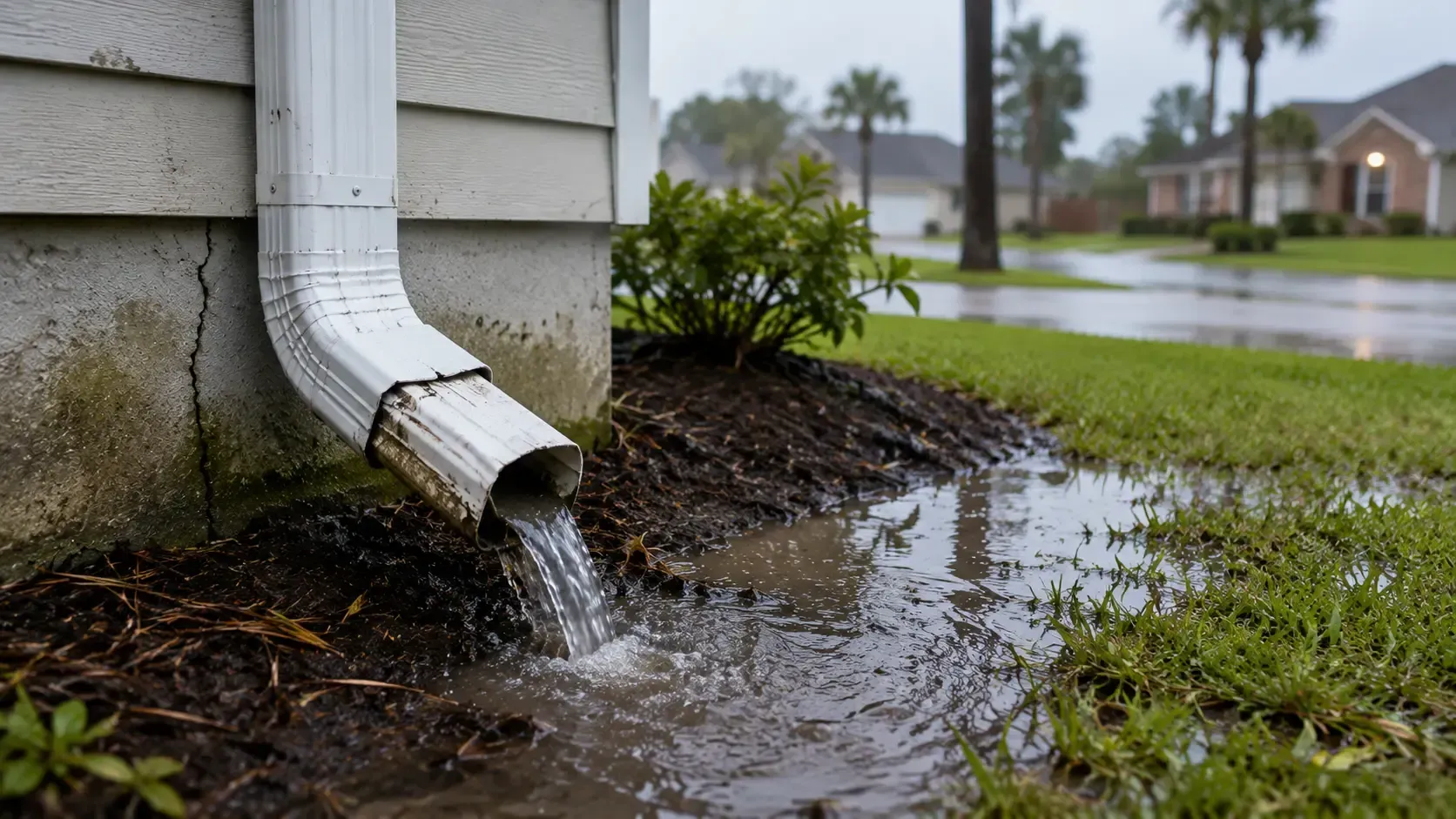
If moisture is appearing near the foundation, check your gutters first. Overflowing or undersized gutters dump water directly against the house, and no French drain solves that. The water is arriving from above, not from saturated soil below. The fix starts at the roofline, not in the ground.
Consider a typical scenario on a Gulf Coast property: a homeowner installs a French drain along the back yard because the ground stays soggy after storms. The yard improves somewhat, but a foundation corner keeps getting wet. The reason, in a situation like this, is usually the rear roofline gutters. If they're undersized or overflowing, they're sending water straight down against the house during heavy rain. The French drain can't intercept water coming from above. The real solution requires correctly sized
seamless gutters handling the roofline and a drain addressing the residual soil saturation, both working together.
Water has to be managed at every stage of its path, not just the most obvious one.
The Gulf Coast Variable That Changes Every Sizing Decision
Most general drainage guides treat rainfall and soil type as background details. On the Gulf Coast, they're the deciding factors.
Northwest Florida and South Alabama sit on a mix of sandy coastal soils and heavier clay-based inland soils. Sandy soils drain quickly but can't handle sudden volume spikes. Clay soils drain slowly and stay saturated long after rain stops. A Navarre beachside lot and a Cantonment property with heavy clay behave like completely different environments during the same storm.
This is why
gutter sizing matters far more than most homeowners realize. A 5-inch gutter might perform adequately in a moderate-rainfall region. During a Gulf Coast summer storm, that same gutter can overflow consistently, not because it's broken, but because it was sized for a different climate. The gutter's capacity was never matched to what this region actually produces.
Martin's Seamless Gutters & Fencing offers 5-inch, 6-inch, and half-round gutter profiles, using materials from top-rated manufacturers including Spectra, Senox, ACM, Raytec, and Geocel. The right size isn't a preference or an upgrade. It's a calculation based on roof square footage, pitch, and the number of downspout outlets relative to the rainfall intensity this region delivers on a routine summer afternoon.
The Water Management Stack: Where Does Your Property Have Gaps?
Think of water management as four layers, each handling one stage of the water's journey. A gap in any layer means water finds its own path, and that path is never the right one.
| Layer | System Type | What It Handles | When You Need It |
|---|---|---|---|
| Roof to ground | Seamless gutters and downspouts | Roof runoff interception | Every structure with a roof |
| Hardscape runoff | Grate drains and channel drains | Driveway and patio sheet flow | Any paved or hardscaped surface |
| Subsurface saturation | French drain | Waterlogged soil, foundation seepage | Persistently wet yards |
| Discharge management | Dry well or outlet routing | Where collected water goes | When no natural grade outlet exists |
Most residential properties in Escambia, Santa Rosa, and Baldwin Counties need the first and third layers at minimum. Properties with significant hardscaping or low-lying lots often need all four.
Addressing only one layer doesn't solve the problem. It moves the problem to wherever the next gap is.
If you're looking at your yard and trying to figure out which layers are missing, that's exactly what a free estimate from Martin's Seamless Gutters & Fencing is built to answer. The assessment covers your full drainage picture, starting from the roofline and following the water's path to its final exit point.
Schedule your free estimate here.
What Drainage Systems Can't Fix
Straight talk: no drainage system corrects a grading problem. If your yard slopes toward the foundation, water will keep finding its way back regardless of what's installed. Drainage systems reduce volume and slow damage, but they can't make water flow uphill.
French drains also don't last indefinitely without maintenance. The gravel and perforated pipe collect sediment over time, especially in clay-heavy soils. A system that worked well for several years can degrade gradually with no obvious sign until the yard is soggy again. The failure is silent until it isn't.
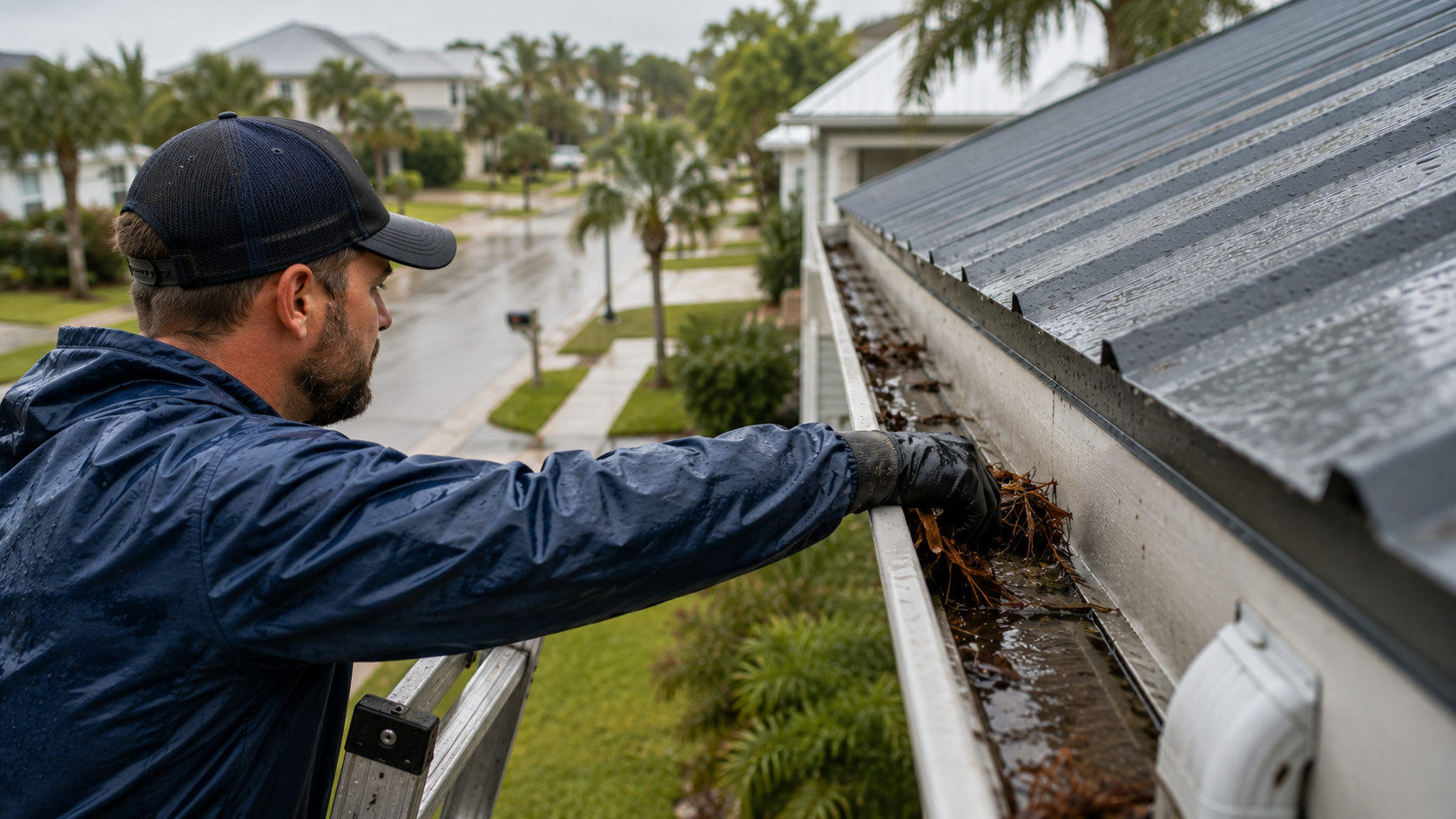
Leaf guards reduce debris accumulation in gutters, and they're genuinely worth it in areas with heavy tree cover. But they reduce maintenance frequency, not maintenance itself. Gutters still need periodic inspection. No product makes a system self-correcting.
The honest framing is this: drainage systems are maintained infrastructure, not permanent installations you forget about. The ones that perform over the long run are the ones installed correctly from the start, with materials matched to the actual conditions, and checked on a reasonable schedule.
How Commercial Properties Handle This Differently
Commercial properties face a scaled-up version of the same problem. Larger roof areas produce dramatically higher runoff volumes. Parking lots and loading areas generate sheet flow that residential systems aren't designed to handle.
For commercial installations, grate drains and channel drain systems shift from optional to necessary. A commercial property with inadequate drainage doesn't just develop a wet yard. It produces flooded parking areas, potential liability exposure, and risk to whatever is stored or operated inside.
Martin's Seamless Gutters & Fencing handles commercial gutter and drainage installations across Northwest Florida and South Alabama, with systems sized for commercial-scale runoff. The approach is the same as residential work: assess the full water management chain, identify where the gaps are, and build a system that handles what the property actually produces. The same lifetime warranty backing applies.
FAQ
How do I know if I need a French drain or just better gutters?
If water pools in the yard away from the house and the soil stays wet long after rain stops, that's a subsurface problem. A French drain is the right starting point. If moisture appears near the foundation or directly below the roofline, check your gutters first. Overflowing or undersized gutters are the most common source of foundation-adjacent moisture on Gulf Coast properties, and no French drain corrects water that's arriving from above.
What size gutters do I need in Pensacola?
Most Gulf Coast homes need 6-inch gutters on any roof section with meaningful pitch or square footage. The 5-inch gutters common on older homes were sized for average regional rainfall, not Gulf Coast summer storm intensity. Proper sizing accounts for your roof's square footage, pitch, and downspout count. Our installation process includes that assessment before any material is cut or installed.
Can I install a French drain myself?
You can dig a trench and lay pipe. Getting the slope, depth, outlet location, and gravel specification wrong means the system either doesn't function or fails within a few seasons. On clay-heavy soil especially, a French drain without the right slope assessment will back up and saturate the surrounding area rather than drain it. The cost of a failed installation plus a professional redo typically exceeds what professional installation would have cost the first time.
Do gutters and drainage systems need to be installed together?
Not always, but they should be planned together. Installing gutters without knowing where the downspout discharge will go can create new drainage problems at grade. If a French drain or dry well is in the eventual plan, routing downspouts to connect with that system from the start avoids significant rework later.
How long does a drainage installation take?
A standard residential gutter installation typically takes a single day. French drain installation depends on the run length and soil conditions, but a standard residential application usually takes one to two days. Projects combining multiple system types require more time and should be scoped during the estimate so there are no surprises.
Does Martin's Seamless Gutters & Fencing handle both gutters and drainage in one project?
Yes. Martin's handles the full water management chain, including seamless gutter installation, downspout routing, drainage system installation, and dry wells. Coordinating these as a single project means the systems are designed to work together from the start, rather than installed independently by separate contractors who never coordinated their approach.
What's the difference between a dry well and a French drain?
A French drain collects water from saturated soil along a linear path and carries it toward an outlet. A dry well receives water from a specific point source, usually a downspout, and disperses it into the surrounding soil gradually. They solve different problems and are often used together. The gutter routes water to a dry well, and a French drain handles the residual soil saturation in the surrounding area.
Water damage that shows up in your crawl space or along your foundation is the end of a long, quiet process. It started with a gap in the water management chain, often months or years before anything visible appeared.
Martin's Seamless Gutters & Fencing has been building and evaluating drainage systems across Pensacola, Milton, Navarre, Gulf Breeze, Cantonment, Pace, and the surrounding Gulf Coast region since 2004. Family-operated, backed by a lifetime warranty on materials, and offering free estimates for both residential and commercial properties. Military, first responder, and senior citizen discounts are available.
Request your free drainage assessment today.
About the Author
Patrick Martin is the owner of Martin's Seamless Gutters & Fencing, a family-operated company founded in 2004 serving residential and commercial customers across Northwest Florida and the Gulf Coast. With more than 20 years of hands-on experience in seamless gutter systems, drainage solutions, and fencing installations, he specializes in water management strategies built for the specific demands of Gulf Coast weather and soil conditions. Martin's Seamless Gutters & Fencing serves 14-plus locations across Florida and Alabama, with a focus on durable, low-maintenance installations backed by clear communication and reliable service.