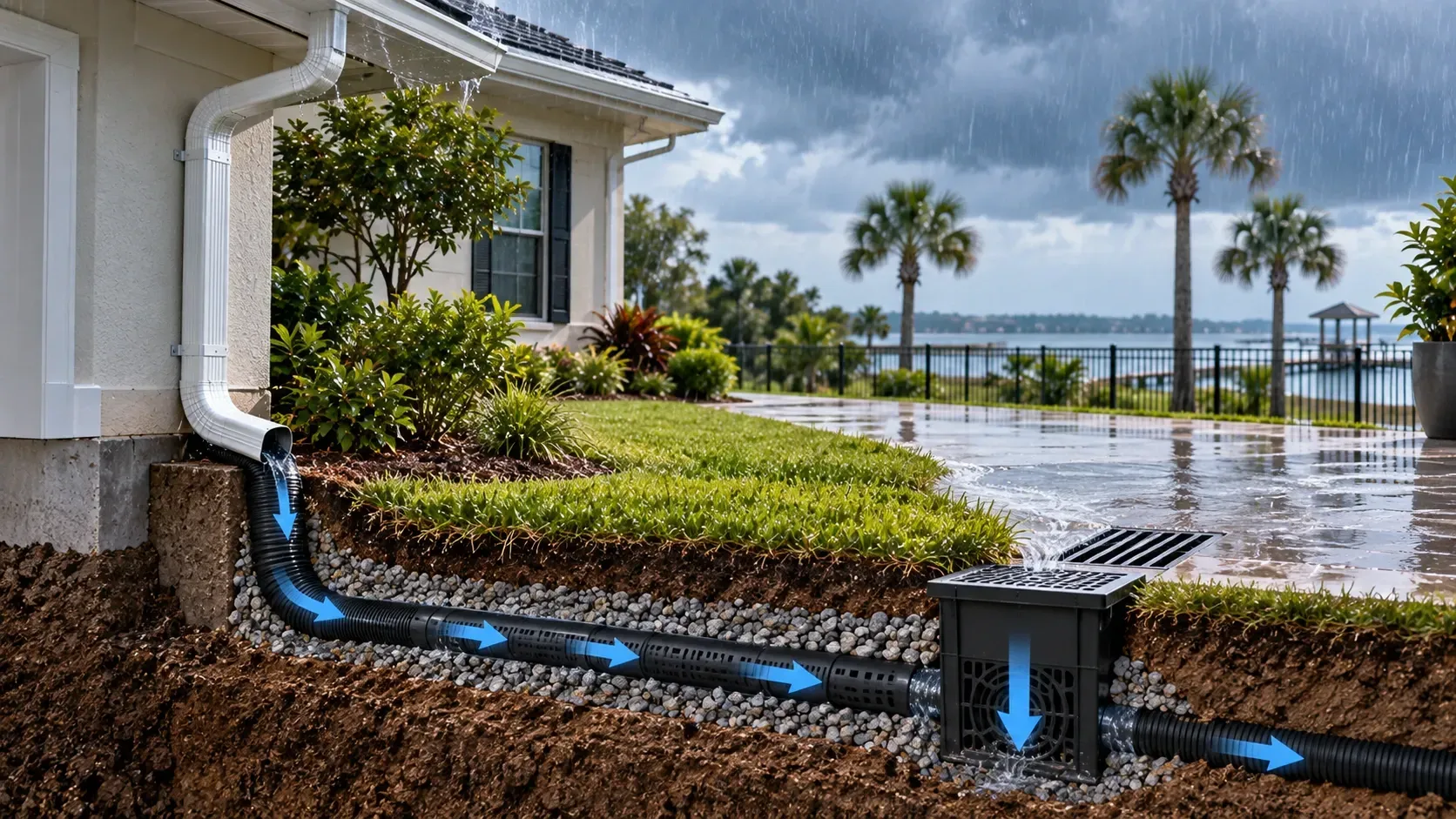
Gutters and drainage systems solve different parts of the same water problem. Gutters intercept rainfall at the roofline before it hits the ground. French drains, grate drains, and dry wells manage water that's already there. On the Gulf Coast, where rainfall can be relentless and soils can be stubborn, most properties need both layers working together.
Key Takeaways
- Seamless gutters handle the roofline. Drainage systems handle what happens after water reaches the ground. They're not competing options; they're separate layers of the same solution.
- French drains move water laterally through gravel and perforated pipe, but they can back up when surrounding soil is already saturated from extended rainfall.
- Dry wells depend on soil permeability. In clay-heavy Northwest Florida soils, a dry well fills faster than it drains during heavy storm events.
- A layered approach covering roofline, subsurface, and surface overflow is the most reliable strategy for properties in Pensacola, Milton, Navarre, and across the Gulf Coast.
- Martin's Seamless Gutters & Fencing has been family-operated since 2004 and offers free estimates to assess what your specific property actually needs.
Why Does Water End Up Where It Shouldn't?
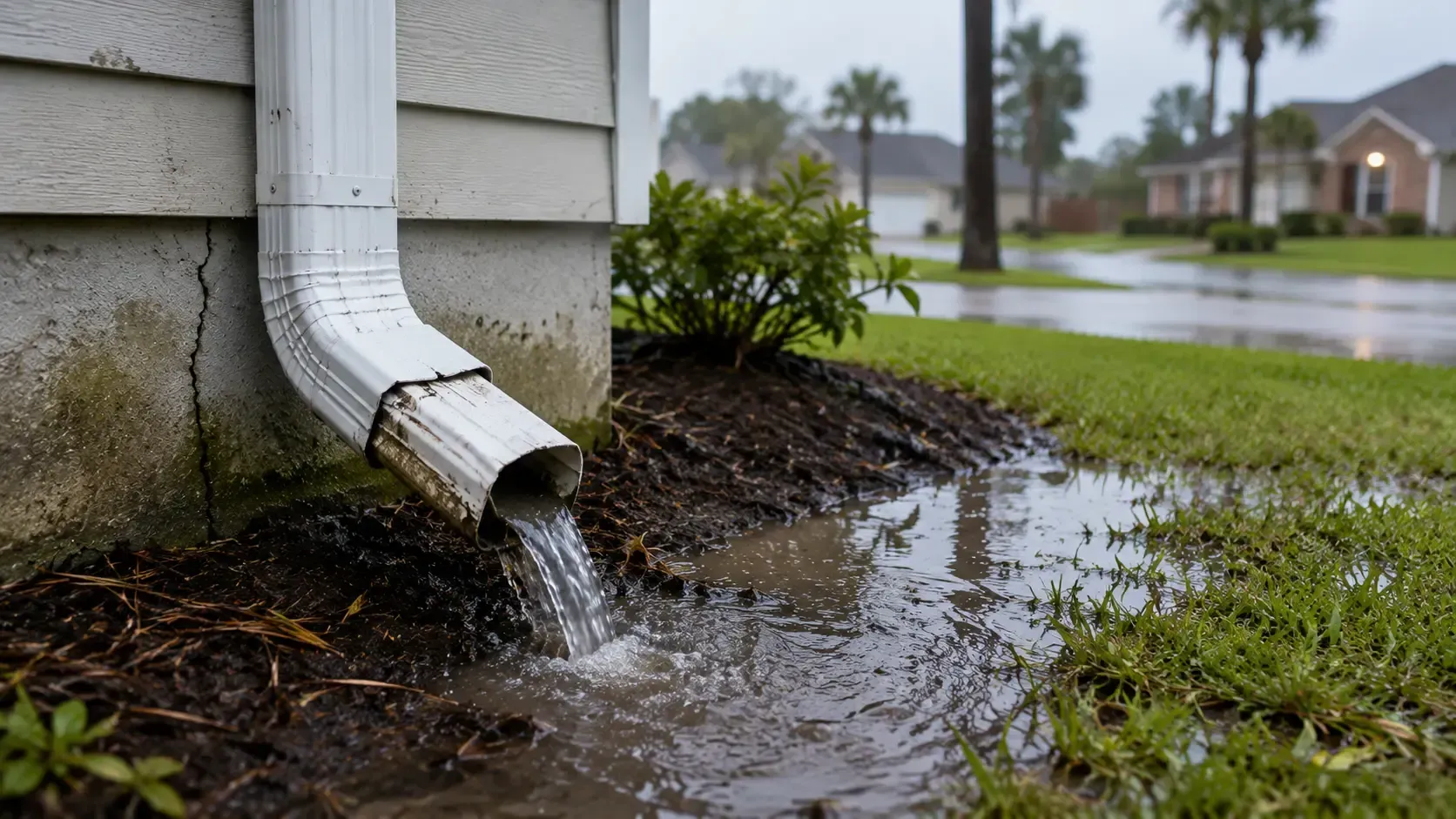
Most property owners notice the symptom long before they understand the cause. A soggy corner of the yard. A mud line along the foundation wall. Water pushing under a door or pooling against a slab. These feel like drainage problems, and sometimes they are. But the root cause is often further upstream: a roofline with no gutters, or a downspout depositing water four inches from the foundation and calling the job done.
Water management works as a chain. Break it at the roof and everything downstream gets overwhelmed. That's why comparing gutters to drainage systems as competing alternatives misses the point. They operate at different stages of the same problem.
What Does Each System Actually Do?
Getting this right starts with understanding the mechanics of each option.
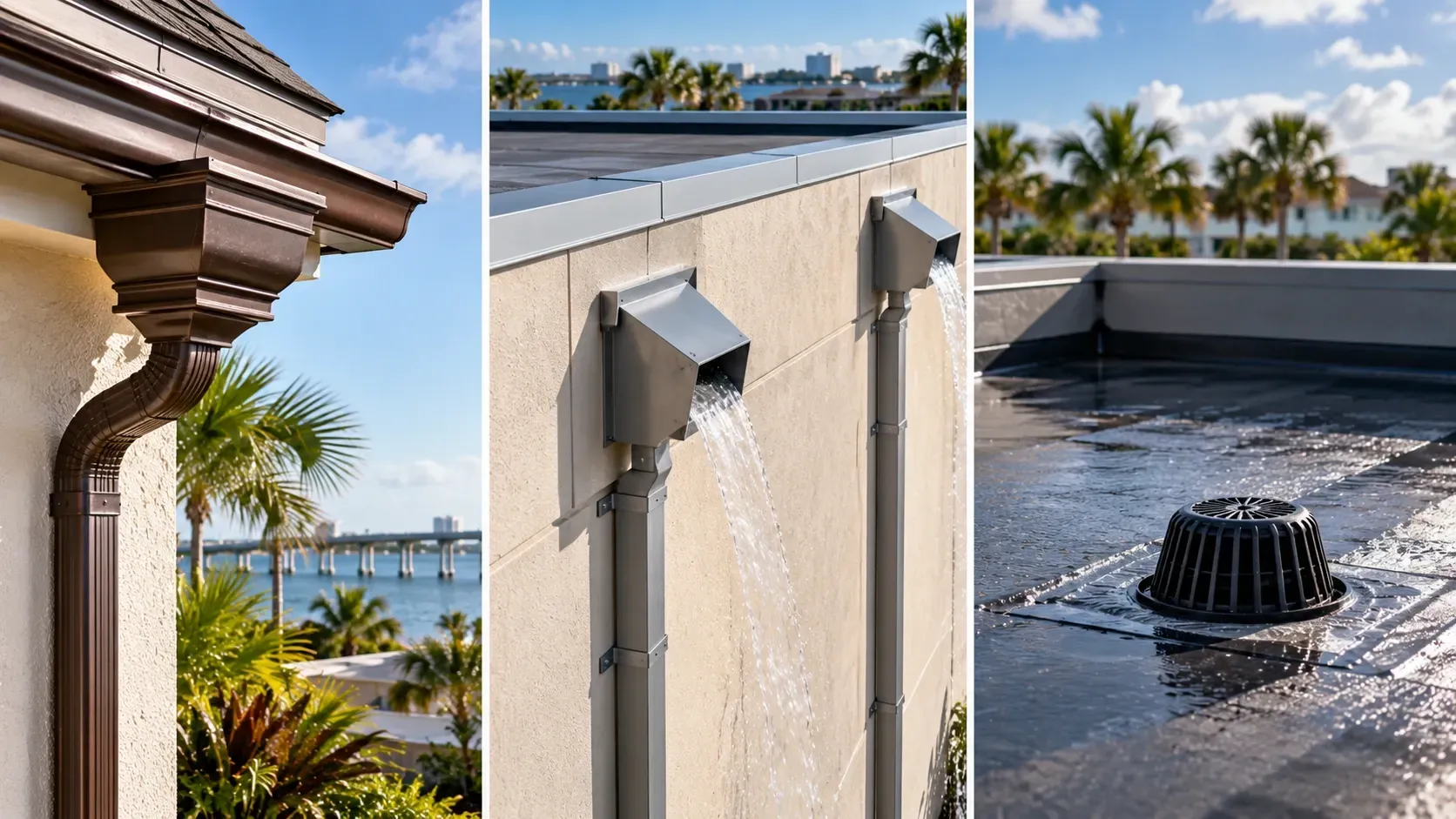
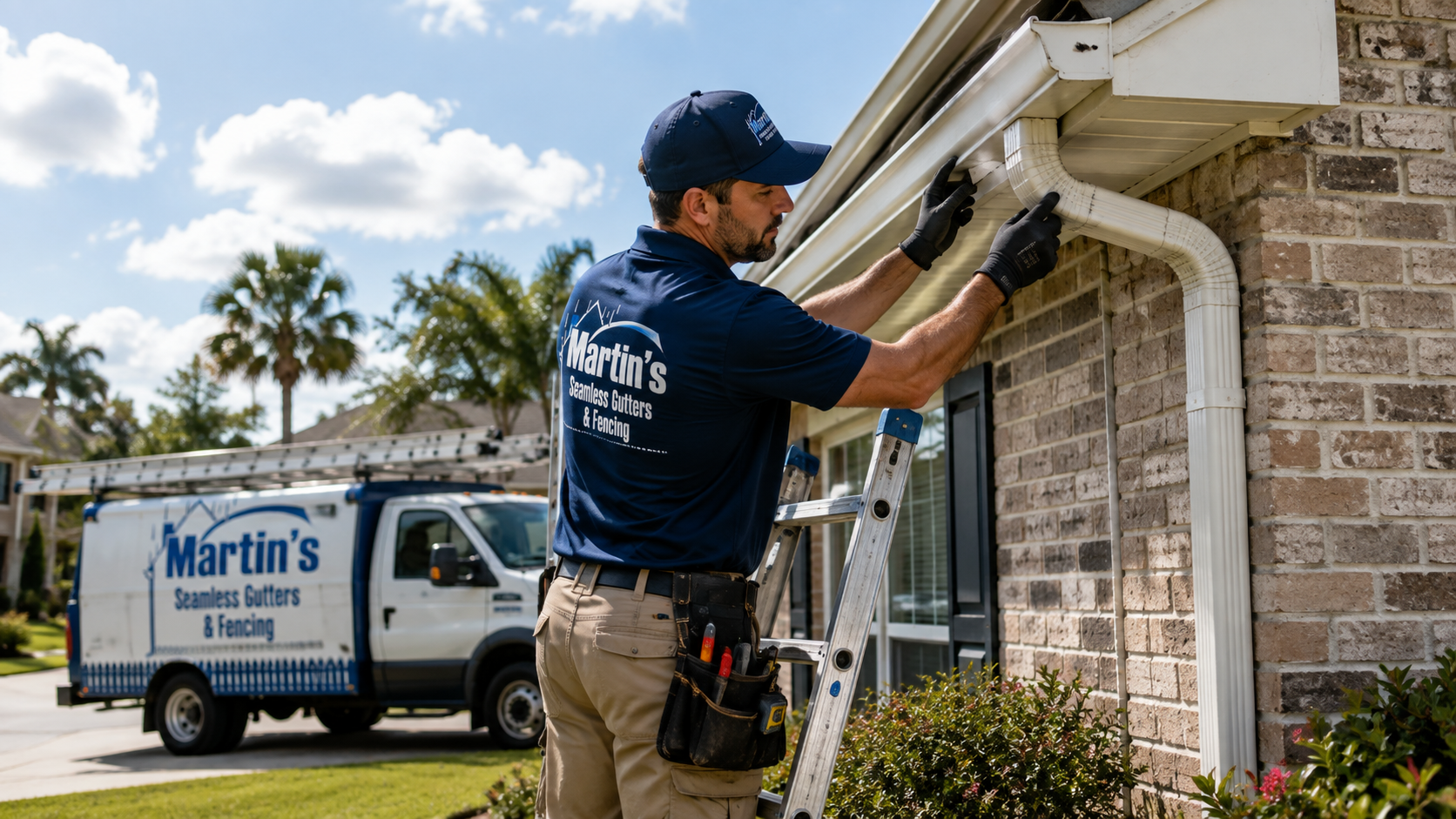
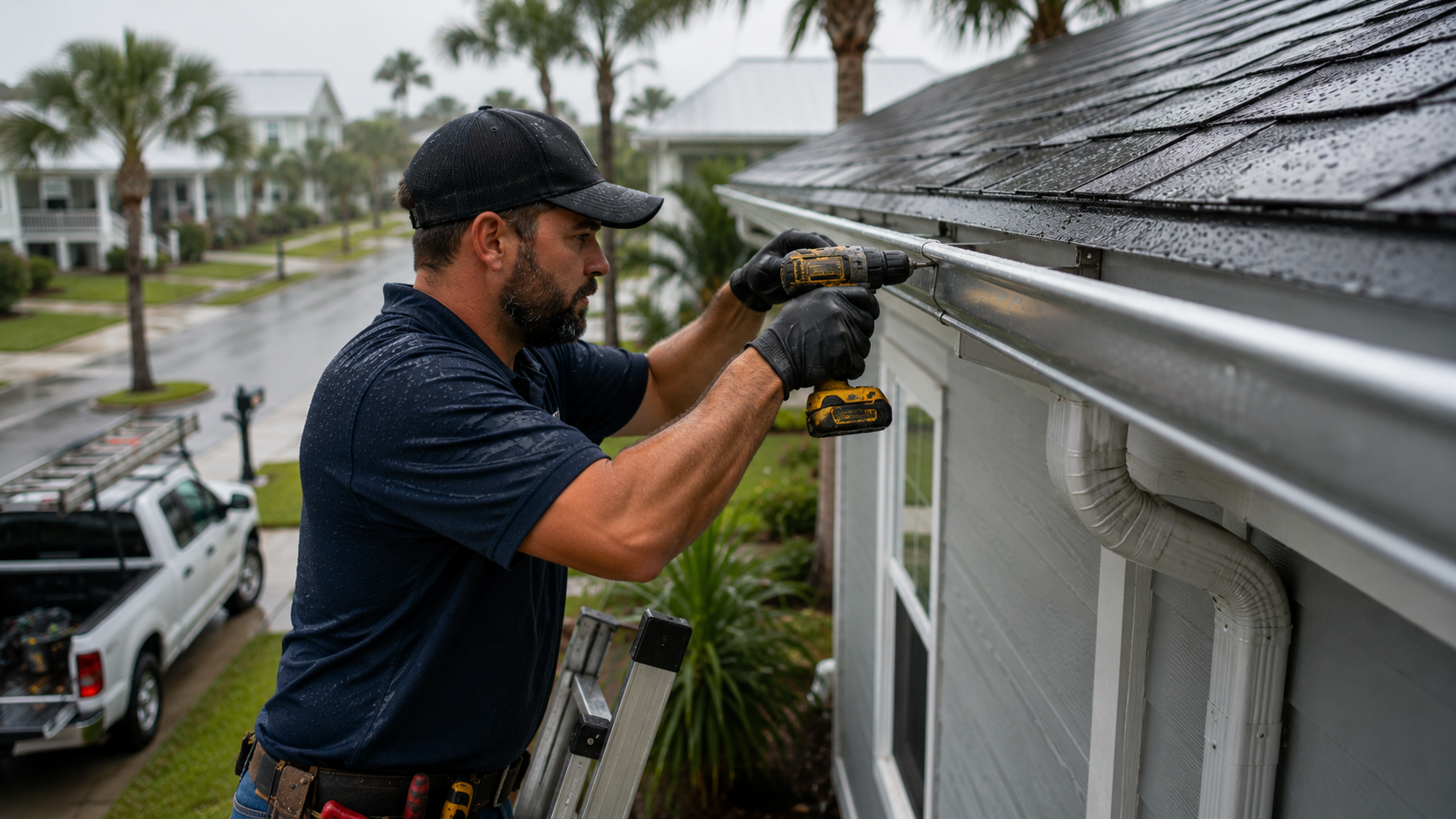
Seamless gutters intercept rainfall at the roofline and route it through downspouts away from your structure. A seamless gutter is fabricated on-site as a single continuous run cut to fit your exact roofline length. There are no seams except at corners and end caps, which means far fewer points where a leak can develop. That's a mechanical advantage over sectional gutters, not a marketing claim. Martin's offers 5-inch, 6-inch, and half-round gutter profiles, using materials from top-rated manufacturers including Spectra, Senox, ACM, Raytec, and Geocel.
You can review the available gutter styles and profiles to see which configuration suits your roofline and drainage volume.
French drains are subsurface systems. A trench filled with gravel surrounding a perforated pipe collects groundwater or infiltrating surface water and redirects it away from your structure toward a lower elevation or a proper outlet. They solve a different problem than gutters. If your yard slopes toward your foundation, a French drain intercepts that lateral water movement before it reaches the slab. French drain installation works best when it's planned alongside your above-ground drainage, not added as an afterthought once problems appear.
Grate drains sit at grade level and catch surface water that accumulates on patios, driveways, or low spots faster than the soil can absorb it. A properly placed grate drain routes collected water to a proper outlet, keeping it from pooling against structures or saturating the soil near your foundation.
Dry wells are underground chambers that receive water from downspouts or surface drains and allow it to percolate slowly into the surrounding soil. They work when soil permeability keeps pace with inflow. In Northwest Florida's clay-heavy soils, that condition often doesn't hold during heavy rainfall. A dry well that fills faster than it drains becomes a buried cistern. The water has to go somewhere, and it typically goes toward your foundation.
The full drainage solutions page covers how these systems work together on a typical Gulf Coast property.
The Gulf Coast Complication That Trips People Up
Here's something worth understanding: a drainage solution that performs well during a moderate fall rain can fail completely during a July tropical system, not because it was installed wrong, but because of how soil saturation accumulates over consecutive storm days.
After several days of sustained heavy rain, the ground can reach near-capacity. A French drain that moves water efficiently during isolated storms can back up entirely when the surrounding soil has no remaining absorption capacity. The drain isn't broken. The problem is that there's nowhere for the collected water to go.
Consider a situation where a homeowner installs a dry well to handle downspout overflow. Through a dry stretch, it performs well. Then back-to-back summer storm weeks hit, the dry well saturates, and water starts pooling against the foundation. The fix in that situation typically isn't the dry well itself. It's that the downspout needed to be extended further from the structure, and the yard likely needed a French drain to intercept lateral flow before it reached the slab.
This is why the Gulf Coast rewards a complete-system approach. Managing the roofline with seamless gutters, addressing subsurface flow where soil conditions support it, and routing surface overflow to a proper outlet each handles a different volume threshold. Remove one layer and the others get overwhelmed when rain comes in volume.
Matching the Solution to the Problem
| Your Situation | Acting With Martin's | Waiting or Going It Alone |
|---|---|---|
| No gutters, water hitting bare ground at the foundation | Roofline managed before downstream damage compounds | Foundation exposure continues every storm; repair costs grow faster than installation costs |
| Yard slopes toward foundation | French drain plus extended downspouts planned together | Lateral water keeps moving toward the slab; a single fix without the full picture often makes things worse |
| Surface pooling on hardscape or low areas | Grate drain routed to proper outlet, clearing standing water | Pooling persists, saturating soil and increasing hydrostatic pressure against the structure |
| Downspout overflow in sandy, well-draining soil | Dry well sized and placed to match actual percolation rate | Generic installation without soil assessment often under-performs when it matters most |
| Clay-heavy soil, repeated seasonal saturation | Layered system designed for low-permeability conditions | Single-solution approaches fail at high-volume events; the problem returns every season |
The table isn't a checklist. It's a framework for identifying which problem you're actually solving before committing to a solution.
Do Gutter Guards Change the Equation?
They don't improve drainage capacity. What they do is protect the system's ability to keep working over time.
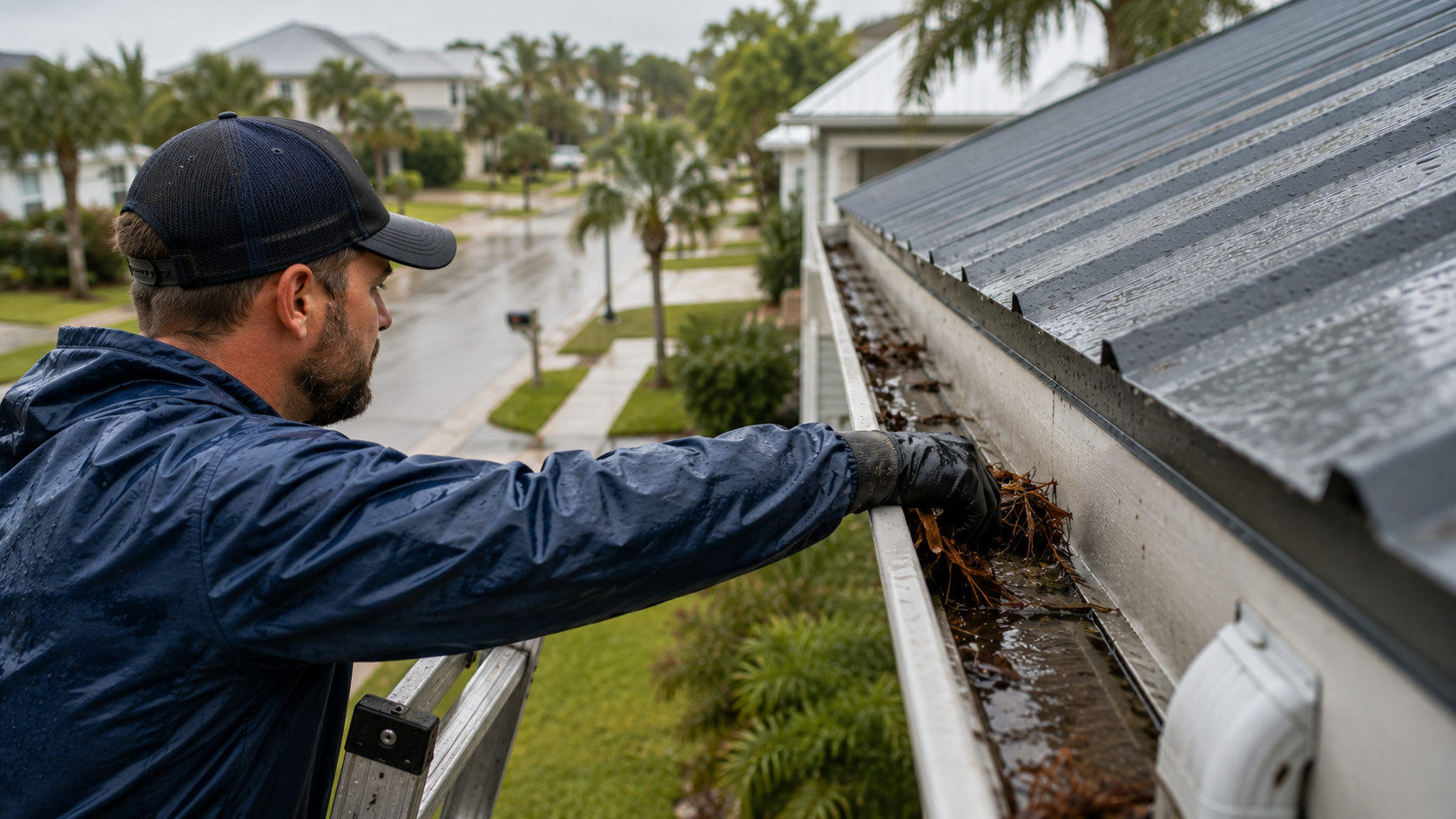
A clogged gutter functions the same as no gutter at all. Water overflows the edge, hits the ground near the foundation, and you're back to the exposure you were trying to prevent. In Northwest Florida, debris loads are heavy. Pine needles, oak leaves, and seed pods work their way into a clean gutter and reduce flow significantly within weeks during certain seasons. Leaf guard installation doesn't replace periodic inspection, but it extends the interval between cleanings and reduces the risk of overflow during a storm when the gutters haven't been recently checked.
Think of the gutter as the system. The guard is what keeps the system from quietly failing between visits.
What a Layered Approach Doesn't Solve
Straight talk: a complete drainage system isn't the right answer for every property.
If your lot slopes naturally away from the structure, your soil drains well, and you have no history of pooling, properly installed seamless gutters with extended downspouts may be completely sufficient. You don't need a French drain if water is already moving away from your structure on its own.
If your drainage problem originates from a neighbor's grading decision or a municipal infrastructure issue, no on-lot system fully resolves it. In those cases, working with your county or a civil engineer may be a necessary step before any installation makes sense.
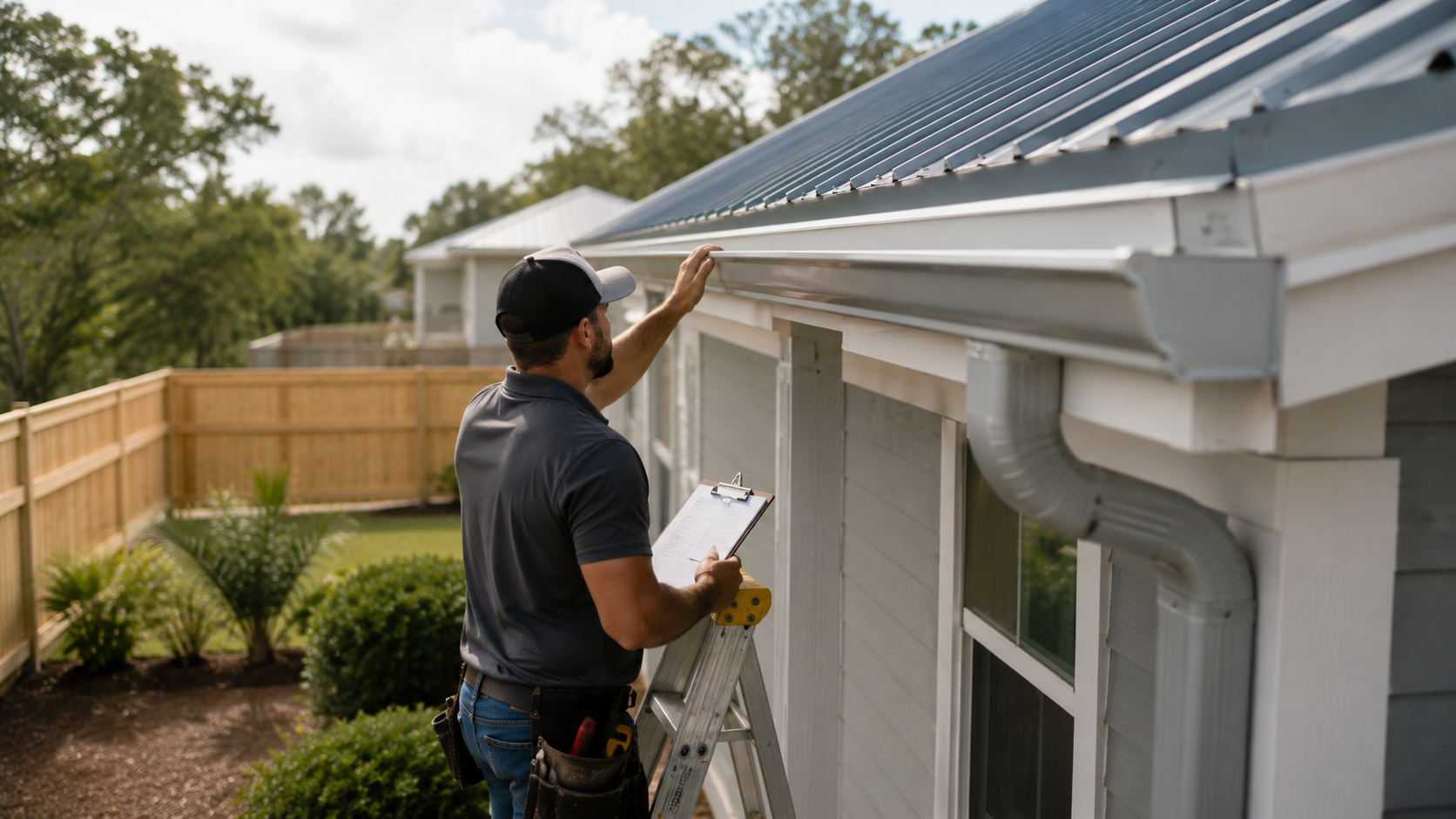
And if your existing gutters are structurally sound but leaking at joints or pulling away from the fascia, starting with a full replacement isn't always necessary. Professional gutter repair is often the right first move, and a proper assessment will tell you whether repair or replacement is the better call for your specific situation.
The wrong system installed well still fails. Fit matters more than product quality in isolation.
FAQ
How do I know whether I need a French drain or just better gutters?
Start at the roofline. If your home has no gutters, or if existing gutters overflow and deposit water near the foundation, fix that first. A French drain can't compensate for a roofline depositing water directly against your slab during every storm. If you have functioning gutters and still see yard pooling or water moving toward the structure from the yard side, that's when a French drain becomes the right conversation.
Can a dry well work if my soil is mostly clay?
It can be installed, but it's likely to underperform when you need it most. Dry wells work by allowing collected water to percolate into surrounding soil. Clay absorbs water slowly, which means a dry well in clay soil may fill before a heavy storm ends and have nowhere to discharge. In most of Northwest Florida's clay-heavy areas, routing water to a proper surface outlet through a French drain or extended downspout is the more reliable approach.
What's the real difference between seamless and sectional gutters?
A seamless gutter is fabricated on-site as a single continuous run cut to your exact roofline length. Sectional gutters are pre-cut pieces joined with connectors. Every connector joint is a potential leak point, and the sealant at those joints degrades under Gulf Coast UV exposure and temperature swings. Seamless gutters eliminate most of those joints. That's why seamless installation is the professional standard rather than an optional upgrade.
How often do these systems need maintenance?
It depends on the system type and your property's debris load. Gutters in areas with heavy tree cover benefit from inspection multiple times per year. French drains can go years without attention but should be checked if performance drops after heavy rain. Grate drains need periodic clearing at the inlet. Across all system types, the most common failure isn't a faulty installation. It's deferred maintenance that lets a minor blockage develop into a water damage problem.
Does fence placement affect how water drains across my property?
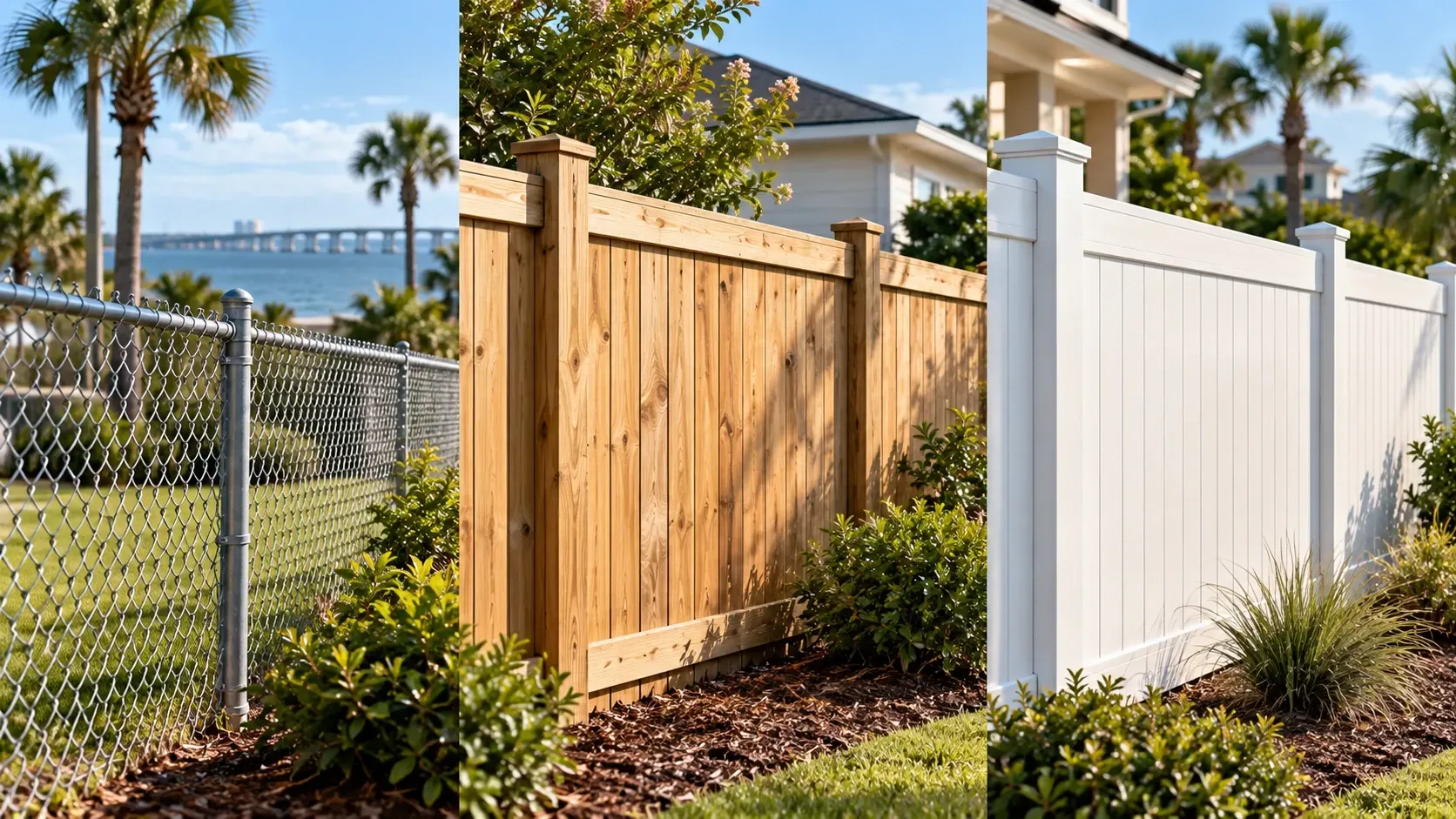
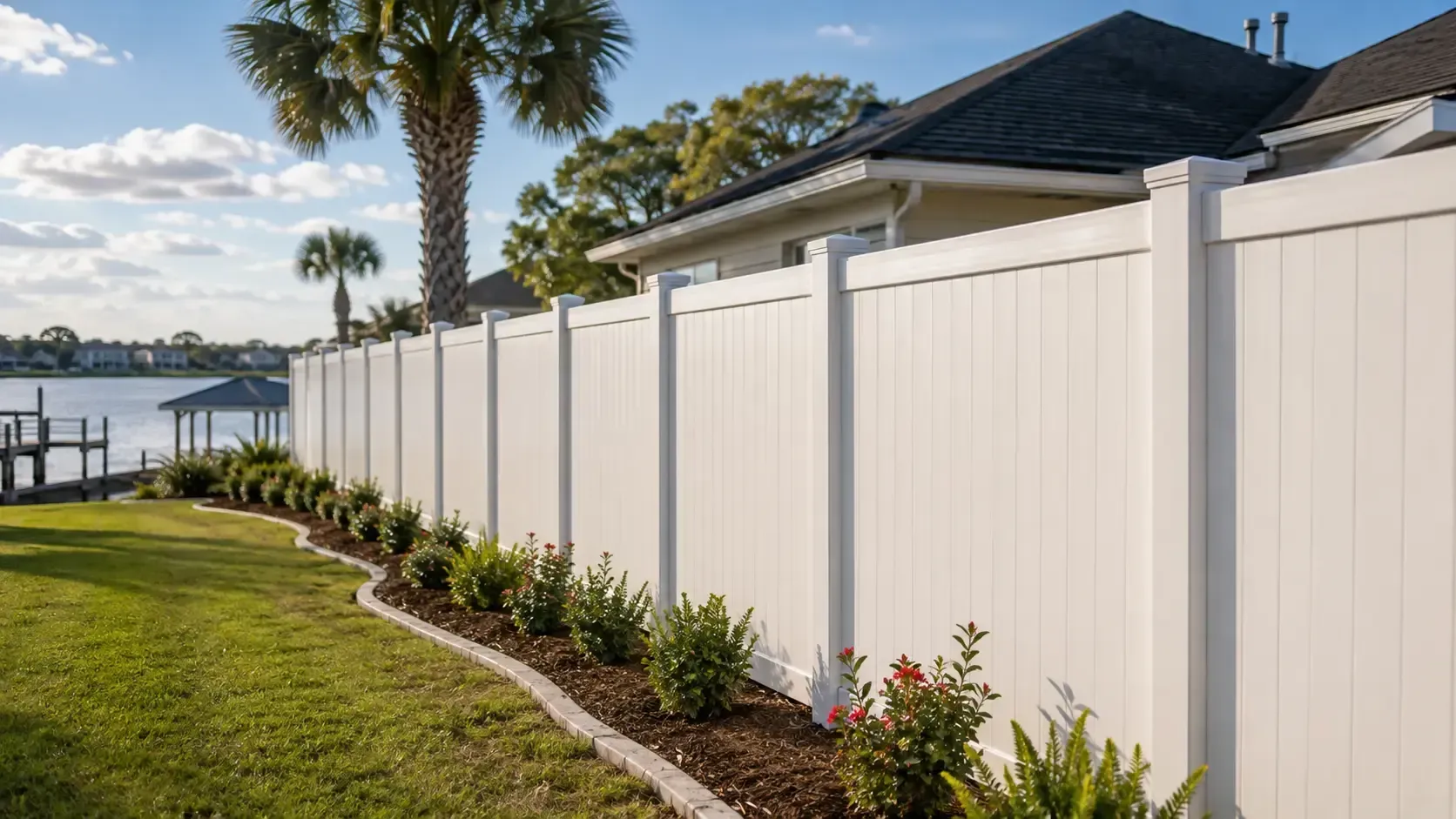
It can. A solid privacy fence running perpendicular to your natural drainage slope can act as a barrier, redirecting sheet flow in ways that weren't accounted for during planning. If you're considering privacy fence installation and your yard has any notable slope or existing drainage considerations, discussing fence layout before installation matters. Small adjustments to placement or adding a gap at grade can prevent a drainage problem from appearing after the fence is in the ground.
Does Martin's handle both residential and commercial properties?
Yes. Martin's has been family-operated since 2004 and serves both residential and commercial clients across Northwest Florida and South Alabama, including Pensacola, Milton, Navarre, Gulf Breeze, and surrounding counties. New gutter installations include a lifetime warranty on materials. Free estimates are available for all property types.
Is there any advantage to scheduling gutter and fencing work at the same time?
Practically, yes. When one contractor handles both, the drainage plan accounts for fence placement before anything goes into the ground. You avoid the coordination problem of two separate crews making decisions that affect each other. Martin's Seamless Gutters & Fencing handles both services, which makes it straightforward to plan a property project as a single scope rather than two separate jobs that may end up working against each other.
Water doesn't wait for a convenient time to find the path of least resistance. The properties that handle Gulf Coast rainfall well aren't always the ones with the most elaborate systems. They're the ones where someone thought through the full chain from roofline to outlet before the first stake went in the ground.
Contact Martin's Seamless Gutters & Fencing to schedule your free estimate. Military members, first responders, and senior citizens receive discounts on all services.
About the Author
Patrick Martin is the owner of Martin's Seamless Gutters & Fencing, a family-operated company founded in 2004 serving residential and commercial customers across Northwest Florida and the Gulf Coast. With more than two decades of hands-on experience in seamless gutter systems, drainage solutions, and fencing installations, he specializes in durable, low-maintenance water management tailored to Gulf Coast conditions. Martin's serves communities from Pensacola and Gulf Breeze to Baldwin County, Alabama.