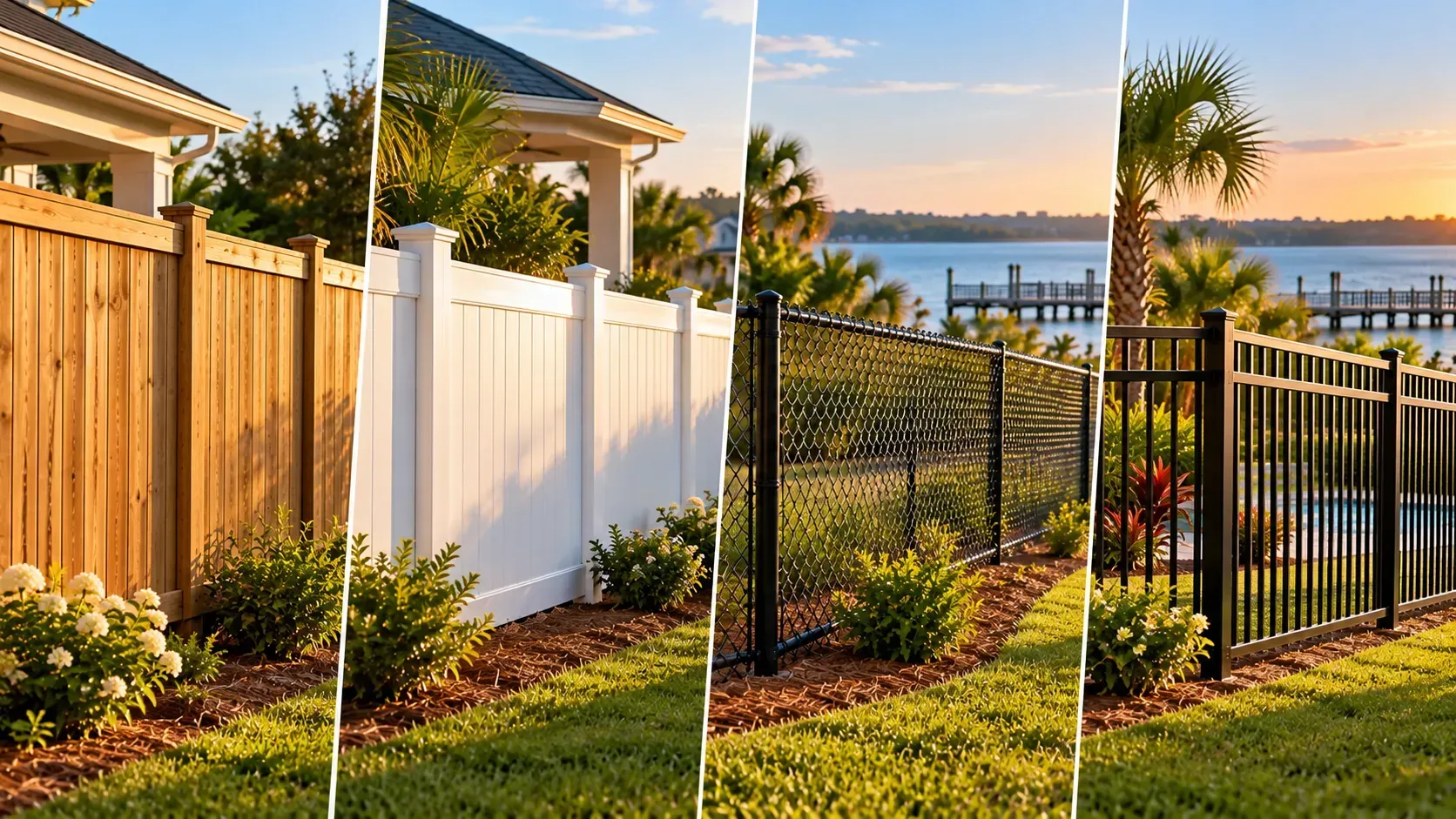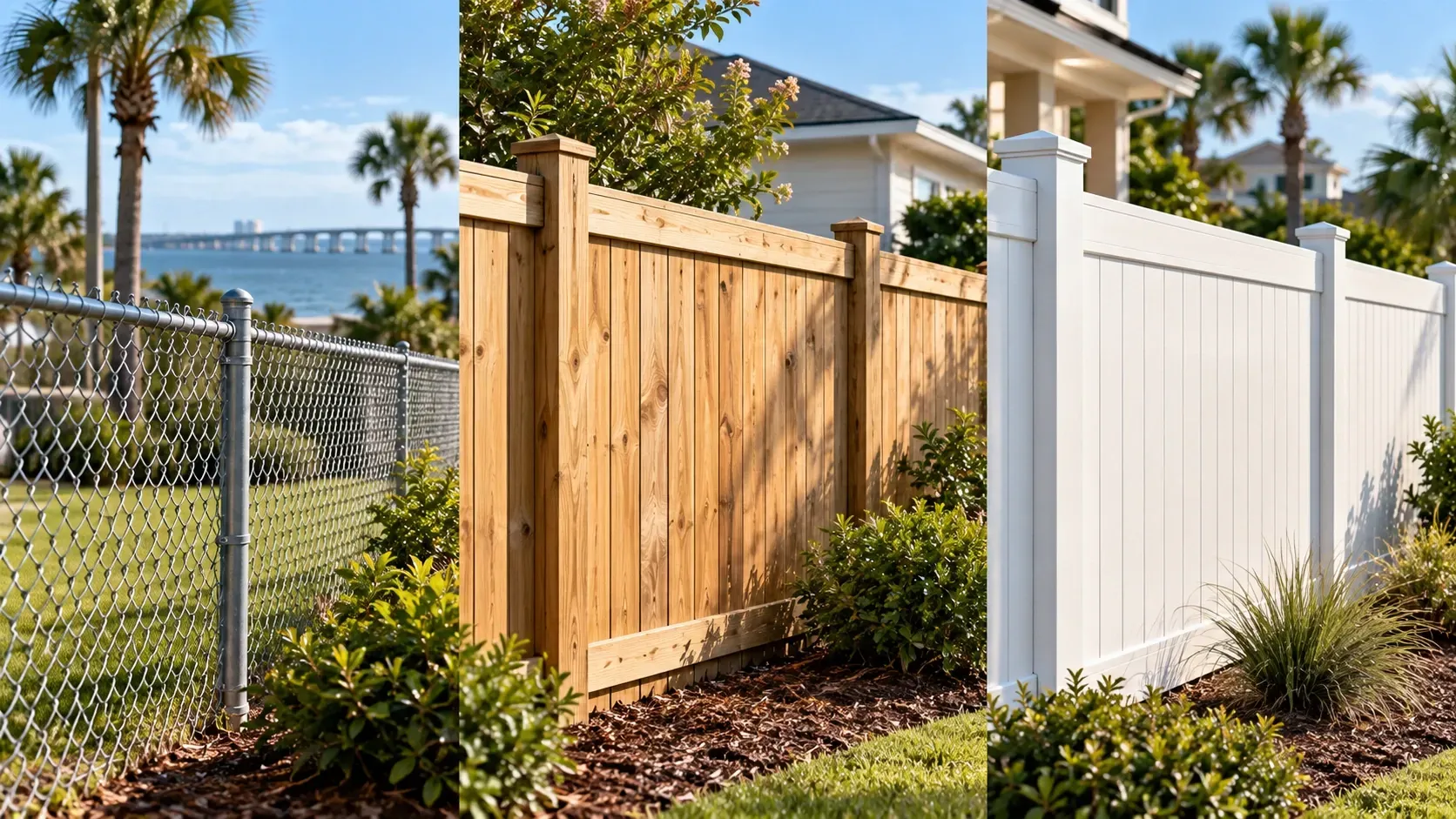

Chain-link holds up longest with the least upkeep. Wood gives you the most design flexibility but asks the most in return. Vinyl typically costs more upfront while keeping maintenance demands low over time. The right material depends on your property's use, its exposure to salt air and wind, and how much ongoing attention you're willing to give it.
Key Takeaways
- Chain-link is built for perimeter security and containment, and its open-weave design is a structural advantage in high-wind coastal conditions
- Wood offers natural appeal and genuine design flexibility, but Gulf Coast humidity and salt air can accelerate deterioration without consistent upkeep
- Vinyl often carries the highest initial cost of the three materials, though its maintenance demands tend to be lower than wood over the long run
- Salt air, ground moisture, and wind load affect every material differently, and a site-specific recommendation accounts for all three
- A free on-site estimate from a qualified contractor prevents costly material mismatches before a single post goes in the ground
What Makes Chain-Link the Practical Choice for Durability?
Chain-link is a perimeter security and containment system first. It was never designed to be a privacy solution, and that honest understanding is what separates buyers who use it well from those who end up disappointed.
The structural case for chain-link in a coastal environment comes down to its open-weave design. A solid wood or vinyl panel catches wind like a sail and transfers that lateral force directly to the posts. Chain-link mesh lets wind pass through, which reduces the load on the entire structure during storm events. On the Gulf Coast, where tropical storm conditions arrive seasonally rather than occasionally, that's not a minor advantage.
Galvanized chain-link handles salt air in a way that bare or painted steel can't. The zinc coating on properly galvanized mesh acts as a sacrificial layer, meaning it may corrode before the underlying steel is exposed. For properties within a few miles of the water, vinyl-coated chain-link adds another protective layer and is often worth the modest cost premium. It's a simple specification decision that can meaningfully extend a fence's service life in a coastal setting.
For commercial properties, rental units, and utility enclosures across Pensacola, Pace, and Baldwin County, chain-link tends to hold up well over the long term with minimal intervention. No painting, no staining, no rot treatment. Periodic post inspections and you're largely done.
The fence installation services at Martin's Seamless Gutters & Fencing include chain-link options for both residential and commercial applications, with post depth and gauge selection matched to your specific site conditions rather than a one-size-fits-all spec.
When Does Wood Make Sense, and When Does It Become a Problem?
Wood earns its place when curb appeal and design flexibility matter most. It's the most customizable of the three materials by a considerable margin. You can adjust height, board spacing, cap styles, and finish to match nearly any architectural style, and individual sections are relatively straightforward to repair if a board or rail gets damaged.
The challenge on the Gulf Coast is specific. Moisture works into wood faster here than in drier inland climates because of the combination of high humidity, salt air, and the repeated wet-dry cycles that come with seasonal rainfall.
Consider a typical scenario in Navarre or Gulf Breeze. A homeowner installs a pressure-treated pine privacy fence and skips consistent maintenance. In many cases, the bottom rails may begin absorbing ground moisture within the first few years. Pickets can show surface cracking as the wood expands and contracts with humidity changes. Posts at ground contact may soften over time, and the fence can begin to lean. The timeline varies depending on soil drainage, sun exposure, and how well the wood was treated at installation. The specific outcome is never guaranteed in either direction. But the direction of travel under neglect is predictable enough to plan around.
That kind of deterioration often isn't a material failure. It's a maintenance failure that wood demands and the other materials don't.
Wood is a legitimate choice when you're committed to periodic sealing and treatment, when the fence is primarily decorative rather than structural, and when you want the ability to repair individual sections without sourcing specialty panels. That repairability is real value for budget-conscious homeowners.
What wood can't do is hold its appearance and structural integrity in a salt-air environment without consistent attention.
Why Vinyl Costs More Upfront and Often Wins on Total Cost
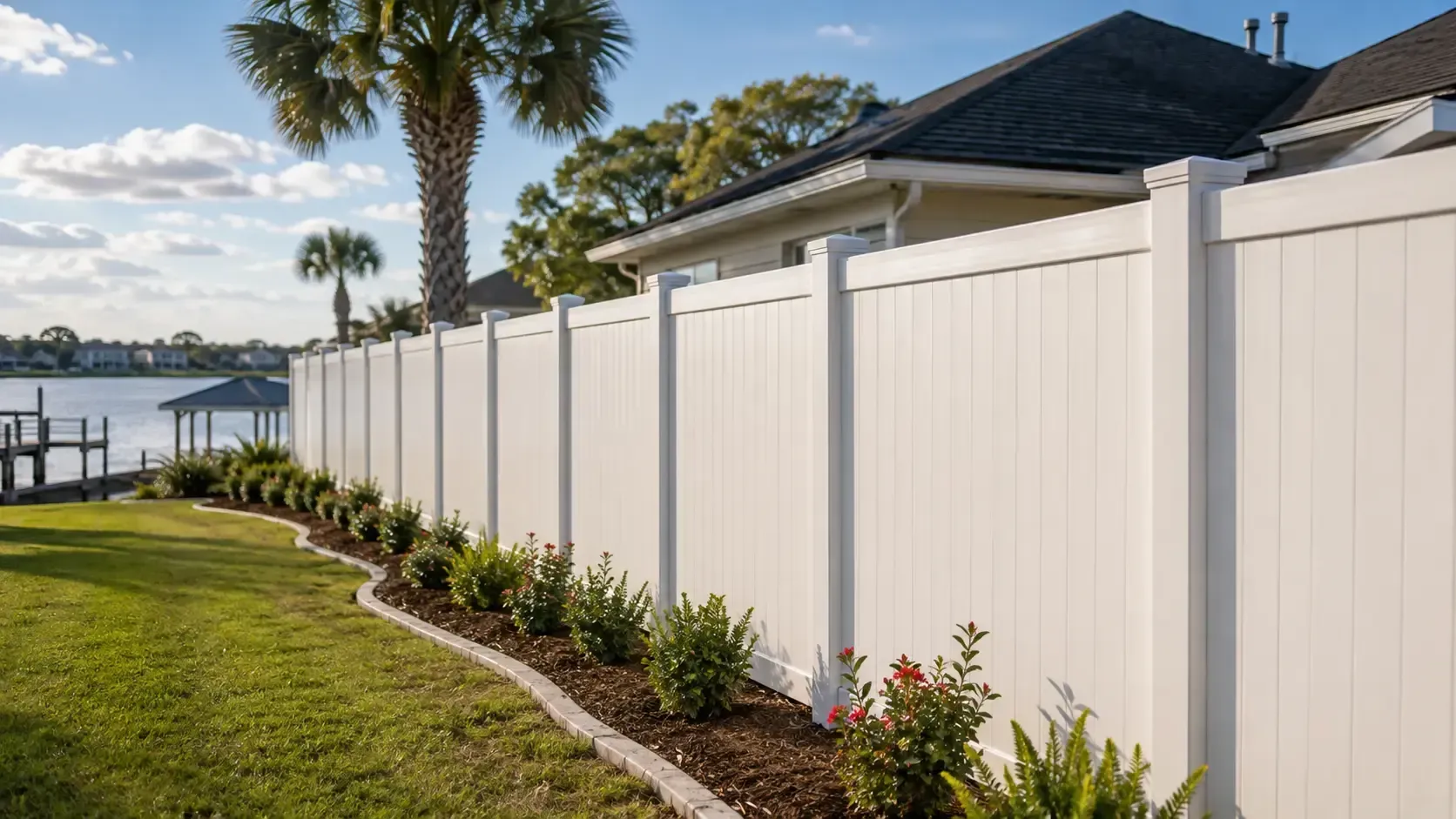
Vinyl fencing is manufactured from PVC compounds that don't absorb moisture, don't rust, and don't require surface treatment. Quality vinyl incorporates UV inhibitors built into the material itself rather than applied as a surface coating. That specification difference matters on the Gulf Coast, where sustained sun exposure puts real stress on exterior materials. Lower-grade PVC products may yellow or become brittle over time under that UV load, while properly specified vinyl is designed to hold its color and structural integrity for years.
The reason vinyl often performs well on total cost is straightforward. Wood maintenance in a humid, salt-air environment may involve periodic sealing or staining, occasional board replacement as individual sections degrade, and eventual post replacement if moisture penetrates the ground contact zone. Each of those tasks carries a cost in both money and time that tends to compound over a decade or more. Vinyl's maintenance program is comparatively minimal: a hose and occasionally a mild cleaner.
For HOA communities, rental properties, and homeowners in Escambia and Santa Rosa Counties who want a low-maintenance privacy fence that holds its appearance without annual intervention, vinyl is the practical recommendation for most situations.
The expert fence contractor services at Martin's Seamless Gutters & Fencing cover vinyl, wood, and chain-link installations across the Gulf Coast region, with free estimates to help you compare real costs for your specific property layout.
The Real Comparison: Acting with a Professional vs. Guessing Alone
This table is about what happens when you get a site-specific recommendation versus making a material decision without one.
| Scenario | With a Professional Site Evaluation | Without One |
|---|---|---|
| Material fit | Matched to your use case, HOA rules, and salt-air exposure | Chosen from a catalog without site-specific context |
| Post depth and footing | Specified for soil conditions and wind load at your location | Defaulted to standard, which may underperform in Gulf Coast conditions |
| Long-term costs | Transparent upfront so you can compare multi-year value | Hidden until repair bills arrive |
| Warranty coverage | Lifetime warranty on materials from top-rated manufacturers | Varies; often none on labor or limited on materials |
| Installation quality | Professional craftsmanship with proven installation methods | Depends entirely on contractor experience or DIY outcome |
| Risk of early failure | Reduced through correct specification from the start | Higher, because the most common failures trace back to the original spec |
Getting the material right on day one is a decision that determines whether your fence is still performing in year fifteen or needs significant work in year five.
What Salt Air, Wind, and Ground Moisture Do to Each Material
The Gulf Coast climate creates specific failure conditions for all three materials. Knowing where each one is vulnerable helps you make a smarter specification decision.
For chain-link, the risk is corrosion at any point where the galvanized coating gets compromised: cut ends, connection points, or areas where the coating has been scratched. Proper installation addresses those points and uses fittings that maintain corrosion resistance across the whole system.
For wood, the combination of salt air and high humidity draws moisture into the grain more aggressively than in drier climates. Maintenance schedules that work well inland often aren't enough here. The drying and rewetting cycle is more demanding, and the consequence of skipping a treatment cycle can show up sooner than expected.
For vinyl, sustained UV exposure is the primary risk. The difference between quality and budget vinyl often isn't visible on installation day. It tends to show up later when cheaper material begins to yellow or crack under the load of Gulf Coast sun.
The commercial gutter and fence services at Martin's Seamless Gutters & Fencing are built around this kind of practical, site-specific thinking for properties that need to perform reliably over time.
Who Should Reconsider Writing Off Chain-Link for Residential Use?
Chain-link doesn't work when privacy is the goal. The open mesh provides visibility in both directions, which makes it a non-starter for HOA communities with appearance standards or any front-yard residential application where the fence contributes to the visual identity of the property.
That limitation is real.
But chain-link gets dismissed for residential applications far more often than it deserves. For backyard pet containment, pool enclosures, side-yard utility areas, and commercial perimeter fencing in Milton or across Baldwin County, chain-link outperforms wood and vinyl on nearly every practical metric. The resistance to it is aesthetic, not functional. Property managers and real estate investors tend to undervalue it because it doesn't photograph well. It performs well. Treating those as the same thing is an expensive mistake over a long property hold.
Martin's Seamless Gutters & Fencing has been family-operated since 2004, and the free estimate process includes a property walkthrough specifically to match the material recommendation to actual site conditions. Military personnel, first responders, and senior citizens receive discounts on both fence and gutter services, so mention your eligibility when you call. If you're ready to get a real number for your property, schedule a free estimate with Martin's Seamless Gutters & Fencing and the team will walk through the options based on what's actually on your lot.
Frequently Asked Questions
How long does chain-link fencing typically last in a coastal environment like Pensacola?
A properly galvanized chain-link fence in Gulf Coast conditions can last 20 to 30 years with minimal maintenance. The key variables are coating quality and installation detail. Vinyl-coated chain-link adds corrosion resistance worth specifying for properties close to the water. Post depth and concrete footing often matter as much as the mesh specification itself.
Can privacy slats turn chain-link into a privacy fence?
Yes, and it's a practical option when budget matters more than aesthetics. Aluminum or vinyl privacy slats thread through the chain-link mesh and provide partial to full visual screening. They reduce wind resistance compared to a solid panel, which is actually an advantage in storm-prone areas. The tradeoff is added cost and occasional slat replacement over the fence's life.
Is vinyl fencing structurally sound enough for Gulf Coast wind conditions?
Quality vinyl fencing engineered for coastal conditions handles wind well because the posts are set in concrete and the panels are designed to flex under lateral pressure rather than crack. When vinyl fences fail in high-wind events, the typical failure point is at the post base rather than the panel itself. Post depth and concrete footing are the installation details that most directly determine storm performance.
Why does wood cost less upfront but sometimes cost more over time?
Wood's lower material cost can be offset by the maintenance it requires in a humid, salt-air environment. Periodic sealing, board replacement as sections degrade, and potential post replacement each carry costs that accumulate over a decade or more in ways that vinyl and chain-link typically don't. The upfront savings are real. The long-term cost comparison often shifts once you account for what consistent wood maintenance actually involves in this climate.
What fence material tends to work best for a rental property or commercial site?
Chain-link is typically the strongest performer for commercial and rental applications where durability, low maintenance, and security matter more than appearance. It holds up under heavy use, requires very little ongoing upkeep, and doesn't carry the rot or UV degradation risks that can affect wood and lower-grade vinyl over time. For tenant-facing areas where appearance matters more, vinyl privacy fencing is a reasonable upgrade that still keeps maintenance demands low.
How do I know whether a contractor is recommending the right material for my property?
A contractor who recommends the same material for every property isn't doing a real site evaluation. The right recommendation depends on your specific use case, your proximity to salt water, any HOA requirements, and how much maintenance you're willing to do. At Martin's Seamless Gutters & Fencing, the free estimate process includes a property walkthrough specifically to match the recommendation to actual site conditions rather than a default spec.
Do military, first responder, or senior discounts apply to fence installation?
Yes. Martin's Seamless Gutters & Fencing offers discounts for military personnel, first responders, and senior citizens on both fence installation and gutter services. Mention your eligibility when you schedule your free estimate and the team will apply the appropriate discount to your quote.
About the Author
Patrick Martin is the owner of Martin's Seamless Gutters & Fencing, a family-operated company founded in 2004 serving residential and commercial customers across Northwest Florida and the Gulf Coast. He specializes in seamless gutter systems, drainage solutions, gutter protection, and fence installation with an emphasis on quality craftsmanship and honest service. Martin's Seamless Gutters & Fencing serves more than 14 locations across Florida and Alabama, including Pensacola, Milton, Navarre, Gulf Breeze, Cantonment, Pace, and Baldwin County.