Fence Materials Guide for Pensacola, FL: Vinyl, Wood, Aluminum & Chain Link Explained

Choosing the right fence for your Pensacola property matters — Gulf Coast weather can shorten a fence’s life if you pick the wrong material. In this guide we’ll walk through the pros and cons ofvinyl, wood, aluminum, and chain link fencing, how each holds up near the water, and the maintenance and costs to expect. Read on and you’ll have a clear sense of which option fits your needs for privacy, security, curb appeal, and budget in our local climate.
Which Fence Materials Work Best in Pensacola’s Climate?
When you choose a fence here, factor in humidity, salt air, and strong sun. Those coastal elements change how materials age and how much care they’ll need over time.
How Does Pensacola’s Humid, Coastal Weather Affect Fence Durability?
Pensacola’s high humidity and salty air speed wear on many fence types. Wood can rot or attract insects if not properly sealed. Uncoated metal will rust when exposed to salt. Vinyl resists moisture and warping, so it’s often a smart pick for coastal homes. Use these realities to weigh upfront cost against long-term performance.
What Are the Climate-Specific Benefits of Vinyl, Wood, Aluminum, and Chain Link Fences?
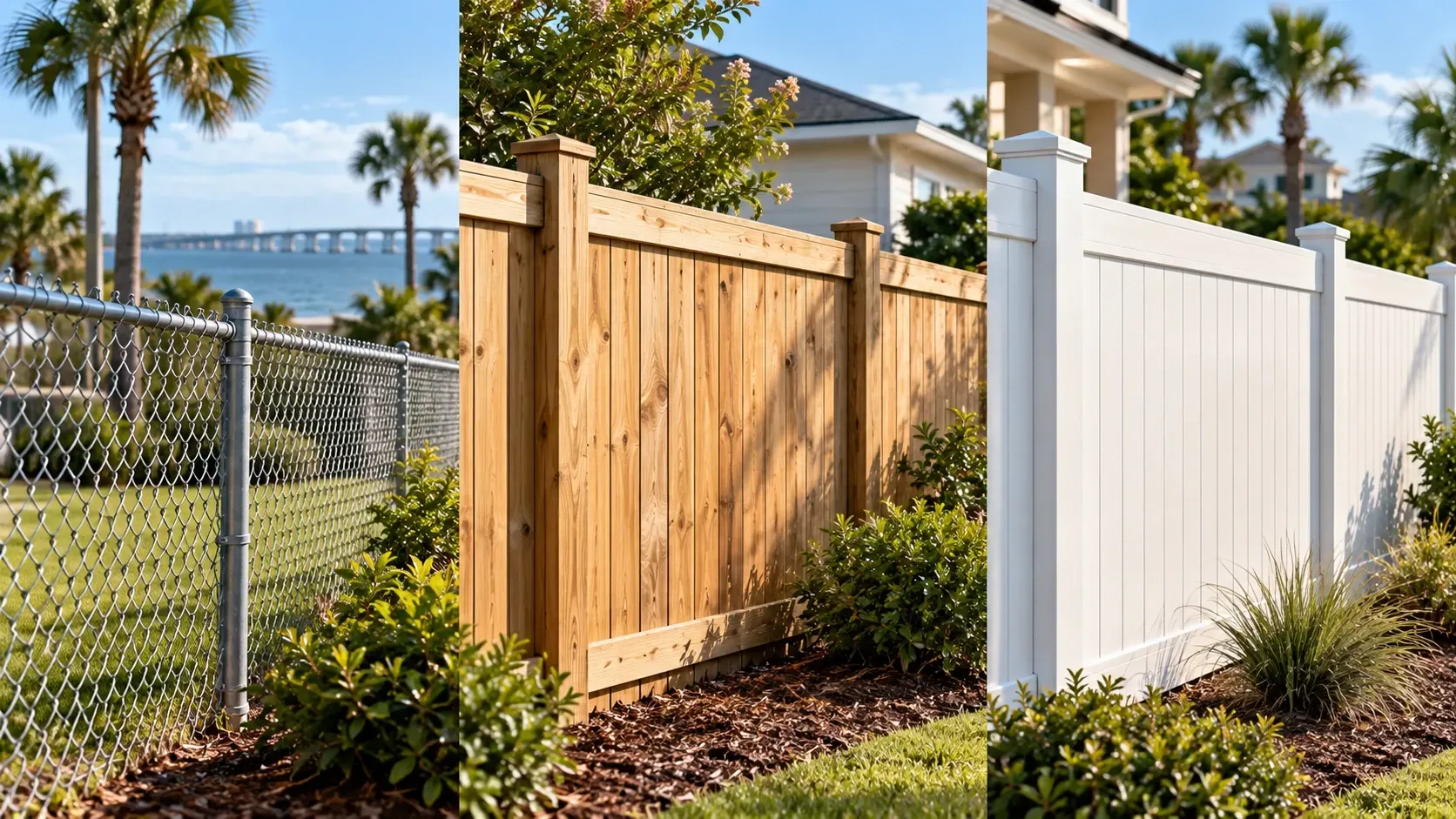
Here’s a quick look at how each material performs in Pensacola’s coastal conditions:
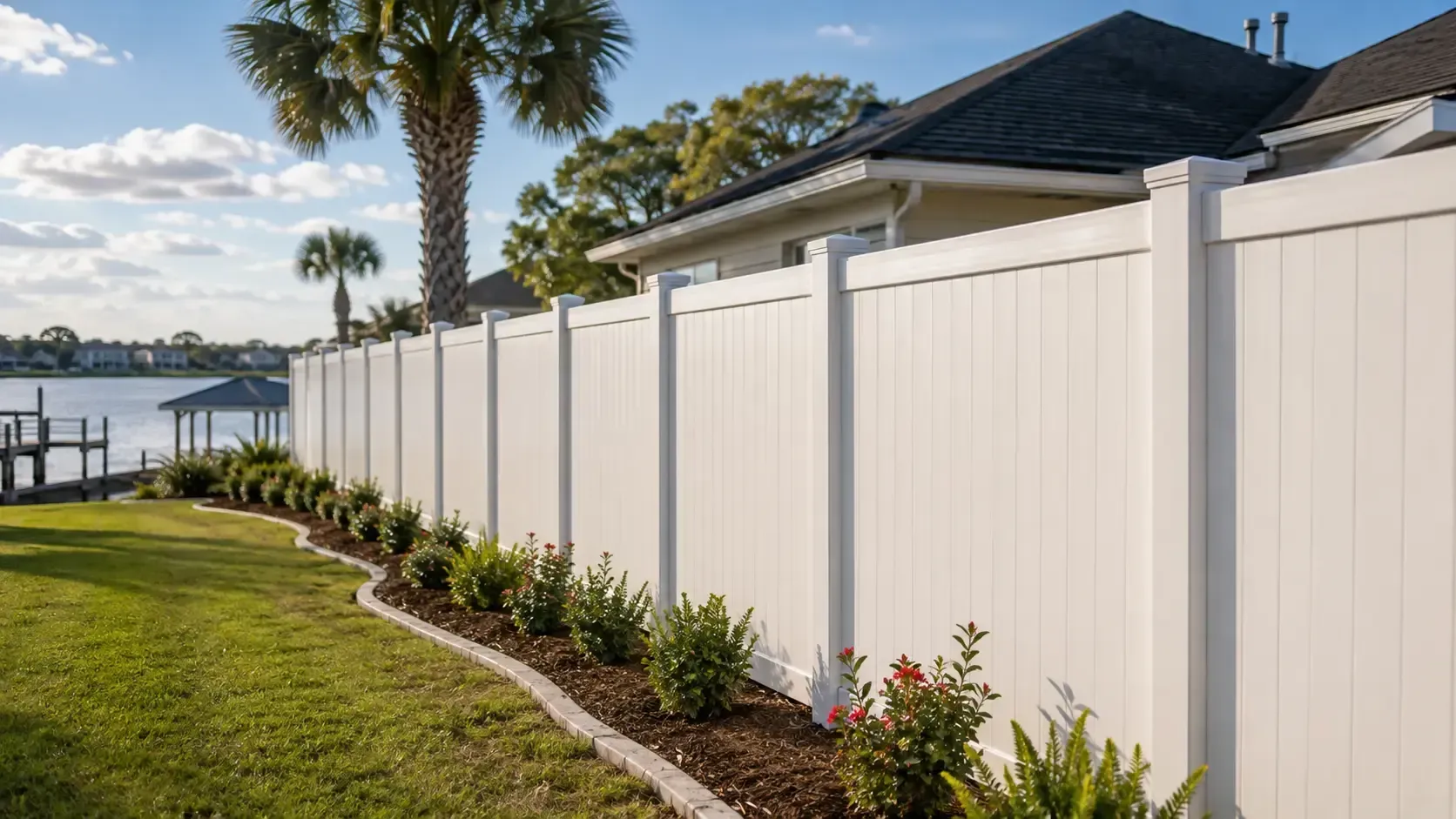
- Vinyl Fences: Resist moisture and UV fading, don’t warp, and hold color well — a low-maintenance, long-lasting choice.
- Wood Fences: Provide a classic look and strong privacy but need regular sealing or staining to fend off moisture and pests.
- Aluminum Fences: Lightweight and corrosion-resistant when coated — a durable option for salt air as long as the finish stays intact.
- Chain Link Fences: Cost-effective and simple to care for. Galvanized or vinyl-coated chain link performs best near the coast to limit rust.
Pros and Cons of Vinyl, Wood, Aluminum, and Chain Link in Pensacola
Knowing each material’s strengths and trade-offs helps you match the fence to what matters most — looks, privacy, upkeep, or price.
Advantages and Trade-offs of Vinyl Fencing in Pensacola
Vinyl fencing offers several benefits:
- Low Maintenance: No painting or staining; occasional cleaning keeps it looking fresh.
- Durability: Resistant to rot, rust, and pests compared with many other materials.
- Style Options: Available in multiple colors and profiles to suit your yard.
The trade-offs: vinyl often costs more up front than wood or chain link, and in extreme cold some vinyl can become brittle. For most Pensacola homeowners, vinyl is a strong long-term value.
How Wood, Aluminum, and Chain Link Compare for Maintenance and Lifespan
Quick comparison to help your decision:
- Wood Fences: Require regular staining or sealing to prevent rot and insect damage. With proper care they can last 10–20 years depending on wood type and treatment.
- Aluminum Fences: Low-maintenance; protective finishes help prevent rust and often deliver 20+ years of service with minimal upkeep.
- Chain Link Fences: Require little daily care and can last 20+ years, especially when galvanized or vinyl-coated; repair exposed metal if coatings wear off.
How Much Does Fence Installation Cost in Pensacola for Different Materials?
Fence installation cost in Pensacola depends on material, property size, and site conditions. Below are typical per-linear-foot ranges to help you budget.
Average Cost per Linear Foot for Vinyl, Wood, Aluminum, and Chain Link
Use this practical cost snapshot per linear foot for common materials:
Customers consistently recognize our professionalism, attention to detail, and dedication to delivering durable, well-installed fences. When comparing materials, vinyl fences range from $30 to $50 per linear foot and are valued for their low maintenance and long-lasting performance. Wood fences, priced between $25 and $40 per foot, offer a classic aesthetic but require higher upkeep. Aluminum fences, also $30 to $50 per foot, combine high durability with low maintenance, making them a strong choice for modern appeal. Chain link fences are the most budget-friendly option at $15 to $35 per foot, with very low maintenance needs. This breakdown helps homeowners balance cost, durability, and upkeep when selecting the right fence for their property.
Which Factors Change Fence Installation Pricing in Pensacola?
Several things affect the final price:
- Material Choice: More durable or decorative materials raise material costs.
- Height and Design: Custom styles or taller fences increase labor and material needs.
- Terrain and Accessibility: Sloped yards or limited access add time and labor, which raises cost.
What Maintenance Does Each Fence Material Need in Pensacola?
Routine care extends any fence’s life. Below are straightforward tips for each material.
Maintaining Vinyl and Aluminum Fences for Longevity
Both vinyl and aluminum are easy to care for:
- Vinyl Fences: Hose or wipe down with mild soap as needed; check periodically for cracks or loose posts.
- Aluminum Fences: Rinse to remove salt and grime, inspect the finish for damage, and touch up coatings or paint when necessary.
Best Practices for Wood and Chain Link Fence Care in Florida
A little upkeep goes a long way with wood and chain link:
- Wood Fences: Apply sealant or stain regularly to protect against moisture and sun; inspect annually for rot or insect damage.
- Chain Link Fences: Watch for rust and recoat when needed; keep the mesh tight and clear debris to prevent sagging.
How to Choose the Right Fence Material for Your Pensacola Property
Pick a material that balances your priorities — how much privacy you want, how long you want the fence to last, how much upkeep you’ll do, and how it looks with your home.
What to Consider: Privacy, Security, Aesthetics, and Budget
Ask yourself these questions when making a choice:
- Privacy Needs: Solid panels like wood or vinyl block views better than chain link.
- Security Requirements: Taller, sturdier designs add protection; aluminum and vinyl can be strong, low-maintenance options.
- Aesthetic Appeal: Choose a style and color that complements your house and landscaping.
- Budget Constraints: Compare upfront cost and ongoing maintenance to find the best overall value.
How Local Rules and HOA Requirements Affect Material Choices
Before you build, check local ordinances and HOA rules — they can affect your final decision:
- Height Restrictions: Many neighborhoods limit fence height to preserve sightlines and safety.
- Material Requirements: HOAs may mandate certain materials or styles for a consistent look.
- Permit Process: Get required permits before work begins to avoid fines or delays.
Why Choose Martin's Seamless Gutters & Fencing for Your Pensacola Fence Project?
Working with a local contractor simplifies the process and protects your investment. We combine hands-on experience with local know-how to install fences that last.
What Martin's Offers: Free Estimates, Warranties, and Local Experience
Martin's Seamless Gutters & Fencingprovides homeowners practical advantages:
- Free Estimates: We give a clear, no-pressure quote so you know what to expect.
- Warranties: We stand behind our work with warranties on materials and installation for added peace of mind.
- Local Experience: We’ve installed fences across Pensacola and understand which materials hold up best here.
How Martin's Handles Pet-Friendly and Pool Fences
We build fences that fit your lifestyle:
- Pet-Friendly Fences: Secure designs that keep pets safely contained while still allowing visibility.
- Pool Fences: Installed to meet local safety rules so your pool area stays protected and compliant.
Frequently Asked Questions
What factors should I consider when choosing a fence for my property?
Think about how much privacy you want, your security needs, the look you want, and your budget. Solid panels like wood or vinyl give more privacy; taller, sturdier designs improve security. Don’t forget to factor in long-term maintenance costs as well as the initial price.
How do local regulations impact fence installation in Pensacola?
Local regulations and HOA rules can affect height, materials, and style. Many areas limit fence height and some HOAs require specific finishes or materials. Always check local codes and secure any necessary permits before work starts to avoid delays or fines.
What maintenance tips can help extend the life of my fence?
Regular inspections and basic upkeep go a long way. For wood, reseal or restain as recommended. For vinyl and aluminum, rinse off salt and dirt occasionally. For chain link, look for rust and tighten loose areas. Address small issues quickly to avoid bigger repairs later.
Are there specific fence styles that work best for coastal properties?
Yes. Vinyl and aluminum perform well near the coast because they resist moisture and corrosion. If you prefer wood, choose treated options and commit to regular maintenance. Consider styles that allow airflow to reduce wind load during storms.
What are the benefits of hiring a professional for fence installation?
Professionals bring experience, the right tools, and knowledge of local codes and permits. They help prevent costly mistakes and can advise on materials and design to match your needs. For complex sites or where compliance is critical, hiring a licensed installer is the safer choice.
How can I ensure my fence is pet-friendly?
Choose a height and material that limit jumping and chewing. Secure gates and reliable latches are essential. You can add features like a bottom barrier or smaller mesh to prevent escapes — we can tailor designs to your pet’s size and behavior.
What should I do if I want to change my fence material later?
If you plan to switch materials later, set posts deep and solid during installation so they can support different panels in the future. Keep records of your current fence’s condition and maintenance history — it helps plan replacements and budget for upgrades.
What are the best fence materials for coastal areas like Pensacola?
For coastal homes, vinyl and aluminum are top picks because they resist moisture and sun. Properly treated wood can work if you commit to regular sealing and inspections. Chain link is economical and practical, especially when galvanized or vinyl-coated, though it offers less curb appeal than wood or vinyl.
How can I enhance the security of my fence?
Increase security with taller panels, sturdy posts, and durable materials like vinyl or aluminum. Install a locking gate, add motion-activated lighting, and keep the fence well-maintained to remove weak points. For higher-security needs, ask about reinforced posts and heavy-duty hardware.
What is the lifespan of different fence materials in Pensacola?
Lifespans vary with material and care: vinyl often lasts 20–30 years with minimal maintenance; aluminum typically exceeds 20 years; treated wood lasts roughly 10–20 years depending on upkeep; chain link can last 20+ years when galvanized or vinyl-coated. Regular inspections extend any fence’s service life.
Are there eco-friendly fencing options available?
Yes. Bamboo and recycled-composite fencing are greener choices — bamboo grows quickly, and composite products reuse post-consumer materials. Sustainably sourced wood is another option; look for certifications to confirm responsible harvesting.
How do I prepare my yard for fence installation?
Clear plants and debris from the fence line, mark property lines clearly, and contact local utility companies to locate underground lines. Check local codes and HOA rules before work begins so the installation stays compliant and runs smoothly.
What should I do if my fence gets damaged?
Assess the damage first. Small problems like loose panels or minor rust can often be fixed quickly. For major structural damage or widespread rot, call a professional to evaluate and repair safely. Regular maintenance helps prevent small issues from becoming big repairs.
Can I install a fence myself, or should I hire a professional?
DIY installation is possible for some projects, but professionals bring experience, the right tools, and knowledge of permits and local rules. Hiring a pro often saves time and reduces the chance of costly mistakes if your site is complex or you’re unsure about permits, we recommend a licensed installer.
Conclusion
Choosing the right fence in Pensacola means balancing looks, durability, maintenance, and budget. Vinyl, aluminum, wood, and chain link each have clear benefits depending on what you need. If you’d like local help picking and installing the best option for your property, reach out for a free estimate and practical guidance tailored to your project.