Why Gutter Installation in Florida Is Harder Than Anyone Tells You (And What That Means for Gulf Coast Homeowners)
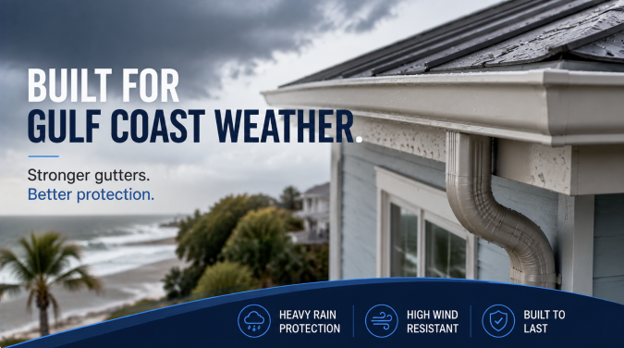
The Gulf Coast doesn't give your home a break. Between hurricane-season downpours that can drop several inches of rain in under an hour and the salt air that quietly corrodes standard aluminum over years, Northwest Florida and South Alabama homeowners face a combination of conditions that most general gutter advice was never written to address.
Direct Answer
Gutter installation in Florida and along the Gulf Coast is more demanding than standard advice suggests because the region combines extreme rainfall intensity, hurricane-force wind loads, salt air corrosion, and sandy soil drainage patterns that interact in ways generic installation guides ignore. Homeowners need heavier gauge materials, wider downspout sizing, and fastening systems rated for high-wind uplift. Not the defaults that work fine in Ohio.
Key Takeaways
- Standard 5-inch K-style gutters are often undersized for Gulf Coast rainfall intensity - 6-inch seamless gutters handle significantly higher flow volume during storm events
- Salt air within roughly 10 miles of the coast accelerates corrosion on untreated aluminum; material selection and coating matter as much as installation quality
- Wind-load fastening requirements in Florida's building code exceed most national defaults. Improper hanger spacing is one of the most common causes of gutter failure after storms
- Seamless gutters eliminate the joints where leaks most commonly originate, making them the practical standard for this climate rather than a premium upgrade
- Bundling gutter and fence installation with one contractor reduces coordination errors and often lowers total project cost
What Is the Real Problem. And Why Does It Keep Showing Up?
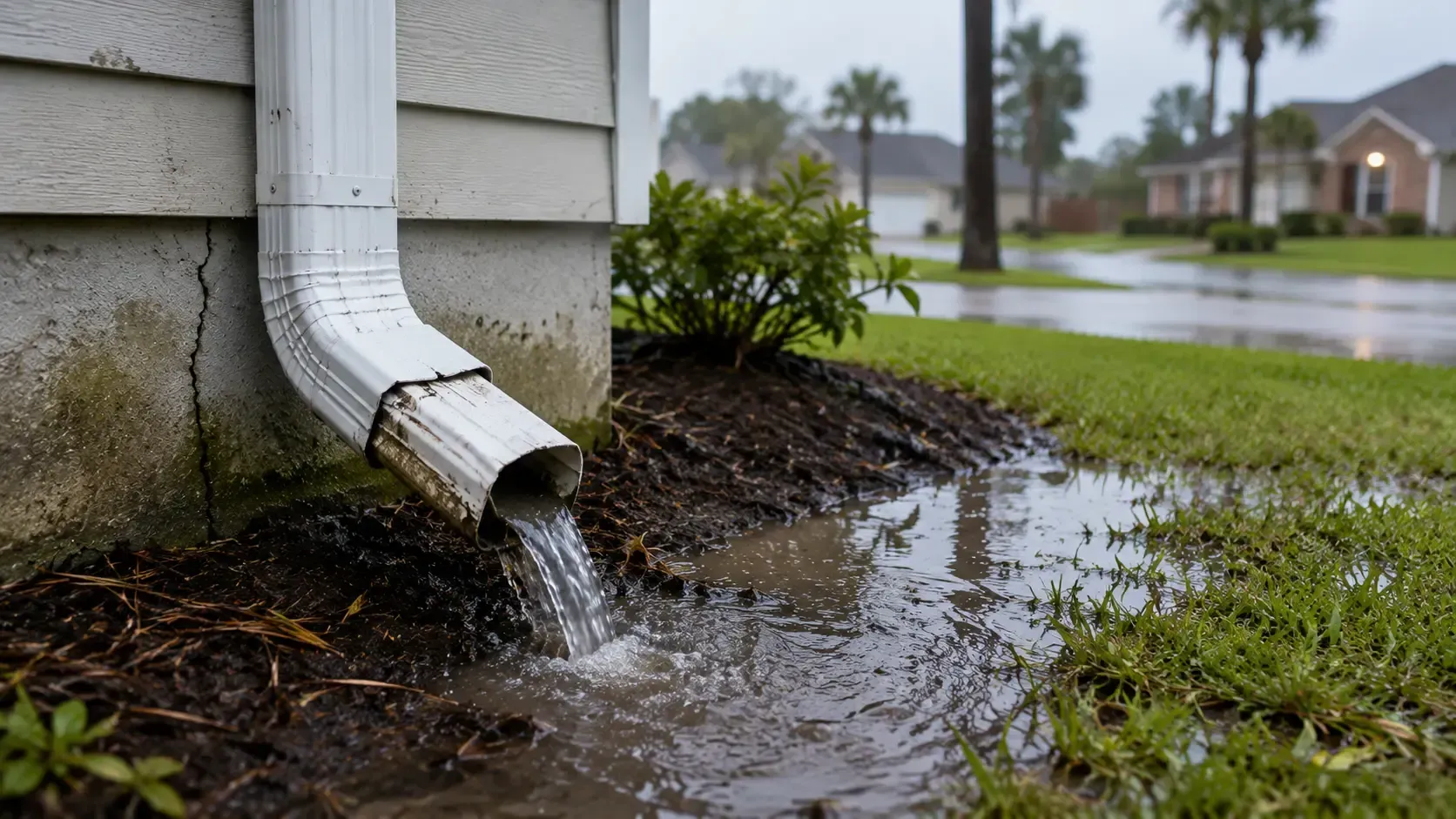
Most homeowners think about gutters reactively. Water stains appear on the fascia board. The flower bed closest to the roofline gets drowned every time it rains. A contractor comes out, installs a standard system, and the problem seems solved.
Then the next named storm comes through.
The real problem isn't that homeowners choose bad gutters. It's that they're sold systems designed for average conditions in a region that doesn't have average conditions. The Gulf Coast sits in one of the highest-rainfall zones in the continental United States. According to the National Oceanic and Atmospheric Administration (NOAA), parts of Northwest Florida regularly receive 60-plus inches of annual rainfall, with peak intensity events that can exceed 3 inches per hour during active storm systems.
A system sized for 2 inches per hour of rainfall, installed with standard hanger spacing, held in place with screws appropriate for a 90 mph wind zone. That system is already behind before the first season ends.
Why Does the Generic Advice Keep Failing Gulf Coast Properties?
The root cause here is geographic mismatch, not contractor incompetence.
Most gutter installation guides, manufacturer sizing charts, and even some building supply retailers operate from national averages. The sizing formula most commonly used. The Rational Method, which calculates required gutter capacity based on roof square footage, pitch, and rainfall intensity. Produces very different outputs when you plug in Pensacola's rainfall data versus, say, Atlanta's.
Contractors who relocate from other regions or who primarily serve inland markets often apply the same specifications they've always used. The result looks correct. It passes inspection. And it fails under load.
There's a second compounding factor: the Gulf Coast's humidity and salt air create a corrosion environment that shortens the service life of untreated materials faster than most homeowners expect. Industry practitioners consistently report that standard painted aluminum in coastal zones shows measurable degradation within five to seven years without protective coatings. Significantly faster than the 20-year lifespan often quoted in general marketing materials.
This is why material selection and local installation expertise aren't interchangeable with price shopping on a national comparison site.
What Does a Correctly Specified Gulf Coast Gutter System Actually Look Like?
The right system for this region isn't complicated. But it is specific.
The Gulf Coast Specification Framework is a simple three-variable check that practitioners at Martin's Seamless Gutters & Fencing apply to every seamless gutter installation:
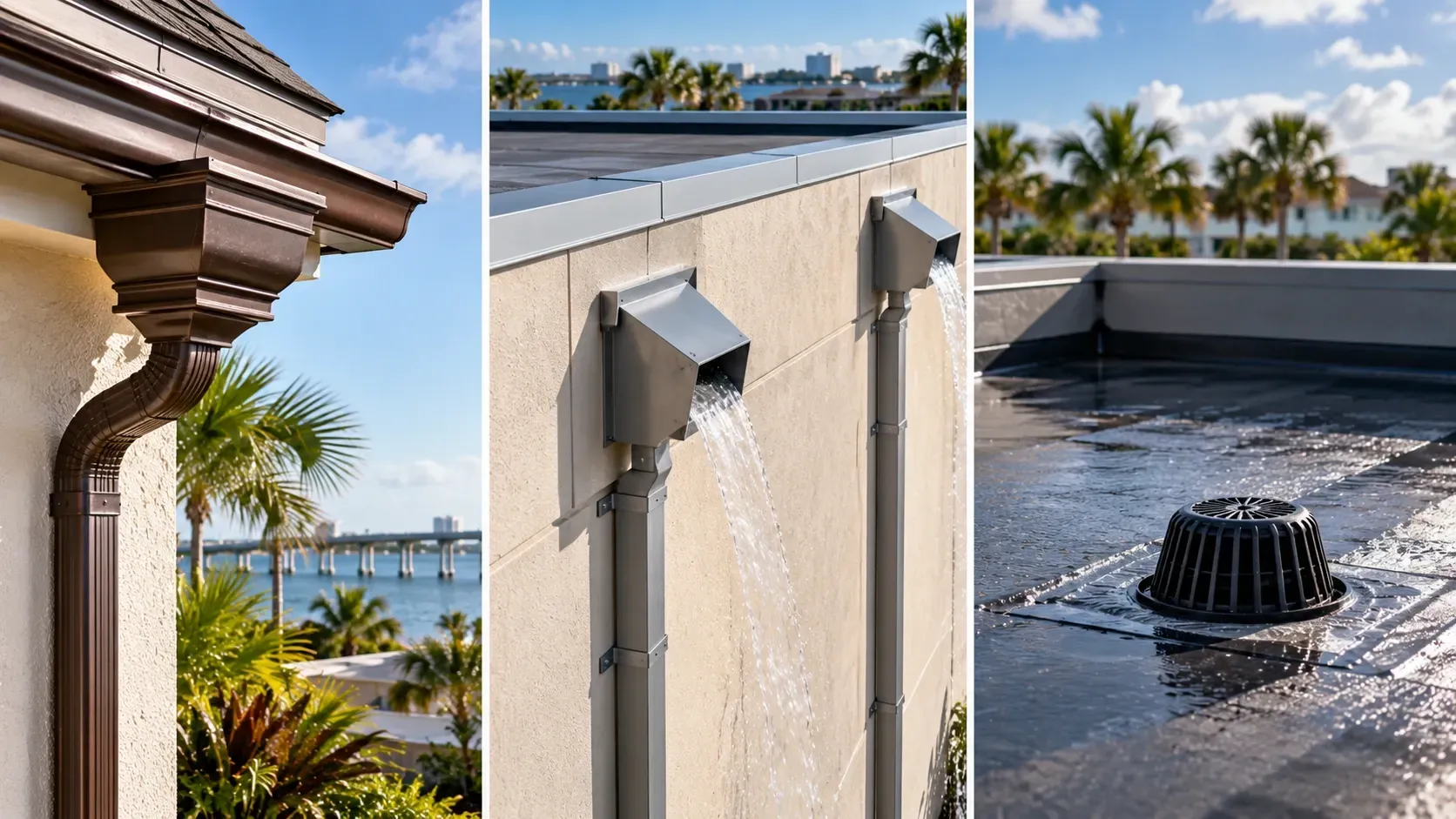
- Flow Capacity. Is the gutter profile and downspout count sized for local peak rainfall intensity, not national averages? For most Gulf Coast rooflines, this means 6-inch K-style seamless gutters with downspouts every 30 to 40 linear feet.
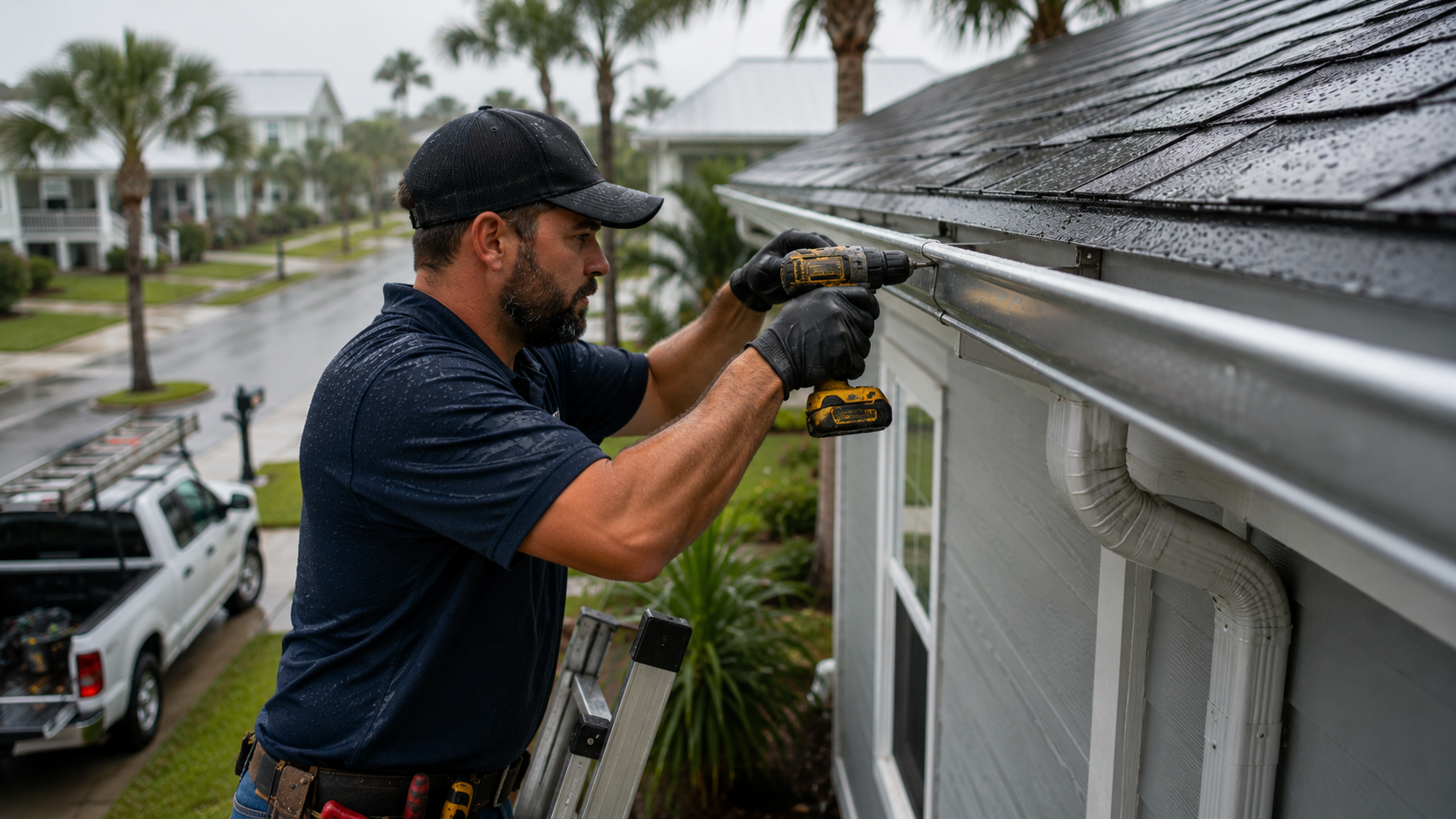
- Wind-Load Fastening. Are hangers spaced at 18-inch intervals, not the 24-inch standard common elsewhere, and anchored into the rafter tails rather than just the fascia board? Florida's wind-load requirements under the Florida Building Code are among the most demanding in the country.
- Material Durability. Is the aluminum gauge .032 or heavier, with a factory-applied finish rated for coastal environments? This is the specification threshold where long-term performance separates from short-term appearance.
Use this framework when evaluating any quote. If a contractor can't speak to all three variables, the system they're proposing is probably built to a different climate.
The Contrarian Reality: Seamless Gutters Are Not a Premium Upgrade
Here's the claim stated plainly: for Gulf Coast properties, seamless gutters are not an upgrade. They are the minimum viable product.
Sectional gutters rely on joints sealed with caulk or gaskets. In a climate that cycles through extreme heat, heavy rain, and hurricane-force wind multiple times per year, those joints fail. Not maybe. Regularly. Each joint is a potential leak point, and each leak point is a direct path to fascia rot, soffit damage, and eventually structural moisture intrusion.
The mechanism is straightforward: thermal expansion and contraction in Florida's temperature range. Which can swing 40 degrees in a single day during shoulder seasons. Stresses every joint connection repeatedly. Caulk that was applied correctly in October is compromised by March.
Seamless gutters, formed on-site from a single continuous run of aluminum, eliminate that failure mode entirely. The only joints are at corners and downspout connections. Unavoidable and manageable. Everything else is one piece.
Martin's Seamless Gutters & Fencing has operated on this standard since 2004, forming gutters on-site to match each property's exact dimensions. That's not a sales point. It's the only installation method that makes sense in this climate.
How Does Fencing Fit Into a Water Management and Property Protection Plan?
Most homeowners think of gutters and fencing as separate projects. They're not, functionally.
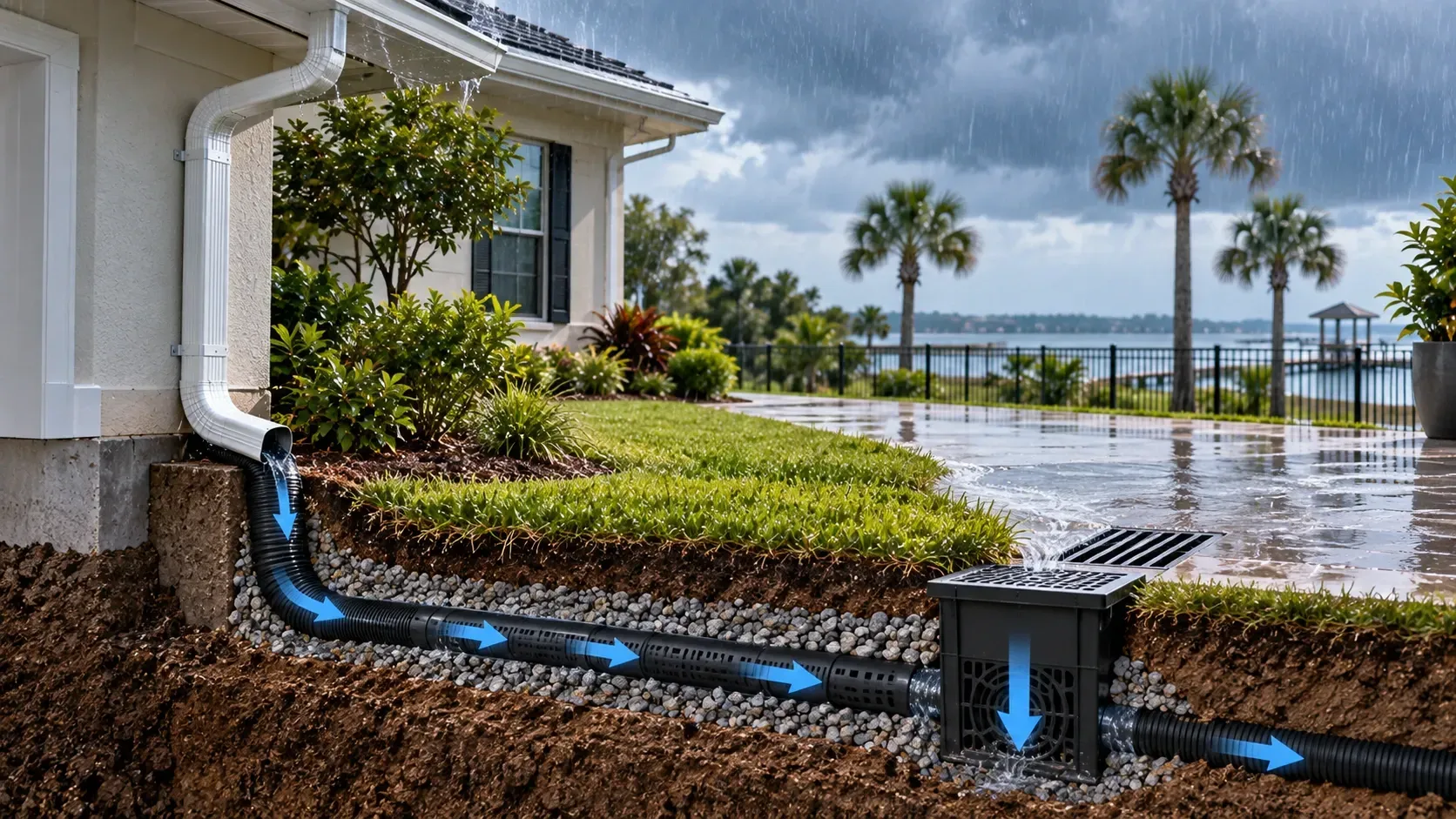
Proper drainage management, which gutters are the first line of, affects soil saturation levels around fence posts. A fence installed in chronically oversaturated ground, because gutters are dumping water at the foundation line, will show post heave and rot significantly faster than one installed in properly drained soil.
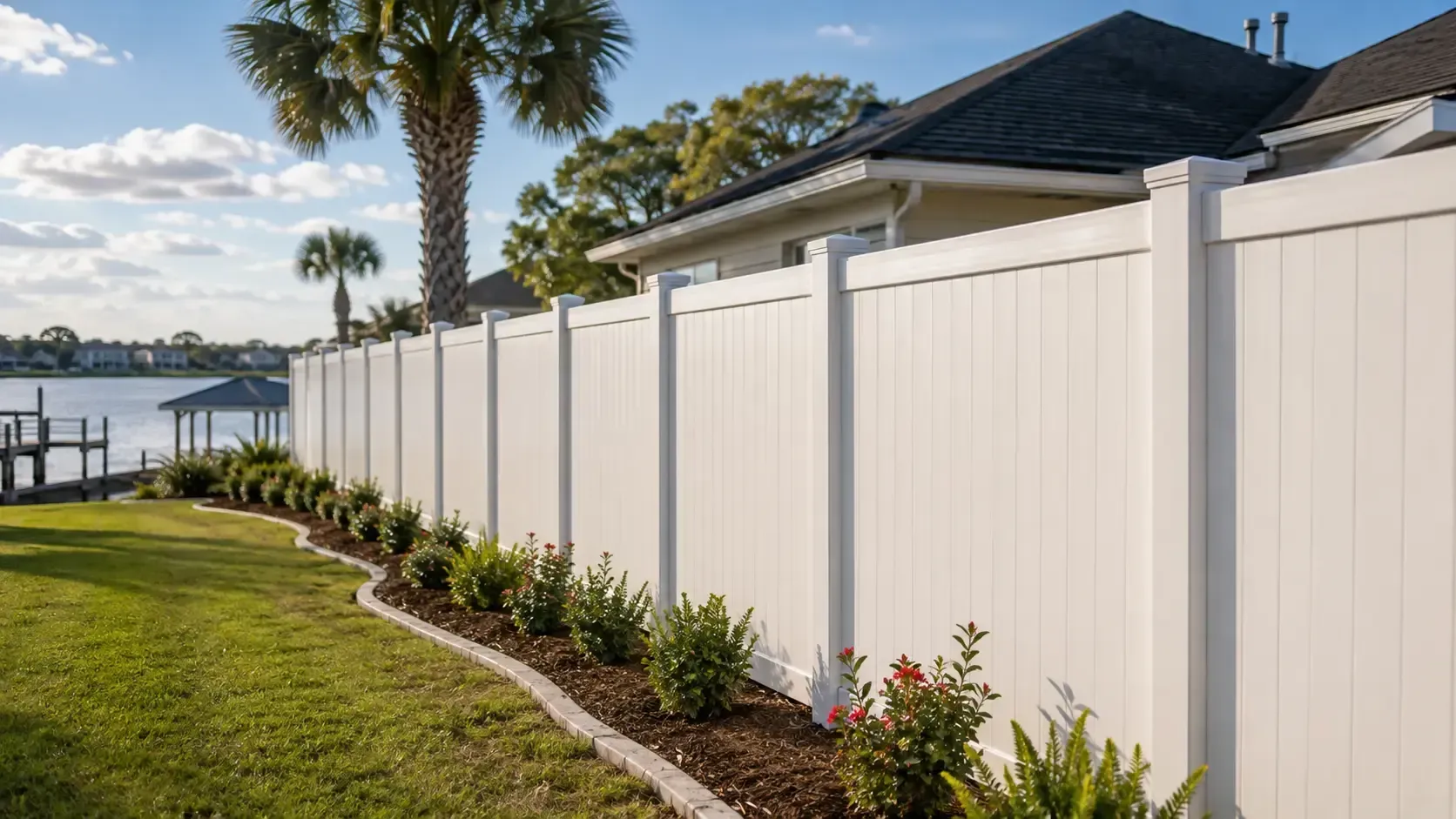
The second observation that challenges common assumptions: privacy fencing doesn't just add security. It changes wind load dynamics on your gutters. A solid privacy fence along a property line alters how wind moves across a structure. In some configurations, this reduces uplift stress on gutters. In others, particularly with certain fence heights and orientations relative to prevailing Gulf Coast storm tracks, it can create turbulence zones that increase stress on specific gutter runs.
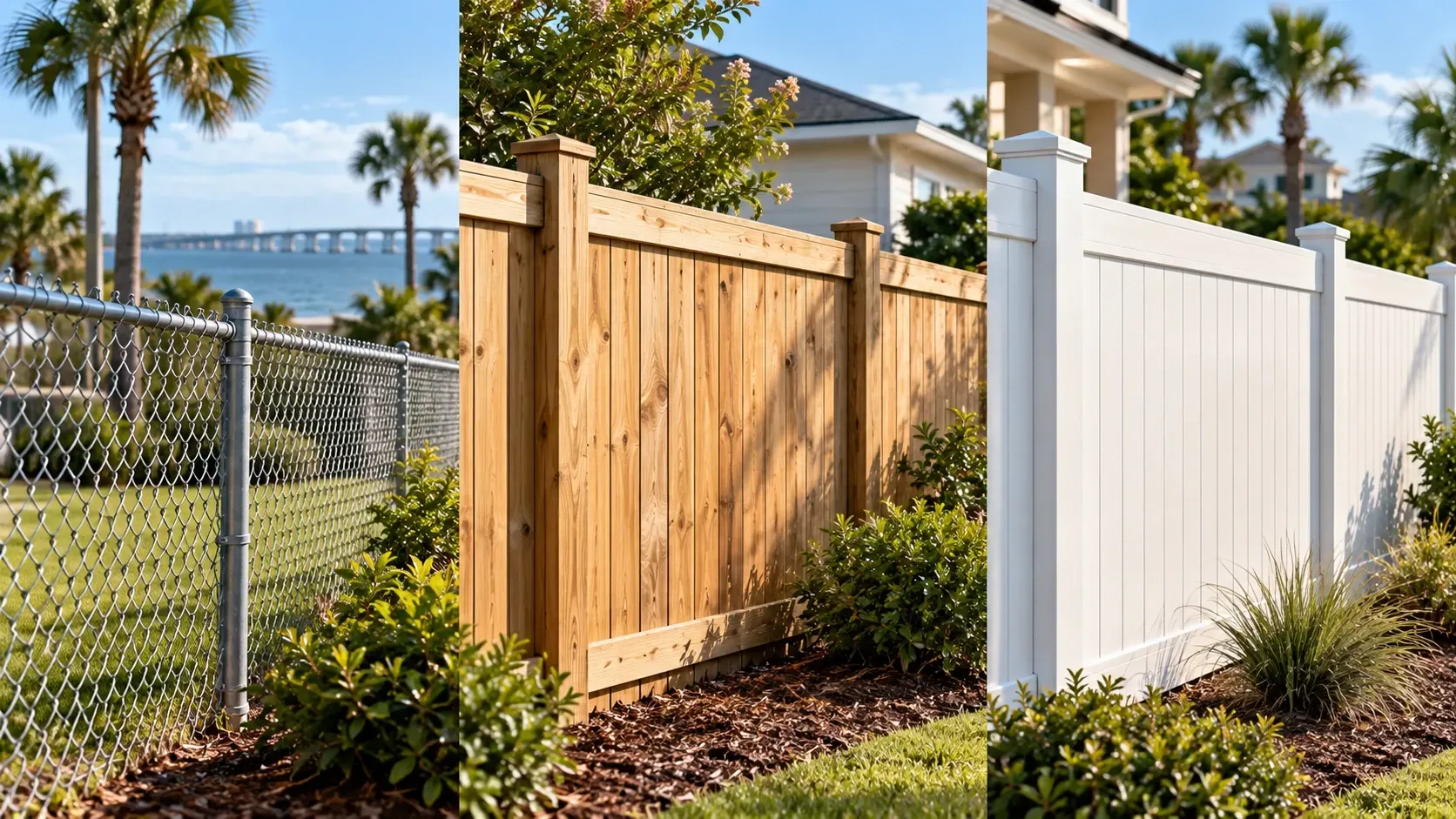
This is why bundling both projects with one contractor. Like Martin's Seamless Gutters & Fencing, which handles vinyl, wood, privacy, and chain link fencing alongside complete gutter systems. Produces better outcomes than coordinating two separate crews who never talk to each other.
A commercial property manager in the Pensacola area who bundled a full perimeter fence replacement with gutter system upgrades across three buildings reported that the combined project timeline was shorter than either project had been individually on previous properties. And the drainage issues that had been undermining fence post stability were resolved at the same time.
Comparing Your Options: What Are the Real Tradeoffs?
| Option | Best For | Limitation |
|---|---|---|
| 5-inch K-style aluminum (standard) | Low-slope roofs, inland properties, tight budgets | Undersized for peak Gulf Coast rainfall events |
| 6-inch K-style seamless aluminum | Most Gulf Coast residential and commercial properties | Slightly higher upfront cost than sectional |
| Copper gutters | Historic homes, high-end aesthetics | Significant cost premium; overkill for most applications |
| Vinyl gutters | Very low budgets, mild climates | Poor performance in high-heat, high-UV Gulf Coast environment |
| Sectional aluminum | DIY installation, temporary solutions | Joint failure risk in thermal cycling; not recommended for permanent installation here |
The honest answer for most Northwest Florida and South Alabama properties: 6-inch seamless aluminum, properly fastened, with downspouts sized and positioned for actual site drainage. Installed by a contractor who knows the Florida Building Code wind requirements. That's the decision the data supports.
Who Is This Not For?
Not every property needs the full specification described here.
If you're on an inland lot more than 20 miles from the coast, on a low-slope roof with minimal square footage, and in a wind zone below 130 mph, standard 5-inch systems may genuinely be sufficient. The Gulf Coast Specification Framework is calibrated for coastal and near-coastal exposure. Applying it to a property in a sheltered inland area can result in over-engineering that adds cost without proportional benefit.
Martin's Seamless Gutters & Fencing will tell you this directly. A trusted local company with 20 years of regional experience doesn't benefit from selling you more system than your property needs. Repeat business and referrals in a community-based market depend on honest recommendations.
Also: if your primary concern is DIY installation, seamless gutters require on-site forming equipment that isn't available for consumer rental. This is a professional installation product by nature.
FAQ
How do I know if my gutters are the right size for Florida rain?
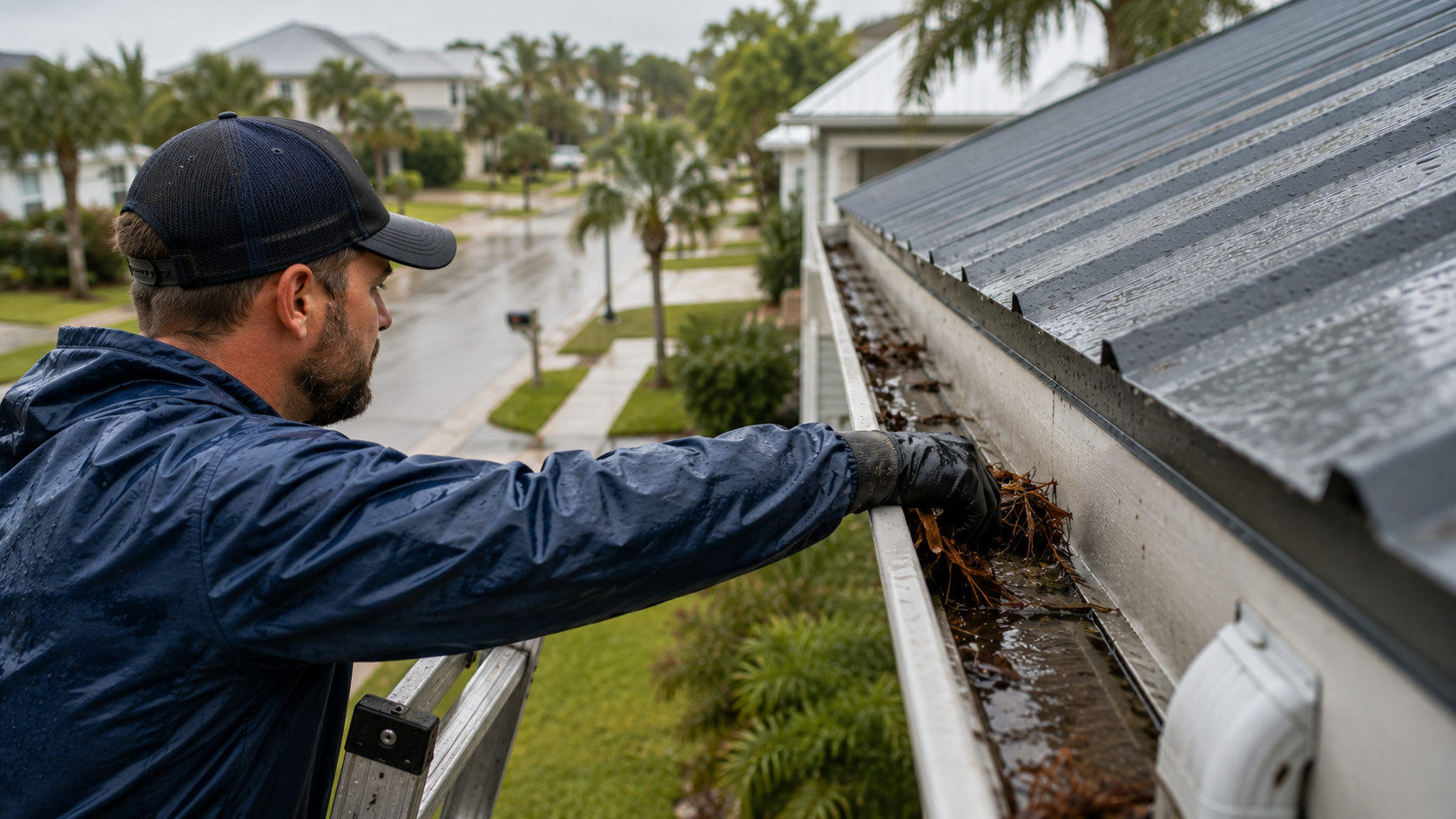
The simplest field check is to watch your gutters during a heavy rain event. If water is sheeting over the front lip rather than flowing to the downspouts, the system is overwhelmed. For a precise answer, a contractor can calculate required capacity using your roof's square footage, pitch, and local peak rainfall intensity data from NOAA records.
What's the difference between seamless gutters and regular gutters?
Seamless gutters are formed from a single continuous piece of aluminum cut to the exact length of your roofline, with no joints except at corners and downspout connections. Regular sectional gutters are assembled from pre-cut pieces joined together, and those joints are the most common source of leaks over time. Especially in climates with significant temperature swings like the Gulf Coast.
How long do gutters last in Florida's climate?
A properly specified seamless aluminum gutter system with a quality factory finish, installed with correct wind-load fastening, typically performs well for 20 or more years in Gulf Coast conditions. Untreated or improperly fastened systems in coastal zones can show significant degradation in five to seven years. The difference is almost entirely in material specification and installation quality, not brand.
Do I need gutters if I already have good drainage around my foundation?
Yes. Gutters and foundation drainage solve different problems. Foundation drainage manages groundwater and surface runoff. Gutters intercept roof runoff at the point it leaves the roofline, preventing concentrated water discharge directly against your foundation, fascia, and landscaping. In Florida's rainfall environment, roof runoff volume during a storm event is substantial enough to overwhelm even good site drainage if gutters aren't directing it to appropriate discharge points.
What kind of fence holds up best in the Gulf Coast climate?
Vinyl fencing is the most corrosion-resistant option for coastal environments and requires no painting or sealing. Pressure-treated wood performs well inland but needs regular maintenance near the coast. Chain link is durable but offers no privacy or wind screening. The right choice depends on your priorities. Martin's Seamless Gutters & Fencing installs all three and can walk through the tradeoffs for your specific site conditions.
Does Martin's Seamless Gutters & Fencing offer discounts?
Yes. Martin's offers discounts for military personnel, first responders, and senior citizens. They've operated as a family business since 2004 and serve 14-plus locations across Northwest Florida and South Alabama. Scheduling an appointment is the fastest way to get a site-specific assessment and pricing.
How soon after a storm should I have my gutters inspected?
Within two weeks of any named storm or significant wind event. The most common post-storm failure mode isn't visible damage. It's hanger separation that leaves the gutter appearing intact but no longer properly pitched or secured. A system that looks fine after a storm but has shifted even slightly will drain poorly and put stress on fascia and soffit connections that compounds over the following season.
If you've read this far, you're not looking for a generic quote. You're trying to make a decision you won't have to revisit in three years. That's exactly the kind of project Martin's Seamless Gutters & Fencing is built for. Schedule an appointment and get a site-specific assessment from a team that has been installing systems in this climate, for this community, since 2004.
References
- National Oceanic and Atmospheric Administration (NOAA). Precipitation frequency data and annual rainfall records for Northwest Florida and Gulf Coast region
- Florida Building Code. Wind-load requirements and fastening standards for gutter and exterior structure installation in Florida wind zones